Measuring height accurately in centimeters (cm) is essential for medical assessments, growth tracking, clothing sizing, and everyday health monitoring. Whether you’re using a clinical stadiometer, a wall chart, or a simple tape measure, understanding how to read the centimeter scale correctly ensures reliable results. The metric system uses a decimal-based structure that makes conversions and calculations straightforward, but only if you know how to interpret the markings properly.
This guide will walk you through exactly how to read a height scale in cm, step by step, whether you’re measuring yourself at home, a child’s growth, or an infant’s length. You’ll learn how to identify centimeter and millimeter lines, avoid common mistakes, convert between inches and cm, and ensure consistent, accurate readings every time.
Identify Centimeter and Millimeter Marks
To read a height scale in cm, start by identifying the basic structure of the metric markings. Most measuring devices use clear visual hierarchies to distinguish whole centimeters from smaller subdivisions.
Find Whole Centimeter Lines
The longest lines on the scale, usually labeled with numbers (e.g., 150, 151, 152), represent whole centimeters. Each number indicates one full cm increment. These are your primary reference points.
On a stadiometer or wall chart, these are often marked every 1 cm with bold numbers. Example: If the headpiece aligns exactly with the line labeled “165,” the height is 165 cm.
Locate Half-Centimeter and Millimeter Lines
Between each full cm, shorter lines indicate fractions of a centimeter. Medium-length lines typically represent 0.5 cm (5 mm). Example: A line halfway between 165 and 166 means 165.5 cm.
The shortest lines represent 1 mm (0.1 cm) increments. Ten of these make up one full centimeter. Example: Three small lines past 167 cm equals 167.3 cm.
Not all tools show 0.1 cm marks. Home height charts may only have 0.5 cm or even 1 cm increments. Always check your device’s resolution before recording.
Use Proper Body Positioning
Even the most accurate tool gives wrong results if the person isn’t positioned correctly. How someone stands or lies affects the final measurement significantly.
Stand Correctly for Adult Measurements
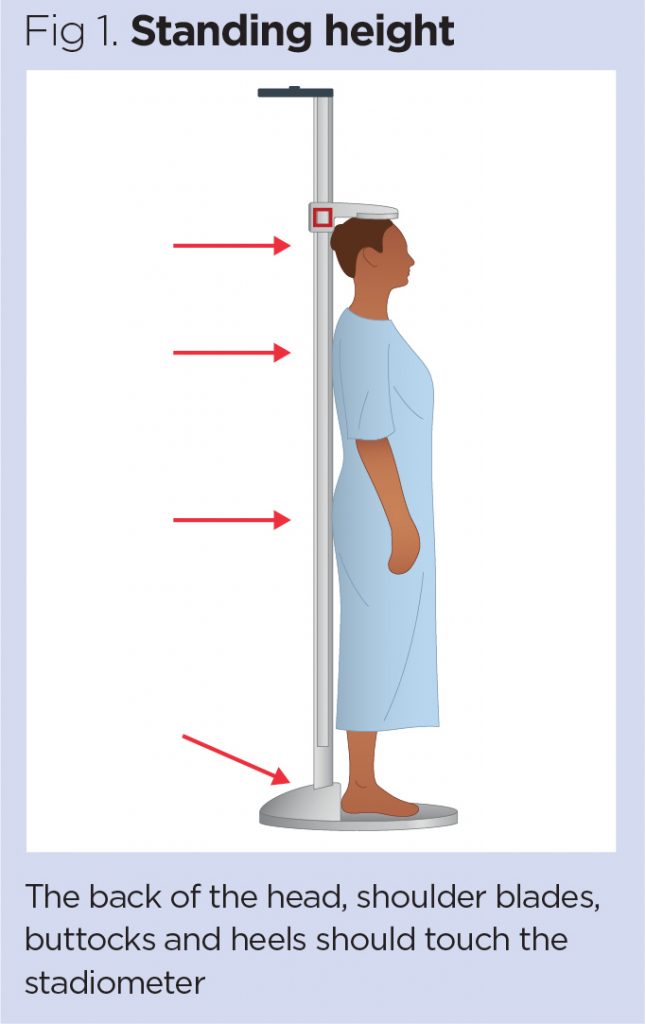
For individuals aged 2 years and older, standing height should be measured with strict attention to posture. Stand barefoot with heels together and back straight. Feet flat on the floor, knees straight but not locked. Arms relaxed at sides, shoulders level.
Head positioned in the Frankfort plane: the imaginary line from the bottom of the eye socket to the top of the ear canal should be parallel to the floor. Buttocks, shoulder blades, and the back of the head should touch the wall or stadiometer backboard if possible.
Slouching, tilting the head up or down, or standing on tiptoes can distort results by 1 to 3 cm.
Measure Infants and Non-Ambulatory Patients Recumbent
Children under 2 years old and bedridden adults must be measured lying down. Use an infantometer or flat surface with a fixed headboard. Place the child supine (face up), head against the headboard.
Gently extend legs and press feet perpendicular to the shins. Move the footpiece until it touches the heels firmly. Read to the nearest 0.1 cm or 0.5 cm, depending on device precision.
Supine measurements are typically 0.5 to 2 cm longer than standing height due to spinal decompression. Always label such readings as “supine” when documented.
Read the Scale at Eye Level
One of the most common errors in height measurement is parallax error, which is reading the scale from an angle and leads to inaccurate values.
Avoid Viewing from Above or Below
When using a stadiometer, crouch or adjust your position so your eyes are level with the headpiece. For wall marks, ensure you’re viewing the tape measure straight on, not from above or the side.
Misalignment can cause overestimation or underestimation by up to 1 to 2 cm.
Use Flat Object for Self-Measurement
If measuring yourself without assistance, follow these steps. Stand against a smooth wall with no baseboards. Place a flat, rigid object (like a hardcover book) on your head at a 90-degree angle. Ensure the bottom edge is parallel to the floor.
Mark the wall where the bottom of the object touches your head. Use a metal tape measure to measure from the floor to the mark.
Use a mirror to verify alignment before marking. Fabric tapes stretch, so always use metal for accuracy.
Interpret Subdivisions Accurately

Knowing how to count the small lines between centimeters is crucial for precision.
Count Millimeters Beyond Whole Centimeters
On fine-scale devices such as digital stadiometers and infantometers, each minor line equals 1 mm which is 0.1 cm. Example: If the measurement falls 4 small lines past 162 cm, the height is 162.4 cm.
Record to one decimal place when possible (e.g., 165.5 cm).
Estimate to Nearest 0.5 cm When Needed
On lower-resolution tools such as basic wall charts, only half-centimeter lines may be present. If no line exists, estimate visually whether the mark is closer to 162.0, 162.5, or 163.0.
Example: Midway between 162 and 163 equals 162.5 cm.
In hospitals and clinics, heights are typically recorded to the nearest 0.5 cm unless research requires 0.1 cm precision.
Convert Inches to Centimeters Correctly
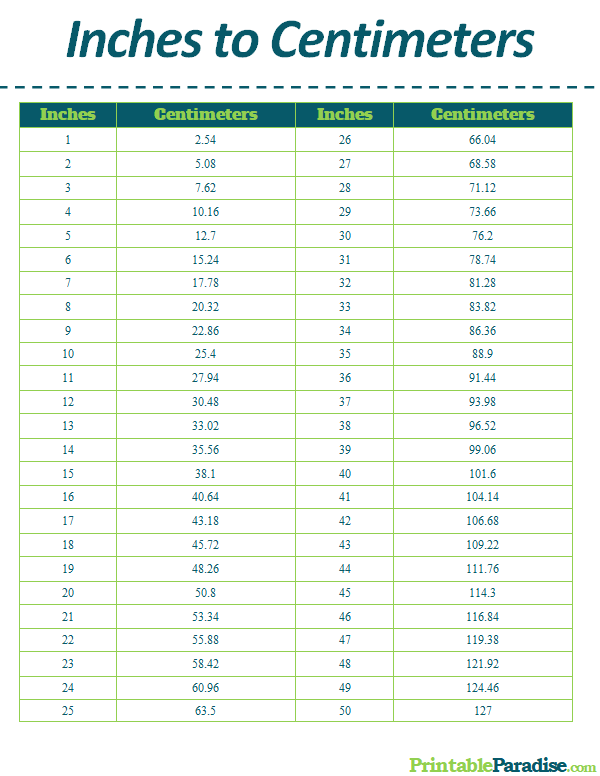
Many people think in feet and inches, but medical systems use cm. Knowing how to convert helps interpret dual-scale devices.
Apply the Conversion Formula
Inches to cm: multiply inches by 2.54. Formula: cm = inches × 2.54.
Feet to inches: first convert feet to total inches. Example: 5 ft 7 in equals (5 × 12) + 7 which is 67 inches. Then: 67 × 2.54 equals 170.18 cm, rounded to 170 cm.
Know Common Height References
| Feet & Inches | Centimeters (cm) |
|---|---|
| 5 ft | 152 cm |
| 5 ft 3 in | 160 cm |
| 5 ft 7 in | 170 cm |
| 5 ft 10 in | 178 cm |
| 6 ft | 183 cm |
Remember these memory aids: 150 cm is approximately 4 ft 11 in. 160 cm is approximately 5 ft 3 in. 170 cm is approximately 5 ft 7 in. 180 cm is approximately 5 ft 11 in. 190 cm is approximately 6 ft 3 in.
Choose the Right Measuring Tool

Different situations call for different tools, each with its own accuracy level.
Use Clinical Devices When Possible
| Tool | Best For | Precision |
|---|---|---|
| Wall Stadiometer | Clinics, schools | 0.1 to 0.5 cm |
| Digital Height Rod | Medical offices | 0.1 cm |
| Infantometer | Babies under 2 | 0.1 cm |
| Metal Tape Measure | Home, bedridden | 0.1 cm |
| Height Wall Chart | Home tracking | 0.5 to 1 cm |
Avoid fabric tapes because they stretch and sag. Always use rigid or metal tools for accuracy.
Prevent Common Measurement Errors
Even small mistakes can lead to misleading data, especially in medical or growth tracking contexts.
Check for Hair and Headwear Interference
Thick hair, braids, or hats can add 0.5 to 2 cm to a reading. Always remove headwear and flatten hair under the headpiece. In clinical settings, the headpiece should press down firmly to compress hair.
Calibrate Equipment Regularly
Test stadiometers and tapes against a known standard such as a certified ruler. Misaligned or worn headpieces can cause consistent over-reading or under-reading. Digital devices should be zeroed and tested daily in clinical use.
Measure at the Same Time Daily
Human height varies by 0.5 to 2 cm throughout the day. Spinal discs compress during activity, so you’re tallest in the morning. For tracking growth or weight changes, always measure around the same time, preferably early in the day.
Document Height Properly
Accurate recording is as important as accurate measurement.
Record in Centimeters with One Decimal
Example: 165.5 cm, not “about 166 cm.” If device only shows whole cm, record as 165 cm. Never leave the unit blank; always write “cm” to prevent confusion with inches.
Note Measurement Method
For non-standing patients, document clearly. Example: “Supine measurement: 163 cm” or “Arm span estimate used: 172 cm.”
Always use cm in formulas like BMI = kg / (m)², which is critical for BMI and dosing calculations.
Apply Height Data in Real-World Contexts
Accurate cm readings support health decisions across multiple domains.
Calculate BMI Using Metric Units
Height must be in meters for BMI calculation. Convert cm to m by dividing by 100. Example: 175 cm equals 1.75 m.
The formula is BMI = Weight (kg) divided by (Height in m)². Example: 70 kg at 175 cm equals 70 divided by (1.75)² which is 22.9, indicating normal weight.
Support Pediatric and Medical Assessments
Growth charts from CDC and WHO require height in cm. Medication dosing (e.g., chemo, antibiotics) is often based on body surface area, which uses cm. Diagnosis of conditions like stunting, scoliosis, or hormonal disorders relies on precise tracking.
Aid in Daily Life Decisions
Accurate height measurements help with clothing and shoe sizes, especially international brands. Ergonomic setup for desk, chair, and monitor height depends on correct measurements. Sports eligibility and military requirements also use cm. Passport and ID documentation require precise height data.
Follow Best Practices for Consistency
For reliable long-term tracking, follow these proven guidelines.
Use the Same Equipment Each Time
Switching tools introduces variability. Use the same wall, tape, and technique for home growth charts. Mark dates beside each measurement to track progress.
Train Caregivers and Staff
In schools, clinics, and homes, untrained users make avoidable errors. Teach proper head positioning, scale reading, and documentation. Use mirrors or video feedback to improve technique.
Validate Home Readings Clinically
Compare home-measured heights with clinic measurements annually. Discrepancies greater than 1 to 2 cm may indicate technique issues or equipment problems.
Frequently Asked Questions About Reading Height Scale in cm
What do the lines on a height scale mean?
The longest lines with numbers represent whole centimeters. Medium lines between them represent half-centimeters (0.5 cm). The shortest lines represent millimeters (0.1 cm). Ten millimeters equal one centimeter.
How do I avoid parallax error when reading height?
Always view the scale at eye level, directly facing the measurement point. Crouch down if using a stadiometer so your eyes align with the headpiece. For tape measures, ensure you’re looking straight on at the markings, not from above or below.
Can I measure my own height accurately at home?
Yes, with proper technique. Use a flat rigid object like a book on your head, held parallel to the floor. Mark the wall where the object bottom touches. Use a metal tape measure (not fabric) to measure from floor to mark. Record to the nearest 0.1 cm.
Why does my height change throughout the day?
Human height varies by 0.5 to 2 cm daily because spinal discs compress during activity. You’re tallest in the morning after lying down. For consistent tracking, measure at the same time each day, preferably in the morning.
What’s the difference between standing and recumbent height?
Standing height is measured upright for people age 2 and older. Recumbent (lying down) measurements are for infants under 2 and bedridden adults. Recumbent measurements are typically 0.5 to 2 cm longer than standing height due to spinal decompression.
How do I convert feet and inches to centimeters?
Multiply total inches by 2.54. First convert feet to inches by multiplying feet by 12, then add remaining inches. Example: 5 feet 7 inches equals (5 × 12) + 7 which is 67 inches. Then 67 × 2.54 equals 170.18 cm, rounded to 170 cm.
Key Takeaways for Reading Height Scale in cm
Reading a height scale in cm is straightforward once you understand the markings and proper technique. Focus on three critical elements: identifying centimeter and millimeter lines correctly, positioning the body properly with head in the Frankfort plane, and reading the scale at eye level to avoid parallax error.
Always use appropriate tools for the situation. Clinical stadiometers offer 0.1 cm precision, while home wall charts may only show 0.5 cm increments. Metal tape measures are more accurate than fabric ones. Remember to remove shoes, hats, and flatten bulky hair before measuring.
For consistent tracking, measure at the same time daily (preferably morning), use the same equipment each time, and record measurements immediately with one decimal place when possible. Whether for health assessments, growth tracking, or everyday use, accurate centimeter measurements provide valuable insights when done correctly.