You’ve seen them in farmhouse kitchens, apothecary-style shelves, and rustic dining rooms. But what do you do with a scale once you find one at a flea market or thrift store? The answer is to decorate it creatively to become a functional, eye-catching centerpiece. Whether you own an authentic cast iron kitchen scale, a delicate baby scale, or a DIY faux vintage version, this guide shows you exactly how to decorate scale for year-round style.
A decorated scale isn’t just a nod to nostalgia. It adds textural contrast, historical character, and visual weight to any space. From Easter egg displays to Christmas ornament trays, the styling options are endless. And the best part? You don’t need an original antique. With simple techniques, even a $5 replica can look like a century-old treasure.
Choose the Right Scale for Your Style

Before decorating, pick a scale that fits your aesthetic. Not all scales work in every space, so match the type to your decor theme.
Pick by Design and Theme
Consider these popular options for your home:
• Antique kitchen scales suit farmhouse, cottagecore, and rustic interiors. Look for brands like Montgomery Wards or American Family Scale with original chippy enamel.
• Balance scales with dual pans evoke law, justice, or apothecary themes. Ideal for libraries, offices, or gallery walls.
• Baby scales with stork or angel graphics are perfect for nurseries, spring, or Easter displays.
• Floor scales make bold floor statements in entryways or living rooms.
• Hanging or postal scales add vertical interest and work well in kitchen vignettes or on open shelving.
Match Materials to Your Decor
Different materials create different vibes. Here’s a quick reference:
• Cast iron suits farmhouse and industrial spaces. Embrace rust for authenticity.
• Enamel with chipped finishes works in mid-century and cottagecore settings. Pair with pastel linens.
• Brass adds warmth to apothecary and traditional spaces. Clean lightly and let tarnish add character.
• Wood and wicker fit country and shabby chic decor. Layer with lace or burlap for added charm.
Choose based on function too. A heavy cast iron scale can double as a bookend. A smaller postal scale fits neatly on a console table.
Clean and Restore Without Ruining Value
A dirty scale can look charming, but only if the grime enhances character rather than hides damage. Clean smartly to preserve patina while ensuring safety.
Clean Safely for Food-Area Use
If placing your scale in the kitchen or using it to hold fruit, follow these steps:
- Wash with warm water and Dawn dish soap.
- Scrub gently with a soft sponge or brush.
- Rinse and dry completely, especially joints and crevices.
- Use white vinegar for light rust. Apply, wait ten minutes, then scrub.
- For heavy rust, try Rustoleum Rust Dissolver Gel. It lifts corrosion without aggressive scrubbing.
Never soak cast iron. It can promote new rust and damage the finish.
Preserve Rust for Character
In farmhouse and primitive styles, rust is a feature, not a flaw. If the scale looks authentically aged, leave surface rust intact. Seal with clear matte spray to stop further oxidation. Avoid aggressive sanding because it destroys both value and character.
For baby or kitchen scales used near food, place a glass or ceramic bowl inside the pan to avoid direct contact with metal.
Style Scales by Room and Purpose
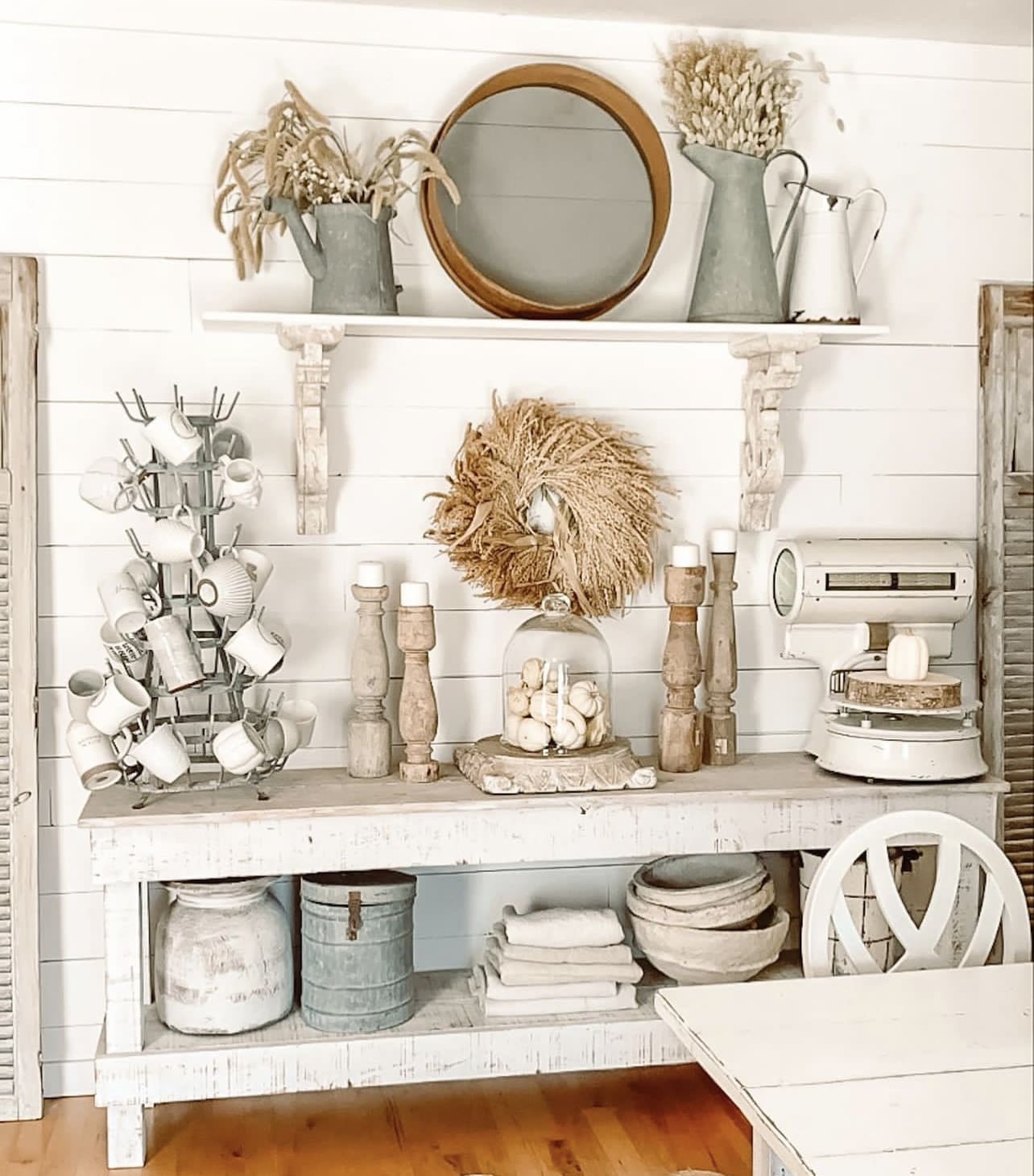
Where you place your scale changes how you style it. Use these room-specific tips to make each display intentional.
In the Kitchen: Functional and Festive
Turn a vintage scale into a dynamic countertop accent. Use it as a fruit or snack bowl by inserting a removable glass bowl or enamelware dish into the pan. Fill with lemons, limes, apples, or nuts. This keeps produce visible and encourages healthy snacking.
Create seasonal kitchen vignettes throughout the year. In spring, add potted herbs, moss, or a cloche with eucalyptus. In summer, style with citrus slices, a vintage tea towel, and a wooden spoon. For fall, fill with mini pumpkins, gourds, and cinnamon sticks. In winter, use pinecones, red berries, and battery-powered fairy lights.
On the Dining Table: Centerpiece with Character
A scale makes a unique dining table focal point. Use it as a riser or base by placing a pillar candle, small wreath, or floral arrangement in the pan. This works especially well on buffets or sideboards.
Try themed centerpieces for holidays. For Easter, nest faux eggs with pastel moss. For Christmas, fill with mini ornaments or a tiny tree. For everyday display, use a single air plant or succulent in a small pot.
In the Living Room: Sculptural and Stylish
Let the scale elevate your coffee table, console, or shelf display. Style it as a vignette anchor on a console table with books, a clock, and a framed photo. On a bookshelf, it breaks up stacks and adds visual interest.
Add height and dimension by using the scale as a platform. Put a small potted plant on the tray. Stack a mini Christmas tree on the pan with two others beside it for depth. Pair with textured throws and wooden trays for complete cohesion.
As Bookends or Doorstops
Heavy scales are perfect for dual-purpose use. Place one on each end of a bookshelf as bookends. Keep a drafty door open in hallways or patios as a doorstop. No extra decor needed. Their form is the function.
One collector styled thirteen scales throughout her home, many as bookends or permanent fixtures.
Decorate by Season and Holiday
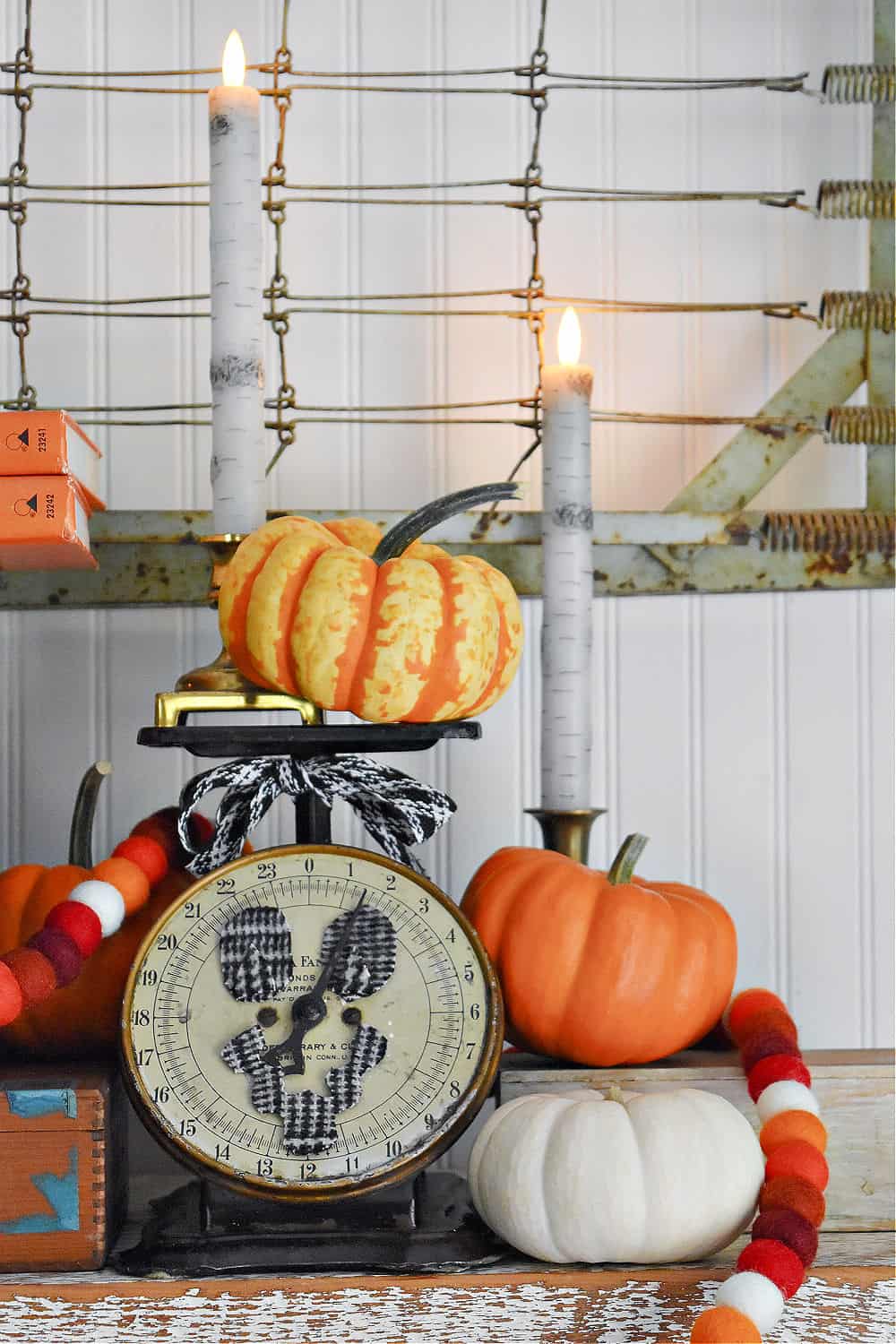
A decorated scale can evolve with the calendar. Rotate accessories to keep it fresh year-round.
Spring: Easter and Renewal
Style a baby scale for Easter by filling the tray with faux speckled eggs. Add mini bunnies or chicks in the Rae Dunn style. Include a nest with moss and pastel-colored filler. Add a small cross or lily for religious themes.
For general spring touches, use a cloche with air plants and ferns. Pair with floral teacups or vintage gloves.
Summer: Fresh and Bright
Turn your scale into a citrus display by filling it with whole lemons, limes, or oranges. Add citrus slices on a tray beside it. Style with floral linens and wooden bowls for complete summer vibes.
For garden-inspired themes, add a mini watering can, vintage garden gloves, or seed packets. This works especially well on kitchen islands.
Fall and Halloween: Cozy and Spooky
Create an autumn harvest look by filling the pan with mini pumpkins, gourds, acorns, and dried corn or wheat. Pair with plaid blankets or burlap ribbon.
For a Halloween twist, use scales with black or orange graphics. Add spiderwebs, plastic spiders, or jack-o’-lantern faces made from fabric. Place near a candle in a black lantern for spooky ambiance.
Winter and Christmas: Festive and Warm
Create a holiday centerpiece by filling with vintage glass ornaments, pinecones, cinnamon sticks, and faux snow or glittery moss. Add a mini nativity, especially on baby scales with angel art.
Add lighting magic by wrapping battery-powered fairy lights around the base. Place a flameless candle nearby for safe glow.
One Instagram user styled her scale with greenery and ornaments three weeks before Christmas. Her post earned 365 likes.
DIY a Faux Vintage Scale (Under $5)
Don’t have an antique? Make your own. A Dollar Tree base and simple aging tricks create a convincing replica.
Gather Your Supplies
You will need these items:
• Dollar Tree scale model or wood scraps
• Mod Podge in matte finish
• Cinnamon for faux rust
• Foam brush
• Printed vintage scale face from free online templates
Create Realistic Faux Rust
Follow these steps:
- Apply Mod Podge to edges and joints where rust naturally accumulates.
- Sprinkle cinnamon over wet glue.
- Use the brush to dab and blend for uneven, organic texture.
- Let dry completely. The cinnamon turns brown and looks like rust.
- Reapply to thin spots.
Why cinnamon? It’s cheap, non-toxic, and adds a warm aged look along with a subtle scent.
Add the Scale Face
Print and trim a vintage dial image. Apply Mod Podge to the back. Press onto the base. Seal with another coat.
The result is a custom, weathered scale that looks like it’s been in your family for generations.
Source and Collect Like a Pro
Finding the perfect scale takes strategy. Know where to look and how to build a collection.
Best Places to Buy
Look in these locations:
• Thrift stores and flea markets for scales under $20
• Estate sales for heavy floor models
• Etsy with filters for free shipping
• Facebook Marketplace by searching vintage scale or antique kitchen scale
• Barn sales and yard sales in rural areas
Collecting Tips
Buy multiples when you find them. One user bought two scales for $50, sold one for $60, making the second free. Collect by color, focusing on themes like baby scales, store-branded models, or justice balances. Message sellers for local pickup to avoid high shipping costs.
True story: Lora Bloomquist owns thirteen vintage scales displayed throughout her home.
Maintain and Preserve for Years
A well-cared-for scale lasts decades. Follow these simple rules.
Clean and Dust Regularly
Use a soft, dry cloth weekly. For metal, wipe with a damp cloth but never soak. Avoid harsh chemicals that strip patina.
Protect from Damage
Keep scales indoors to prevent weathering. Avoid direct sunlight because it fades colors and graphics. Store in dry areas to prevent new rust.
Repair and Refresh
Tighten loose screws or joints with a small wrench. Touch up chipped enamel with matching craft paint. Replace broken trays only if necessary because original parts add value.
Safety and Practical Tips
Even decorative scales need safe handling.
Food Safety
Never place food directly on old metal pans. Use a glass, ceramic, or stainless steel bowl inside the scale instead.
Fire Safety
Place candles securely in the pan. Keep them away from curtains, paper, or flammable decor. Use battery-powered lights for safer glow.
Structural Safety
Check floor scales for stability. Don’t place them near high-traffic areas where they could tip. Faux DIY scales are not for outdoor use because moisture damages them.
Frequently Asked Questions About Decorating a Scale
What type of scale works best for farmhouse decor?
Antique kitchen scales with cast iron construction and chippy enamel finishes work best for farmhouse decor. Look for brands like Montgomery Wards or American Family Scale. These pieces add authentic vintage charm and pair well with rustic accessories.
How do I stop my vintage scale from rusting further?
Apply a clear matte spray sealer to preserve the existing finish. Keep the scale indoors away from humidity. Wipe it regularly with a dry cloth. Avoid harsh cleaning products that strip protective coatings.
Can I use a decorative scale for food display?
Yes, but place a clean glass, ceramic, or stainless steel bowl inside the pan first. Never place food directly on old metal surfaces. This prevents contamination while maintaining the vintage aesthetic.
Where can I find affordable decorative scales?
Check thrift stores, flea markets, and estate sales for prices under $20. Facebook Marketplace and Etsy often have good deals. Dollar Tree sells basic scale models perfect for DIY faux vintage projects.
How do I make a fake vintage scale look real?
Apply Mod Podge to edges and joints. Sprinkle cinnamon over wet glue and let it dry. The cinnamon darkens and creates realistic rust texture. Print a vintage dial face and attach it with more Mod Podge for added authenticity.
Key Takeaways for Decorating Your Scale
Decorating a scale is more than a trend. It’s a celebration of vintage charm, texture, and storytelling. Whether you’re styling an authentic 1940s kitchen scale or crafting a $5 DIY replica, the result is a piece that’s both beautiful and meaningful.
The most important steps are choosing a scale that matches your decor style, cleaning it properly without damaging patina, and placing it strategically in high-visibility areas. Seasonal rotations keep the display fresh throughout the year. With proper care and creative styling, your scale can become a year-round focal point that evolves with your home and reflects your personal style.
From farmhouse kitchens to shabby chic shelves, the only limit is your imagination. Start hunting for your perfect scale today, and transform it into a stunning decorative piece that tells a story.