You step on the scale every day, yet the number keeps changing. Is it you, or is it the scale? More often than not, inconsistent results come not from your body, but from how you’re using the scale. Whether you’re tracking weight loss, baking sourdough, or measuring lab chemicals, knowing how to use a scale properly is essential for accuracy. This guide breaks down everything you need to know, step by step, for every major type of scale.
From leveling the surface to mastering the tare function and interpreting body composition data, we cover real-world best practices backed by expert insights and user experiences. No fluff, no guesswork. Just clear, actionable steps to get consistent, trustworthy measurements every time.
Setting Up Your Scale on a Level Surface
All scales require a flat, hard, level surface to deliver accurate readings. Soft materials like carpet or rugs absorb force and destabilize the sensor, leading to false lows or fluctuating numbers. Always place your scale on tile, hardwood, concrete, or linoleum.
Choosing the Right Surface
Place your scale on a stable, hard floor rather than soft surfaces. Carpets and rugs cause uneven weight distribution and can permanently affect accuracy. If your bathroom has uneven tiles, move the scale to a more stable area.
Checking Level with a Bubble Level
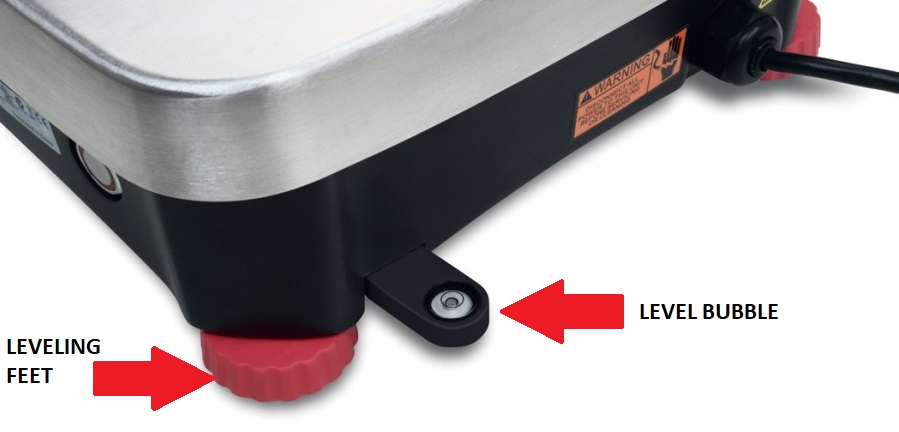
Many digital and lab scales include a built-in bubble level. Before first use or after moving the scale, check if the bubble is centered. If not, adjust the screw feet until it is. For mechanical scales without this feature, use a separate spirit level or visually confirm alignment. Even a two-degree tilt can skew results by several pounds.
Pro Tip: Test stability by placing a marble on the scale platform. If it rolls, your surface is not level.
Zeroing Your Scale Before Every Use
Skipping the zeroing step is one of the most common user mistakes that leads to inaccurate readings. Always reset your scale before stepping on or placing any item.
Resetting Mechanical Scales Manually
On a balance beam scale, always slide both the large weight and the small weight fully to the left before stepping on. Never assume they are at zero. This prevents carryover errors that skew your reading.
Using Auto-Zero or Tare on Digital Scales
Digital scales typically power on and display zero after stabilization. Wait two to three seconds for this to happen. If the display shows a negative or positive number, press the Tare or Zero button to reset. For kitchen and lab scales, use Tare after placing any container to exclude its weight.
Warning: Never skip zeroing. Even slight residual weight affects precision, especially when measuring in grams.
Stepping On or Loading Items Properly
The way you step on or load items affects accuracy significantly. Gentle, controlled movements produce the most reliable readings.
Standing Correctly on Bathroom Scales
When using a digital bathroom scale, step on barefoot with feet centered and flat. Keep your weight evenly distributed and remain motionless until the reading locks in, usually two to five seconds. Avoid talking, shifting, or holding objects during measurement. Movement disrupts the load cells and causes inaccurate readings. For body composition models, dry feet are essential because moisture interferes with bioelectrical impedance signals.
Adding Ingredients Slowly on Kitchen Scales
When weighing food, place the bowl on the scale first, press Tare, then add the ingredient gradually. Use a spoon or spatula to avoid overshooting. If you go over the target weight, remove excess with a spoon rather than estimating. For lab scales, gently lower samples into the weigh boat using tweezers or a spatula. Never drop material onto the pan because this can damage the sensitive load cell.
Reading Your Weight Accurately
Understanding how to read your specific scale type is crucial for accurate results. Different scales have different display methods.
Reading a Mechanical Scale
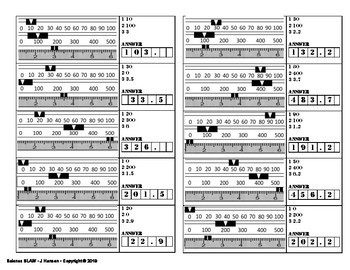
After balancing the needle on a mechanical scale, read the large weight value from the bottom bar and the small weight from the top bar. Add them together for your total weight. The needle must align exactly with the center mark. If it dips or rises, adjust the small weight accordingly. Half-marks between numbers equal 0.5 pounds.
Reading a Digital Scale Display
Do not read the number as soon as it appears. Wait until the display stops flickering and the reading stays constant for at least two seconds. Look for any indicator like Stable or a lock icon that confirms readiness. On body composition scales, wait for all metrics to fully load before stepping off.
Mastering the Tare Function for Multi-Item Weighing
The Tare button is your most powerful tool for accurate ingredient measurement. It resets the display to zero after placing a container, allowing you to weigh multiple items in one bowl without doing math.
Weighing Multiple Ingredients in One Bowl
Place an empty bowl on the scale and press Tare. Add your first ingredient until you reach the target weight. Press Tare again to reset, then add your next ingredient. Repeat this process for each ingredient. This method reduces cleanup and ensures exact ratios, which is critical for keto diets, baking, or medical nutrition.
Applying Tare in Lab Settings
In scientific work, place the weigh boat on the pan and press Tare. Add your sample slowly. Close the draft shield and wait sixty seconds for stabilization. Record the mass only after the reading locks.
Expert Note: Never exceed the scale’s maximum capacity, even briefly. It can permanently damage the load cell.
Calibrating Your Scale for Reliable Results
Calibration ensures long-term accuracy. It adjusts the scale to read correctly using a known weight.
When to Recalibrate
Recalibrate your scale after moving or shipping, following a drop or impact, if readings seem off, or periodically for precision tasks. Monthly calibration works well for kitchen scales, while lab scales may need daily calibration before critical measurements.
How to Calibrate Your Scale
Turn on the scale and wait one to two minutes for warm-up. Enter calibration mode using the button combination or menu. Place a known mass on the center of the platform and wait for stabilization. Confirm via the on-screen prompt or button press. Exit calibration mode and the scale should return to zero.
Best Practice: Use certified calibration weights for medical or scientific applications. Avoid coins or household items because they are not precise enough.
Tracking Weight Consistently for Best Results
Body weight fluctuates up to five pounds daily due to hydration, food intake, and hormones. Consistent tracking methods reveal true trends.
Weighing at the Same Time Daily
For reliable tracking, weigh once per week. The best time is morning, after using the bathroom, before eating or drinking. Wear the same clothing or weigh naked. Daily weigh-ins can mislead you, but weekly averages reveal true trends.
Using the Same Scale Always
Switching between scales introduces variability. Even two identical models can differ by one to two percent. If you are tracking progress, stick to one device.
User Insight: “I weigh every day but only look at the weekly average. It takes the emotion out of it.” Fitness tracker user
Maintaining and Storing Your Scale Properly
Proper maintenance extends the life of your scale and ensures continued accuracy.
Cleaning After Each Use
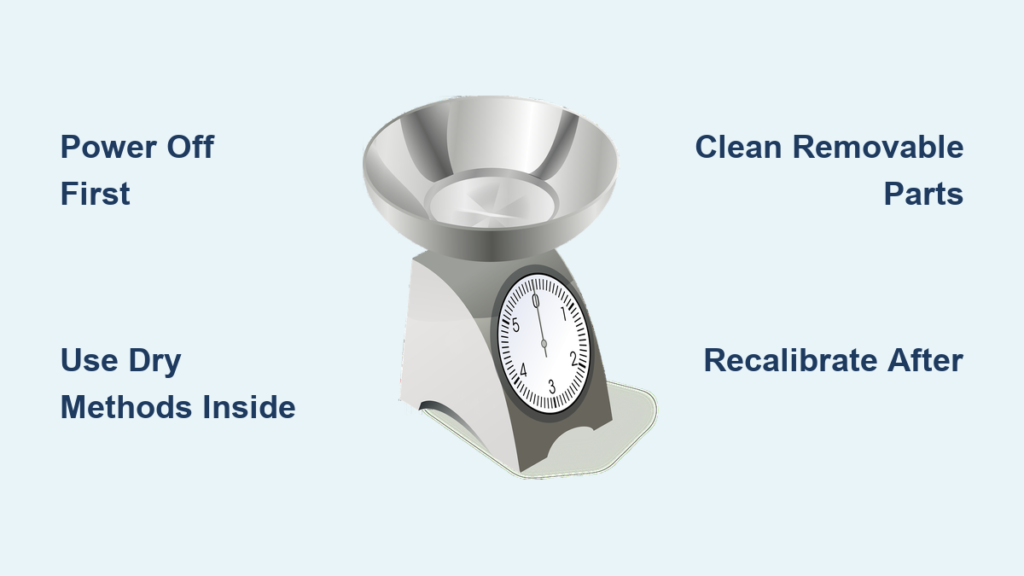
Wipe digital and mechanical scale platforms with a damp cloth. For kitchen scales, clean spills immediately, especially oils or sticky substances. Use a soft brush for lab scale pans and never use liquids unless the scale is waterproof rated.
Storing in a Dry, Covered Area
Keep kitchen and lab scales in a dry, cool place. Use the protective cover to prevent dust buildup. Remove batteries during long storage to prevent leakage.
Critical Rule: Never submerge electronic scales in water. Even water-resistant models are not waterproof.
Avoiding Common Scale Mistakes
Many accuracy problems stem from preventable user errors. Knowing what to avoid saves time and frustration.
| Mistake | Solution |
|---|---|
| Skipping Tare | Always zero after placing container |
| Using carpet | Move to hard, flat floor |
| Jumping on scale | Step on and off gently |
| Weighing in different clothes | Standardize attire or go nude |
| Ignoring calibration | Recalibrate monthly for kitchen, daily for lab |
| Relying on cups for flour | Use grams. One cup does not equal 120g every time |
Pro Tip: Volume measures like cups are inconsistent, especially for dense ingredients like almond flour or cocoa. Weighing in grams eliminates guesswork.
Optimizing Scale Use for Specific Goals
Different goals require different approaches. Tailor your technique to your specific use case.
For Weight Loss Tracking
Use a digital bathroom scale with BMI or body fat percentage. Weigh barefoot at the same time weekly. Dry your feet for accurate BIA readings. Avoid use after workouts or large fluid intake because hydration skews body fat readings. Bioelectrical impedance sends a small current through your body, and more water equals a lower fat reading.
For Baking and Keto Diets
Choose a kitchen scale with 0.1g precision, tare function, and capacity of at least 2,000g. Always use grams rather than ounces or cups. Calibrate monthly with a 100g weight.
User Feedback: “My keto results improved dramatically once I started weighing every ingredient.” Keto dieter
For Lab and Scientific Work
Use precision scales with draft shields. Operate in a vibration-free, draft-free environment. Allow one to two minutes warm-up time. Calibrate before each critical measurement. Record data via USB or RS-232 if available.
Lab Rule: Never touch the scale during measurement. Body heat and movement affect microgram readings.
Troubleshooting Common Scale Problems
When your scale acts up, these solutions often restore proper function.
Scale Shows Fluctuating Numbers
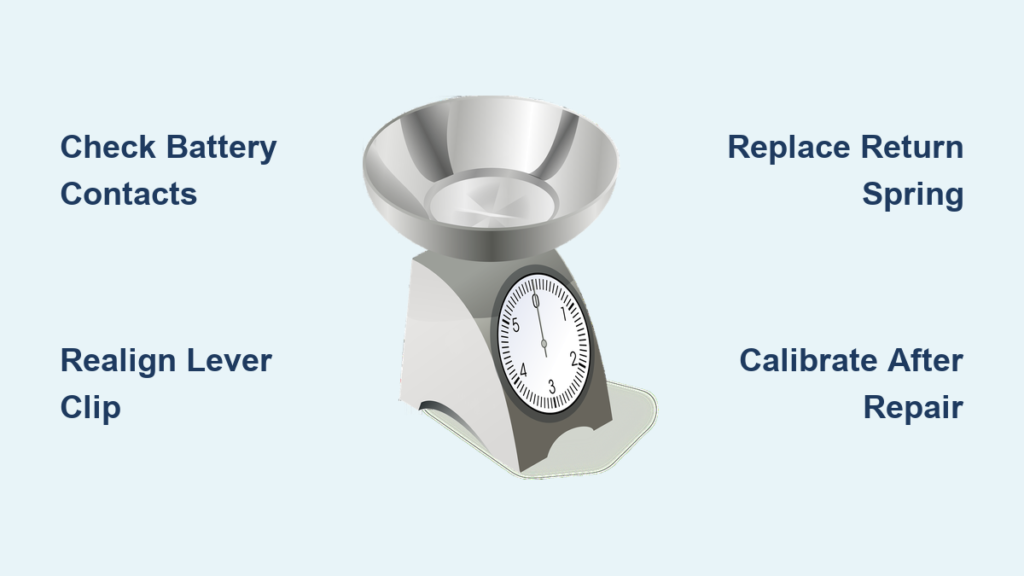
Unstable surfaces, drafts, or low batteries cause fluctuating readings. Re-level the scale, move it away from vents, and replace the batteries.
Error Message Appears
Overload, malfunction, or calibration issues cause error messages. Turn off the scale, wait thirty seconds, and restart. Consult the manual if the error persists.
No Reading on Mechanical Scale
Weights not reset, a stuck needle, or debris under the base cause this issue. Slide weights to zero, clean the base, and ensure a level surface.
Body Fat Percentage Not Displaying
Wet feet, poor contact, or incorrect stance prevent body fat readings. Dry feet thoroughly, stand centered, and follow BIA instructions.
Frequently Asked Questions About Using a Scale
What is the best time of day to weigh myself?
Weigh yourself in the morning after using the bathroom but before you eat or drink anything. This provides the most consistent baseline because your stomach is empty and hydration is stable.
Why does my body composition scale give different fat readings day to day?
Bioelectrical impedance is highly sensitive to hydration. Avoid using the scale after exercise, alcohol consumption, or large fluid intake because these factors significantly affect the readings.
How often should I calibrate my kitchen scale?
Calibrate your kitchen scale monthly with a calibration weight. If you notice inconsistent readings or after moving the scale, recalibrate immediately.
Can I use my phone charger cable with my digital scale?
Only use the charging cable that came with your scale or one specifically recommended by the manufacturer. Using incompatible chargers can damage the battery or electronics.
Why does my digital scale show different weights each time I step on?
Unstable surfaces, low batteries, or movement during weighing cause inconsistent readings. Ensure the scale is on a hard, level floor, replace the batteries, and stand still until the reading locks.
Should I weigh myself every day to track progress?
Weighing daily is not recommended because normal fluctuations can mislead you. Weigh once per week and track the weekly average to see true trends over time.
Key Takeaways for Using Your Scale Effectively
A scale is only as accurate as the person using it. The key to reliable results is consistency in method, not the device itself.
Always place your scale on a flat, hard, level surface and zero it before every use. Step on gently and wait for stable readings before recording. Use the tare function for precise ingredient measurement and calibrate regularly, especially for precision tasks. For body weight tracking, weigh weekly at the same time in consistent clothing. For cooking and baking, always use grams rather than volume measures.
Whether you are monitoring health, perfecting a recipe, or conducting research, following these steps ensures every measurement counts. Refer to your user manual for specific guidance, and when in doubt, recalibrate and retest. With the right technique, your scale becomes a powerful tool, not a source of confusion.