Stepping on a scale only to see a confusing display, a wobbly needle, or sliding weights you don’t understand can be frustrating, especially when tracking health, fitness, or precise ingredient measurements. Whether you’re using a digital bathroom scale, an old analog dial, or a clinical balance beam model, knowing how to read a pound scale correctly is essential for accurate results. Millions rely on these devices daily, yet improper use leads to inconsistent readings, misleading trends, and avoidable errors.
This guide breaks down exactly how to read every type of pound scale, digital, dial, and balance beam, with clear step by step instructions. You’ll learn how to interpret displays and dials, adjust sliding weights, avoid common mistakes, and ensure consistent, reliable measurements. Whether you’re monitoring weight loss, measuring food portions, or working in a medical setting, mastering these skills will help you get trustworthy results every time.
How to Read a Digital Pound Scale
Digital scales are the most common type found in homes and gyms due to their clarity and speed. But even small errors in setup or use can skew results.
Prepare the Digital Scale Correctly
Place your digital scale on a hard, flat surface like tile, hardwood, or concrete. Avoid carpet or uneven flooring because these can tilt the scale and misalign internal sensors. Turn it on and wait for the display to stabilize. It should read “0.0” before stepping on. If it doesn’t, press the tare or zero button to reset it. This ensures no residual weight affects your reading.
Low batteries or debris under the feet can prevent accurate calibration. Replace batteries when the low power icon appears, and clean the base regularly.
Step On and Wait for Stability
For body weight, step on barefoot with feet centered and flat. Stand still. No shifting, leaning, or holding onto walls. Movement disrupts the sensor readings. Wait 5 to 10 seconds for the number to stop fluctuating. The final displayed value is your weight in pounds, unless set to kilograms.
Some smart scales calculate BMI or body fat using bioelectrical impedance. These require bare feet for proper conduction. Follow setup prompts to input height, age, and gender for accurate estimates.
Use Tare for Kitchen Scales
In cooking, digital kitchen scales often include a tare function. Place a bowl on the scale, press tare, and the display resets to zero. Add ingredients. The weight shown is only the contents, not the container. This is critical for baking or portion control.
Example: After taring a 1.2 pound bowl, adding flour shows 1.5 pounds. That means you’ve added 1.5 pounds of flour.
How to Read an Analog Dial Scale

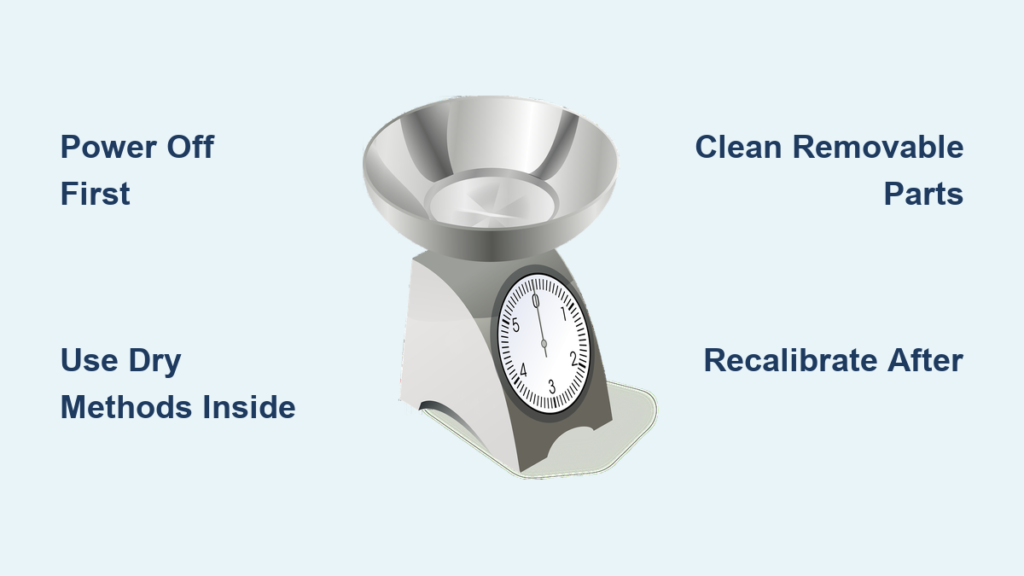
Dial scales use a mechanical spring system and a rotating needle to indicate weight. While durable, they require careful reading and regular maintenance.
Set Up and Zero the Dial
Position the scale on a level, hard floor. Check that the needle rests at zero before stepping on. If it doesn’t, locate the calibration knob, usually at the base or near the dial face, and turn it until the needle aligns with zero. Skipping this step leads to consistently high or low readings.
Read the Needle Position Accurately
Step on slowly and stand still, arms at your sides. The needle will swing and settle. Read the number it points to. Most dials mark every 1, 2, or 5 pounds. If the needle falls between marks, estimate the value.
For example, between 160 and 165 pounds, marked every 5 pounds, the midpoint is approximately 162.5 pounds. Some dials have half pound hash marks. Use those for better precision.
Take multiple readings over a few days to confirm consistency. If the needle jumps erratically, internal springs may be worn.
Avoid Common Dial Errors
Never jump on or step off abruptly. This damages internal springs. Always step off gently. Also, avoid placing the scale near heat sources or moisture, which can warp components over time.
How to Read a Balance Beam Scale
Balance beam scales are the gold standard in medical offices. They require manual adjustment but deliver highly accurate, repeatable results without batteries.
Zero and Level the Beam
Before use, slide both the large and small poises, which are the weights, fully to the left, which is the zero position. Check the balance indicator, a vertical arrow or pointer. It should be centered in the window. If not, the scale may need professional calibration.
Ensure the scale is on a solid, level surface. An unlevel floor causes imbalance and inaccurate readings.
Adjust the Large Poise First
Step on barefoot, standing centered with even weight distribution. Begin by moving the large poise, the bottom bar, in 50 or 100 pound increments to the right. Slide it one notch at a time until the balance indicator drops below center. Then, move it back one increment. This is your base weight.
Example: If the beam dips at 200 pounds but balances at 150 pounds, your base is 150 pounds.
Fine Tune with the Small Poise
Now adjust the small poise, the top bar, in 1 or 2 pound increments. Slide it slowly right until the balance indicator centers. This gives the additional pounds.
Example: Small poise at 14 pounds when balanced.
Calculate Total Weight
Add both values. Large poise, 150 pounds, plus small poise, 14 pounds, equals 164 pounds.
Estimate your weight first. If you expect approximately 170 pounds, set large poise to 150, then fine tune small poise to 20.
Always return both weights to zero after use to preserve calibration and extend lifespan.
Best Practices for Accurate Pound Scale Readings

No matter the scale type, these universal habits ensure reliable, consistent results.
Use a Hard, Flat Surface
Carpet, rugs, or soft tiles compress under weight, destabilizing the platform. Always use tile, hardwood, or concrete. The American Heart Association confirms this prevents up to 5 pound errors in readings.
Weigh at the Same Time Daily
Body weight fluctuates due to food and fluid intake, bowel movements, and hormonal shifts, especially in women. For the most accurate tracking, weigh every morning, after using the bathroom, and before eating or drinking. This routine eliminates variables and reveals true trends.
Wear Consistent Clothing
Clothing adds 2 to 8 pounds depending on fabric and layers. For progress tracking, weigh naked or in underwear. Or always wear the same light clothing, such as a t-shirt and shorts. Digital body fat scales require bare feet. Socks or shoes block electrical signals.
Stick to One Scale
Different scales, even identical models, can vary by several pounds. Switching between devices introduces noise into your data. Use one dedicated scale for tracking weight loss or health goals.
Stay Still During Measurement
Movement causes fluctuations. Stand upright, balanced, and motionless until the reading stabilizes. This is especially critical on digital and balance beam models.
How to Calibrate Your Pound Scale
Regular calibration prevents drift and maintains accuracy.
Digital Scale Calibration
Reset to zero before each use. Test with a known weight, such as a 10 pound dumbbell. If the scale reads 9.8 or 10.3, it may need recalibration. Follow manufacturer instructions. Some require placing the weight, others use a button sequence. Replace batteries when low. Weak power distorts sensor output.
Dial Scale Adjustment
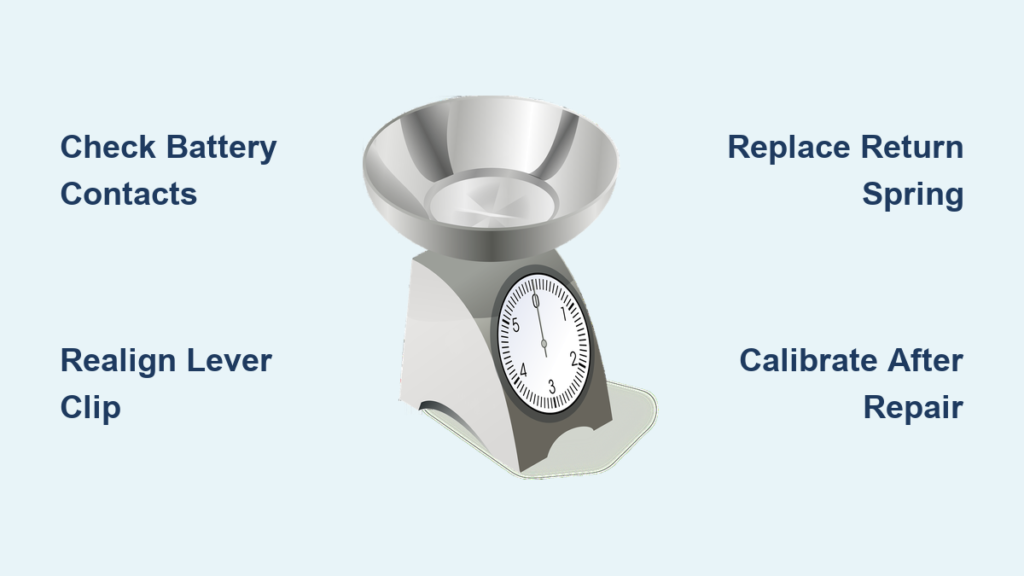
Check zero before each use. If the needle doesn’t return to zero, turn the calibration knob until it does. If adjustments fail or the needle wobbles, the spring mechanism may be worn. Consider replacement.
Balance Beam Professional Calibration
Medical offices should have these scales professionally serviced twice a year, per 1800scales.com. Test with certified calibration weights. Always return sliding weights to zero after use to reduce mechanical stress.
Common Mistakes to Avoid When Using a Pound Scale
Even small errors sabotage accuracy. Here’s how to prevent them.
Placing Scale on Carpet
Soft surfaces tilt the platform, leading to inconsistent sensor activation. Always use a hard floor.
Jumping On the Scale
Impacts damage digital sensors and analog springs. Step on gently and evenly.
Weighing After Meals
Food and liquids add 3 to 8 pounds temporarily. For true baseline weight, weigh before eating.
Ignoring the Tare Function
On kitchen scales, failing to tare means you’re weighing the container plus contents. Always press tare with the bowl on first.
Using Multiple Scales
Switching between scales adds variability. One may read 148 pounds, another 151 pounds. This isn’t progress, it’s inconsistency. Use one device only for tracking.
Special Uses for Pound Scales
Different scenarios demand specific techniques.
Medical Scale Use
Found in clinics, these often combine weight and height measurement. The vertical rod measures stature for BMI calculation. Balance beam models are preferred for long term accuracy. Always calibrate regularly, use bare feet, and record data immediately.
Kitchen Scale Precision
Used for baking, portion control, and dietary tracking. Understand unit conversions. One pound equals 16 ounces. One ounce equals approximately 28.35 grams. Use tare for multiple ingredients.
Example: Tare bowl, add flour, 1.5 pounds, tare again, add sugar, 0.8 pounds. Total equals 2.3 pounds.
Personal Weight Tracking
For fitness or weight loss, use weekly weigh ins to avoid stress from daily fluctuations. Track trends over time, not single data points. Use digital scales with memory storage for multiple users.
Weighing Non-Food Objects
Digital scales can measure packages for shipping, craft materials, or small tools or equipment. Ensure the object fits on the platform and is under the max capacity, usually 300 to 400 pounds for body scales and 5 to 11 pounds for kitchen models.
Troubleshooting Common Pound Scale Issues
Fix issues fast with these solutions.
Scale Shows Different Weights Same Day
Normal fluctuation is 2 to 5 pounds due to hydration and food. Weigh at the same time and same conditions.
Digital Scale Won’t Turn On
Cause: Dead batteries or dirt under sensors. Solution: Replace batteries and clean the base.
Dial Needle Stuck Off Zero
Cause: Misalignment or wear. Solution: Adjust calibration knob. If persistent, retire the scale.
Balance Beam Won’t Balance
Cause: Wrong poise position or uncalibrated scale. Solution: Recheck weights, return to zero, recalibrate.
Tare Function Not Working
Cause: Overloaded scale or malfunction. Solution: Remove weight, reset, and retry. Check if max capacity is exceeded.
Expert Tips for Reading Pound Scales
Trusted sources agree on best practices.
Souad Gharib, Exercise and Wellness Specialist, recommends weighing in the morning after using the toilet but before eating or drinking anything. This gives the most consistent and accurate reading.
The American Heart Association confirms using a hard, flat surface and avoiding rugs or carpets ensures accuracy.
Consumer Reports advises not holding onto walls or furniture while weighing. This shifts weight distribution and skews results.
Cleveland Clinic notes that for balance beam scales, always return sliding weights to the left after use to maintain calibration.
1800scales.com states that mechanical medical scales should be tested and calibrated by a professional at least twice a year.
Key Takeaways for Reading a Pound Scale
| Step | Action |
|---|---|
| 1 | Place scale on flat, hard, level surface |
| 2 | Ensure display reads zero, reset if needed |
| 3 | Stand barefoot, centered, weight evenly distributed |
| 4 | Remain still until reading stabilizes |
| 5 | Read digital display, dial needle, or sum sliding weights |
| 6 | Record weight for tracking |
| 7 | Step off gently and reset scale |
| 8 | Weigh at same time, same clothing, same scale |
| 9 | Calibrate regularly and maintain device |
Balance beam scales remain the most accurate for medical use. Digital scales offer convenience and features but need battery care. Dial scales are reliable but less precise and fading from use. No matter the type, consistency in routine matters more than perfect precision when tracking health trends.
By following these proven methods, you can confidently read any pound scale and trust the number you see.
Frequently Asked Questions About Reading a Pound Scale
How do I read a digital scale in pounds?
Place the scale on a hard, flat surface and turn it on. Wait for it to display “0.0” before stepping on. Step on barefoot with feet centered, stand still, and wait for the number to stabilize. The display shows your weight in pounds.
How do I read an analog dial scale?
Position the scale on a level surface and ensure the needle reads zero. Step on slowly and stand still. Read the number the needle points to. If it falls between marks, estimate the value between the nearest pound increments.
How do I read a balance beam scale?
Slide both weights to the left for zero. Step on and move the large poise in 50 or 100 pound increments until the beam dips, then back one notch. Move the small poise until the beam balances. Add both values for your total weight.
What is the tare function on a scale?
The tare function resets the scale to zero after placing a container on it. This allows you to weigh only the contents inside the container without including the container’s weight.
Why does my scale show different weights throughout the day?
Body weight fluctuates 2 to 5 pounds daily due to food, fluid intake, bowel movements, and hormonal changes. Weigh at the same time each day, preferably morning after using the bathroom, for consistent results.
How often should I calibrate my scale?
Digital scales should be tested with a known weight regularly and batteries replaced when low. Balance beam scales in medical settings should be professionally calibrated at least twice a year. Dial scales should be checked for zero accuracy before each use.
Final Thoughts on Reading a Pound Scale
Mastering how to read a pound scale requires understanding your specific scale type and following consistent measurement practices. Digital scales offer ease of use, dial scales provide mechanical reliability, and balance beam scales deliver clinical precision. The most important factor is establishing a routine: weigh at the same time daily, on the same scale, wearing consistent clothing, and on a hard, flat surface. Regular calibration and proper maintenance ensure your scale remains accurate over time. By applying these techniques, you’ll eliminate guesswork and gain confidence in your weight measurements, whether for health tracking, cooking, or medical purposes.