If you’ve ever watched a loaded dump truck pull onto a massive metal platform at a quarry or highway weigh station, you’ve witnessed a truck scale in action. These industrial systems, also known as weighbridges, are the backbone of weight enforcement, commercial trade, and logistics operations. But how does a truck scale work? At its core, it combines robust mechanical design, precision sensor technology, and digital signal processing to deliver accurate, legally enforceable weight measurements, even under extreme conditions.
A truck scale doesn’t simply “weigh” a vehicle. It captures and processes data with high reliability, ensuring compliance with transportation laws, accurate billing for freight, and protection of road infrastructure. Whether used in a landfill, agricultural facility, or at a state weigh station, the process follows a consistent sequence: load application, force conversion, signal processing, and weight display. In this guide, you will learn how each component contributes to that process, the different types of truck scales available, and why accuracy and certification matter across industries.
Core Components of a Truck Scale System
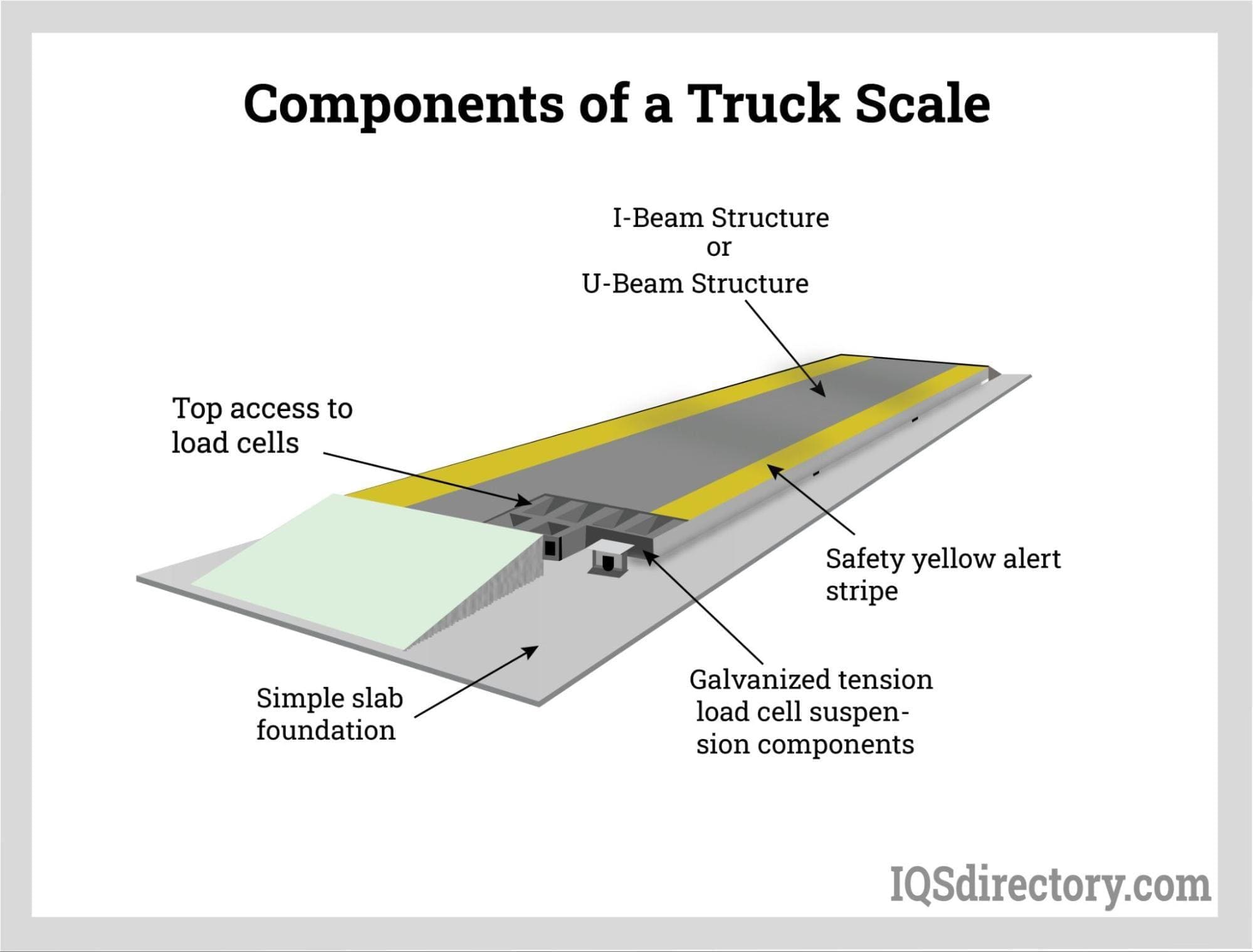
Every truck scale relies on a network of key components working in harmony. Understanding these parts is essential to grasping how the system delivers precise weight readings.
The Weighbridge: The Load-Bearing Platform
The weighbridge is the heavy-duty surface that supports the entire vehicle. Constructed from steel or reinforced concrete, it spans 35 to 70 feet long and 9.5 to 12 feet wide, large enough to accommodate multi-axle trucks.
Key functions include:
- Transfers vehicle weight evenly to load cells
- Engineered to resist deformation under loads up to 100 tons or more
- Designed for all-weather durability and long-term stability
No matter where the truck stops on the platform, the weighbridge ensures consistent weight distribution to the sensors below.
Load Cells: Converting Weight to Electrical Signals
Load cells are the heart of any truck scale. These rugged sensors transform mechanical pressure into measurable electrical output using strain gauges, which are tiny resistive elements bonded to a steel alloy structure.
When a truck drives onto the scale:
- The load cell bends slightly under pressure
- Strain gauges deform, changing electrical resistance
- This shift generates a voltage signal proportional to the applied weight
Common types used in truck scales include double-ended shear beam (most common), compression load cells, and S-type load cells for smaller platforms. Typically, 6 to 10 load cells are installed beneath the weighbridge, each sending a signal that gets combined for total weight calculation.
Modern load cells offer significant advantages. They are hermetically sealed against moisture and corrosion, capable of handling over 1 million pounds, and equipped with diagnostics to detect failures early.
The Junction Box: Signal Summing and Balancing
The junction box, also called a summing board, collects analog or digital signals from all load cells and combines them into one unified output.
Key functions include:
- Balances signal strength across load cells
- Filters electrical noise that could distort readings
- Protects against surges and lightning damage when properly equipped
In digital systems, this step may occur inside the load cell itself, enabling smarter, self-diagnosing scales.
The Weighing Indicator: Display and Control Center
The weighing indicator is the user-facing terminal that shows the final weight. It receives the summed signal and converts it into a readable number, often down to the nearest 10 or 20 pounds.
Features include:
- Large, backlit digital display
- NTEP certification for legal-for-trade use
- Tare, zero, and unit-switching functions
- Connectivity via USB, Ethernet, RS-232, or wireless
Popular models like the DD1050, T400, and D70ES support integration with ticketing software and remote monitoring.
How Weight Is Measured: Step by Step
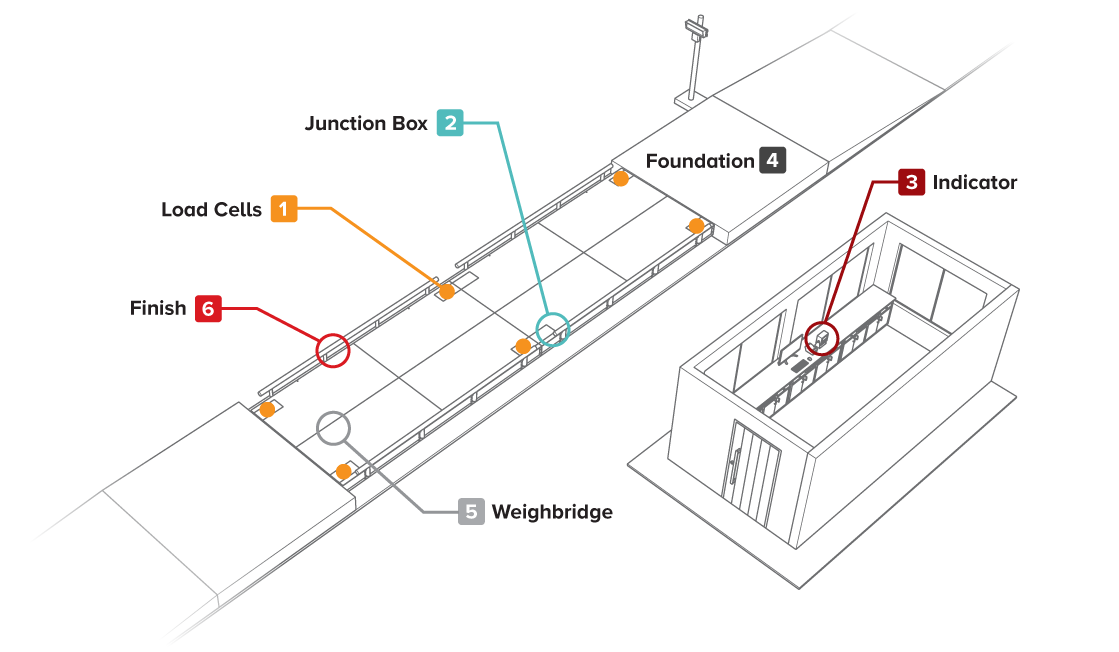
Understanding how a truck scale works means following the journey from tire to readout. The process follows five distinct stages.
Stage 1: Vehicle Entering the Scale
The truck drives fully onto the weighbridge and comes to a complete stop during static weighing. All axles must be positioned over the platform. Operators wait for the indicator to stabilize, as flashing weight values mean the reading has not yet locked in.
Stage 2: Weight Transfer to Load Cells
The weighbridge channels the force downward through support points, pressing directly on the load cells. Each cell responds to the localized load, generating a micro-voltage signal based on strain.
Stage 3: Signal Combination in the Junction Box
All individual outputs are routed to the junction box where they are normalized, balanced, and combined into a single analog or digital stream. This prevents discrepancies caused by uneven loading or minor cell variations.
Stage 4: Indicator Calculating Total Weight
The weighing terminal receives the summed signal, applies calibration factors, and computes the total weight. It then displays the result with options to subtract tare (empty vehicle weight), print a ticket, or save data to memory or cloud storage.
Stage 5: Data Integration Into Business Systems
Modern indicators link to software that automates workflows, generates invoices, tracks shipments, flags overweight vehicles, and syncs with ERP or accounting platforms. This seamless flow turns raw weight data into actionable business intelligence.
Installation Types: Surface vs. Pit-Mounted
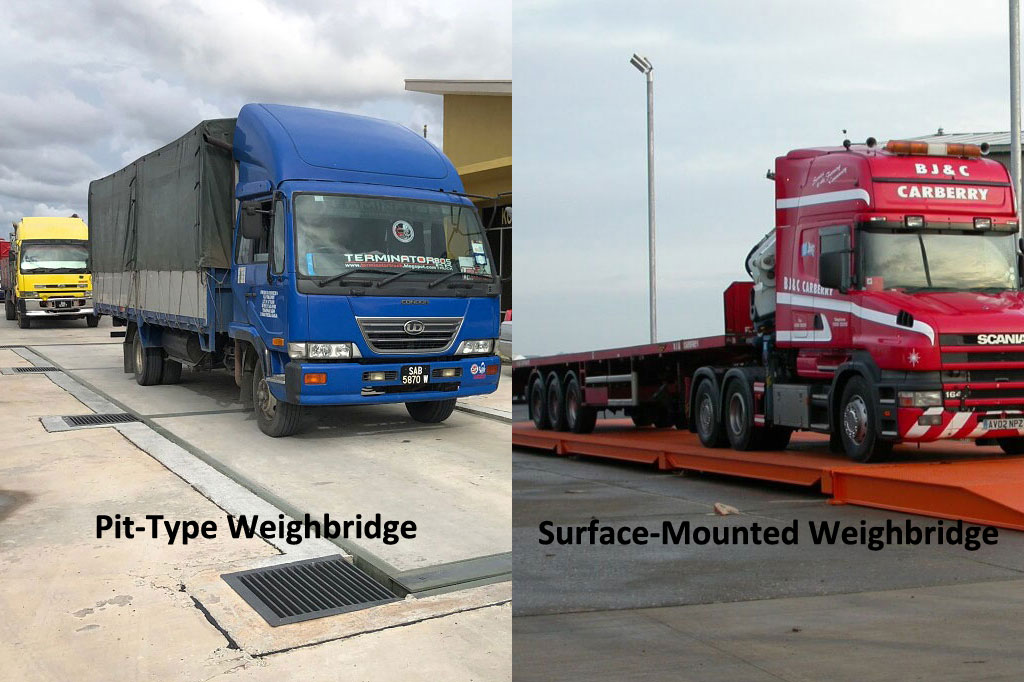
The way a truck scale is installed affects usability, safety, and site requirements. Choosing the right configuration depends on your operational needs and budget.
Surface-Mounted Scales
Surface-mounted scales are installed above ground with approach ramps. This method offers faster, lower-cost setup with no excavation required and is ideal for temporary or mobile operations.
Advantages include quick installation and easier relocation. The tradeoff is that these scales require extra space for ramps and maneuvering room.
Pit-Mounted Scales
Pit-mounted scales are set flush with the ground inside a concrete trench. This configuration provides a smooth, level driving surface and reduces tripping hazards while improving traffic flow.
These scales are best for high-volume sites like landfills, quarries, and weigh stations. However, they come with higher costs due to excavation, drainage, and structural work. Proper drainage and ventilation are essential to prevent water and debris buildup.
Weighing Methods Compared
Not all weighings are the same. The method used depends on accuracy needs and throughput goals. Understanding these differences helps you choose the right approach for your operation.
Static Weighing (Full Vehicle)
Static weighing requires the truck to stop completely while all axles are weighed at once. This method delivers the highest accuracy and is NTEP-approved for legal transactions. It is used when selling goods by weight such as grain, scrap metal, or aggregates.
Time required is 2 to 5 minutes per vehicle, with accuracy reaching plus or minus 20 pounds or better.
One-Axle Weighing
One-axle weighing involves the truck moving forward slowly, axle by axle. Each axle group is weighed individually and summed to calculate total weight. This method is less accurate than static weighing and is not legal for trade, but it is useful for check weighing or internal audits.
Weigh-in-Motion (WIM)
Weigh-in-motion systems allow vehicles to pass over sensors at low speed (3 to 10 mph) for instant screening without stopping. This method is common at highway enforcement points and helps reduce congestion by filtering out compliant trucks.
Accuracy is lower at plus or minus 5 to 10 percent due to dynamic forces, but it significantly increases throughput and identifies potential overloads for secondary inspection.
Types of Truck Scales
Different applications call for different scale designs. Matching the right type to your operation ensures optimal performance and cost efficiency.
Full-Size Platform Scales
Full-size platform scales are permanent, fixed installations with steel or concrete decks. They are NTEP-certified for commercial use and represent the most accurate and durable option for high-traffic environments.
These scales are commonly used in quarries, recycling centers, and agricultural cooperatives.
Axle Scales
Axle scales are compact platforms that weigh one axle at a time. They can be portable or permanent and offer lower cost with easier deployment.
These scales are common in DOT inspections, farm gates, and temporary job sites. They are not suitable for legal sales but excel at compliance checks.
Portable Truck Scales
Portable truck scales feature lightweight, modular frames with interlocking decks that can be deployed on dirt, gravel, or asphalt. They achieve accuracy within plus or minus 1 percent of capacity.
These scales were first used in 1929 by the Los Angeles Motor Patrol to weigh trucks wheel-by-wheel. They are ideal for logging roads, remote construction sites, and emergency response operations.
Rail Weighbridges
Rail weighbridges are designed to weigh trains and railcars using three main methods. The dynamic track weighbridge uses load cells under a short rail section for speeds up to 10 km/h. Strain gauges embedded in rail measure deformation as trains pass for speeds up to 30 km/h. Weighing sleepers are instrumented railroad ties with built-in load cells.
All methods allow bidirectional weighing and calculate gross, tare, and net cargo weights. These scales are used in freight terminals, hump yards, and maintenance depots.
Accuracy and Legal Certification
For commercial use, accuracy is not optional. It is regulated to ensure fair trade practices and protect consumers and businesses alike.
What Is NTEP Certification?
NTEP (National Type Evaluation Program) certifies scales as Legal for Trade in the United States, meaning they meet strict standards in NIST Handbook 44. To earn NTEP approval, scales undergo repeatability testing, environmental resilience checks, and interference resistance evaluation.
Verification occurs through the VCAP (Verified Conformity Assessment Program).
When Is NTEP Required?
You need an NTEP-certified scale if you sell grain, aggregates, or scrap metal by weight, charge disposal fees at a landfill, invoice for freight based on weight, or operate in regulated commerce.
Non-NTEP scales are acceptable for internal use such as checking loads or tracking inventory, but they cannot be used for billing or commercial transactions.
Industries That Rely on Truck Scales
Truck scales are mission-critical across many sectors. Each industry has specific requirements based on the materials handled and operational conditions.
Aggregates and Mining
These operations weigh sand, gravel, ore, and other extracted materials. Scales must endure dust, vibration, and heavy impacts, and they are often custom-designed for off-road haul trucks.
Agriculture
Agricultural operations measure grain, feed, and livestock. Weatherproof designs with easy cleaning are essential, and integration with batching systems supports bulk bag operations.
Waste Management
Landfills bill by the pound, making accurate weighing critical. Scales track daily tonnage and customer usage while helping prevent fraud and ensure regulatory compliance.
Construction
Construction operations verify concrete, asphalt, and steel deliveries while confirming loads do not exceed bridge limits. On-site scales reduce disputes with suppliers.
Transportation and Logistics
These operations validate cargo weight before shipment to avoid fines for overweight trucks and protect roads and bridges from structural damage.
Energy and Utilities
This sector weighs wind turbine blades, transformers, and oilfield equipment. Full traceability from production to delivery is essential, and remote monitoring via cellular or cloud links is standard.
Chemical and Gas Handling
Precision weighing for hazardous materials requires explosion-proof load cells and indicators. Safety-compliant installations in volatile environments are mandatory.
Calibration and Maintenance
Even the best truck scale drifts over time. Regular care ensures lasting accuracy and prevents costly downtime.
Why Calibration Matters
Over time, load cells can degrade due to environmental exposure, heavy usage, and mechanical stress. Without recalibration, readings become unreliable, risking financial loss or regulatory violations.
Calibration Tools and Methods
Common calibration tools include test carts (portable units with certified weights), test trucks (vehicles with known, traceable tare weights), and scale test cars (special railcars for rail scale calibration).
The calibration process involves applying known weights at multiple points on the deck, adjusting indicator settings, and verifying consistency across the platform. Annual calibration is recommended, or immediately after repairs or major impacts.
Predictive Diagnostics
Advanced systems like B-TEK’s TruDigital Technology offer real-time error logging, remote diagnostics via Nexia monitoring, automatic alerts for signal loss or cell failure, and data retention during power outages. Monthly diagnostic checks help catch issues early before they become major problems.
Environmental and Operational Factors
Truck scales operate in tough conditions. Design accounts for these challenges to ensure reliable performance year after year.
Durability by Design
Steel decks receive anti-corrosion coatings while concrete decks feature rebar reinforcement. Load cells are sealed and rated for IP68 or higher to withstand extreme heat, cold, rain, and snow. These scales are built to last decades in harsh environments.
Drainage and Protection
Pit-mounted scales require sloped floors, sump pumps, and ventilation to prevent condensation and water buildup. Surge protectors guard electronics from lightning strikes, which are common in open areas.
Traffic Management Integration
High-efficiency sites use automated systems including loop detectors to sense vehicle presence, traffic lights to control flow, gates and barriers to prevent bypass, LED displays for remote viewing, and intercoms for operator communication. Fully automated terminals let drivers check in via mobile apps or RFID.
Software and Data Integration
Modern truck scales go beyond weight measurement. They connect seamlessly to your business systems for comprehensive data management.
ScaleSoft Suite
ScaleSoft Lite provides basic ticketing for single scales. ScaleSoft Standard offers full truck management with reporting. Unattended Terminal Software enables self-service with mobile access.
Business Management Tools
STIO (Truck In/Out) tracks entry and exit with photo eyes. Data Studio creates custom reports and dashboards. Data Wedge provides keyboard emulation for ERP integration. Relay Server syncs data across multiple locations. ScaleSuite connects to accounting and inventory systems. DataView offers live monitoring with customizable views.
Remote Access Options
DD Cellular Kit enables remote monitoring via cell network. ASP.NET integration provides browser-based control and reporting. Real-time access means you can troubleshoot issues from anywhere, reducing downtime and maintenance costs.
Key Takeaways on How a Truck Scale Works
A truck scale is far more than a metal platform. It is a precision measurement system built for industrial demands. From the moment a truck rolls on, the process follows a clear path.
First, weight presses down on the weighbridge. Second, load cells detect force and generate signals. Third, the junction box combines and balances those signals. Fourth, the indicator calculates and displays total weight. Fifth, software records and shares data across systems.
Whether it is a static steel-deck scale at a quarry or a portable axle scale on a logging road, each system is engineered for accuracy, durability, and compliance. NTEP certification ensures fairness in commercial transactions, while predictive diagnostics and remote monitoring keep downtime low.
As technology advances, truck scales are becoming smarter, automating workflows, reducing human error, and integrating seamlessly into digital supply chains. Knowing how a truck scale works helps you choose the right system, maintain accuracy, and ensure compliance. Whether you are managing a fleet, running a landfill, or shipping raw materials, a reliable truck scale is a profit protector, a safety enforcer, and a data hub all in one.
Frequently Asked Questions About Truck Scales
How does a truck scale measure weight accurately?
A truck scale measures weight through load cells containing strain gauges. When a vehicle’s weight presses down on the weighbridge, the load cells deform slightly, changing electrical resistance. This change produces a voltage signal proportional to the applied weight, which gets combined and processed to display the final reading.
What is the difference between static and weigh-in-motion truck scales?
Static scales require vehicles to stop completely for accurate measurement, delivering precision within plus or minus 20 pounds. Weigh-in-motion (WIM) scales let trucks pass through at low speeds (3 to 10 mph) for quick screening, though accuracy is lower at plus or minus 5 to 10 percent due to dynamic forces.
Do all truck scales need NTEP certification?
NTEP certification is required only for commercial transactions where goods are bought or sold by weight, such as at landfills, grain elevators, or scrap metal facilities. Internal check weighing or inventory tracking does not require NTEP certification.
How often should a truck scale be calibrated?
Truck scales should be calibrated annually as a standard practice. Calibration is also recommended after any major repairs, significant impacts, or when accuracy issues are suspected.
Can truck scales be used in all weather conditions?
Yes, modern truck scales are designed for all-weather operation. Load cells are hermetically sealed (IP68 rated) to resist moisture, dust, and corrosion. Both steel and concrete deck constructions withstand extreme temperatures, rain, snow, and UV exposure.
What industries use truck scales the most?
Truck scales are essential across many sectors including aggregates and mining, agriculture, waste management, construction, transportation and logistics, energy utilities, and chemical handling. Any industry that buys, sells, or transports materials by weight relies on these systems.