Mettler Toledo scale repair becomes necessary when precision instruments fail in labs, production lines, or quality control environments. A malfunctioning scale can disrupt compliance, waste expensive materials, or delay critical operations. This guide provides everything you need to diagnose failures, choose the right service provider, and restore your equipment to full functionality.
You will learn how to identify common problems like failed relays and limit switches, decide between authorized and third-party repair services, and implement preventive maintenance that minimizes future downtime. The information covers both warranty-protected units and legacy models still in operation.
Choose Authorized or Third-Party Repair
Selecting the right repair service depends on your scale’s warranty status, model age, and operational urgency. Understanding the differences between authorized and third-party providers helps you make an informed decision that protects your investment and ensures compliance.
Use Authorized Service for Warranty Units
If your Mettler Toledo scale remains under warranty, always choose an authorized service provider such as UniFide CST. Factory-trained technicians use genuine Mettler Toledo parts and follow strict protocols that maintain ISO, FDA, and GLP compliance. Unauthorized repairs can void your warranty and compromise calibration traceability. These providers also offer firmware updates, compliance documentation, and upgrade paths for older models.
Hire Third-Party Experts for Legacy Models
For out-of-warranty or discontinued units, third-party providers like Trescal deliver fast, cost-effective repair solutions. They support over 150 Mettler Toledo models, including XS, PB, XP, and PL series, with global logistics and in-house diagnostics. While they may not use OEM parts exclusively, their multi-vendor expertise allows rapid turnaround when original components are obsolete. This makes them ideal for keeping legacy equipment operational without costly replacements.
Compare Service Provider Capabilities
| Feature | Authorized Providers | Third-Party Services |
|---|---|---|
| Technician Training | Factory-certified | Experienced, multi-brand |
| Replacement Parts | Genuine Mettler Toledo only | OEM or compatible alternatives |
| Warranty Impact | Preserved | May be voided if not compliant |
| Turnaround Time | Standard lead times | Often faster due to stock availability |
| Compliance Support | Full GLP/GMP/FDA documentation | Varies by provider |
| Cost | Higher (premium for authenticity) | Competitive, budget-friendly |
Diagnose Common Scale Failures
Accurate diagnosis is the first step toward successful Mettler Toledo scale repair. Understanding common failure points helps you identify issues quickly and determine whether professional service is required.
Identify Relay and Switch Problems
Relays and limit switches are frequent failure points in Mettler Toledo scales. In the PL3000 case, pressing the platform caused the display to shut off, indicating a failed AC 535 series relay. A healthy relay shows near-zero resistance, typically under 1 Ω, on normally closed contacts. The measured 2.5 Ω reading indicated contact degradation. Even when energized, the relay failed to switch, confirming mechanical or electrical failure.
Two limit switches monitor platform movement: one positioned above the mechanism and one below. Voltage testing revealed 31 V across the switch when depressed, dropping to 0 V upon release. This confirmed power delivery but pointed to faulty relay logic as the root cause.
Test Load Cells and Mechanical Platforms
Load cell issues often present as drifting readings, zero instability, or overload errors. To test load cells, disconnect power and remove the base cover. Use a multimeter to check mV/V output at rest, which should be approximately 0 mV. Apply a known weight and verify the output increases linearly. Compare readings to the specification sheet.
Mechanical damage such as bent platforms or misaligned stops can mimic electronic faults. Inspect for physical deformation, corrosion on mounting points, and loose or cracked fasteners. Misalignment often results from shock loading or improper handling.
Check Display and Control Boards
Display failures may stem from loose ribbon cables, corroded connectors, or failed driver circuits. Power down the unit and inspect flex cables between display and main board. Look for solder joints with cold cracks and signs of moisture ingress or burn marks. A flickering or blank screen after platform actuation suggests a control board interruption, often triggered by failing relays disrupting voltage supply.
Replace Critical Components Correctly
When components fail, proper replacement procedures ensure long-term reliability. Following correct sourcing and installation methods prevents premature failures and maintains measurement accuracy.
Source Relays When OEM Parts Are Unavailable
The AC 535 series relay used in many Mettler Toledo models is no longer available as an OEM part. In such cases, technicians must source alternatives. A successful repair used a new-old-stock Zettler relay from Poland, costing $40 and shipped via air freight. Though not branded Mettler Toledo, it matched electrical specs including 24 V AC coil voltage, SPDT contact configuration, and 2 A current rating.
Always verify pinout compatibility, mounting dimensions, and switching speed before installation. Test the replacement under load before final assembly to ensure reliable operation.
Install Genuine Parts for Long-Term Reliability
When available, use genuine Mettler Toledo components. Third-party or compatible relays may function initially but degrade faster due to inferior materials or tolerances. For regulated environments including pharmaceutical and food applications, only OEM parts ensure audit readiness and performance consistency. Keep spare relays, fuses, and platform stops on hand for critical systems to minimize downtime.
Follow Safe Disassembly Procedures
To access internal components safely, power off and unplug the scale first. Remove the die-cast aluminum cover secured by two screws. Note the inverted pie-plate design with inner and outer drip rings that protect against spills. Label all cables and connectors before disconnecting to ensure proper reassembly. Handle circuit boards with ESD precautions and avoid touching gold contacts or IC pins.
Calibrate After Every Major Repair

Calibration is mandatory following any repair that affects mechanical structure, load cells, or control electronics. Even replacing a relay that interrupts power can alter zero stability or response time, requiring verification and adjustment.
Perform Post-Repair Calibration
Begin calibration by warming up the scale for 30 minutes. Place the unit on a level, vibration-free surface. Use traceable reference weights such as Class E2 or F1 standards. Start with zero calibration, then apply known weights incrementally. Record deviations and adjust if necessary. For advanced models like XPE and XP, use built-in calibration menus or connected software such as LabX.
Maintain Traceability and Compliance
In regulated industries, calibration must include date and time stamp, technician ID, environmental conditions including temperature and humidity, before-and-after error values, and certificate of calibration. Store records digitally for audits. Recalibrate after every repair, weekly for high-use applications, and monthly for general lab use.
Prevent Future Failures Proactively
Implementing preventive strategies reduces repair frequency and extends equipment lifespan. A proactive maintenance approach protects your investment and ensures consistent measurement accuracy.
Implement Preventive Maintenance Plans
Reduce repair frequency with scheduled maintenance. Perform monthly cleaning of platform and housing per manual instructions. Conduct quarterly inspections of limit switches and relays. Check load cell connections and grounding biannually. Complete full calibration and firmware checks annually. Document each service event to track wear trends over time.
Train Operators to Avoid Damage
Improve longevity through proper handling procedures. Never exceed maximum capacity. Avoid dropping items onto the pan. Use protective covers in wet or dusty areas. Turn off the scale when not in use for extended periods. Label scales clearly with maximum weight and usage instructions to prevent operator errors.
Monitor Performance Trends
Use built-in diagnostics on smart models such as XPE and SevenCompact to detect early drift. Flag unstable zero returns and alert on abnormal temperature readings. Set thresholds for automatic alerts via USB or Ethernet connections. Trend data helps predict failures before they halt production.
Repair vs. Replace: Make the Right Call
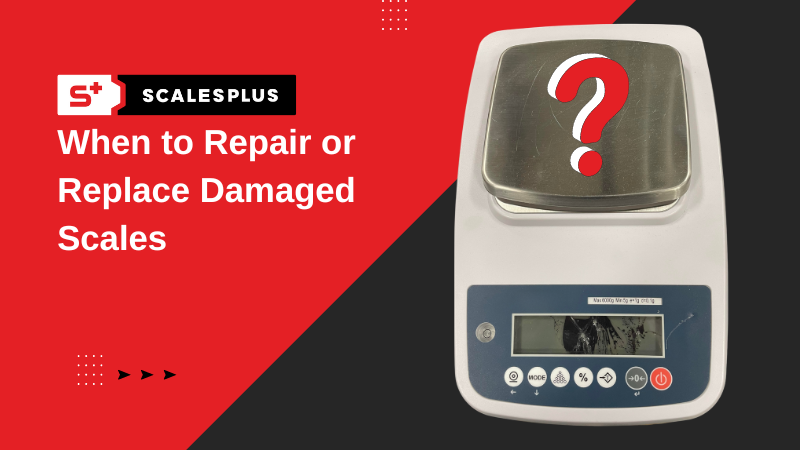
Evaluating whether to repair or replace a Mettler Toledo scale requires careful analysis of cost, technology, and operational requirements. Making the right decision protects your budget while ensuring measurement capability.
Keep Legacy Scales Running Cost-Effectively
Many Mettler Toledo scales including PL3000, AG204, and PB series remain reliable beyond 10 years with proper care. If the chassis, load cell, and base structure are intact, repair is often more economical than replacement. Third-party services extend life by sourcing obsolete parts and refurbishing control boards. Consider repair when core components are undamaged, replacement cost exceeds 60% of new unit price, and calibration history shows stable performance.
Upgrade When Technology Limits Accuracy
Replace older models when parts are no longer available, accuracy drifts beyond acceptable limits, or the scale lacks data connectivity options such as USB, Ethernet, or RS232. Also upgrade when unable to comply with current GLP or FDA requirements. Modern replacements offer touchscreen interfaces, automated calibration, cloud integration, and enhanced overload protection. Evaluate ROI based on uptime, compliance risk, and labor savings.
Key Takeaways for Mettler Toledo Scale Repair
Successful Mettler Toledo scale repair depends on precise diagnosis, correct part selection, and thorough post-repair validation. Prioritize authorized service for warranty units to preserve coverage and ensure compliance. Leverage third-party experts like Trescal for legacy models where cost-effectiveness and快速 turnaround matter most. Always calibrate after any hardware intervention affecting sensors or control systems. Adopt preventive maintenance schedules including monthly cleaning, quarterly component inspections, and annual calibration verification. Train operators on proper handling procedures to minimize mechanical stress and extend equipment life. With proper care, Mettler Toledo scales deliver reliable precision for a decade or more, making repair a smart investment compared to premature replacement.
Frequently Asked Questions About Mettler Toledo Scale Repair
How do I know if my Mettler Toledo scale needs repair?
Common signs include display shutdown when pressing the platform, drifting readings, zero instability, overload errors, flickering screens, and unresponsive controls. If calibration fails or accuracy degrades beyond acceptable tolerances, professional diagnosis is needed.
Can I repair my Mettler Toledo scale myself?
Basic cleaning and maintenance can be performed by operators. However, electrical repairs, relay replacement, and load cell testing require professional expertise. Improper repairs can void warranties and compromise measurement accuracy.
What does Mettler Toledo scale repair cost?
Costs vary based on model, issue severity, and parts availability. Minor repairs such as relay replacement may cost $150 to $300. Major repairs involving load cells or control boards can exceed $500. Third-party services often offer competitive pricing compared to authorized providers.
How long does Mettler Toledo scale repair take?
Turnaround time depends on parts availability and provider workload. Third-party services often complete repairs faster due to available stock. Authorized providers may take longer but ensure OEM parts and warranty preservation. Expect 5 to 15 business days typically.
Should I repair or replace my old Mettler Toledo scale?
Repair makes sense when the chassis and load cell remain sound, replacement costs exceed 60% of new unit price, and calibration history shows stable performance. Replace when parts are obsolete, accuracy cannot be restored, or modern features like data connectivity are required for operations.
How often should Mettler Toledo scales be calibrated?
Calibrate after every repair. For high-use applications, calibrate weekly. General lab use requires monthly calibration. Document all calibration events for compliance and audit purposes.