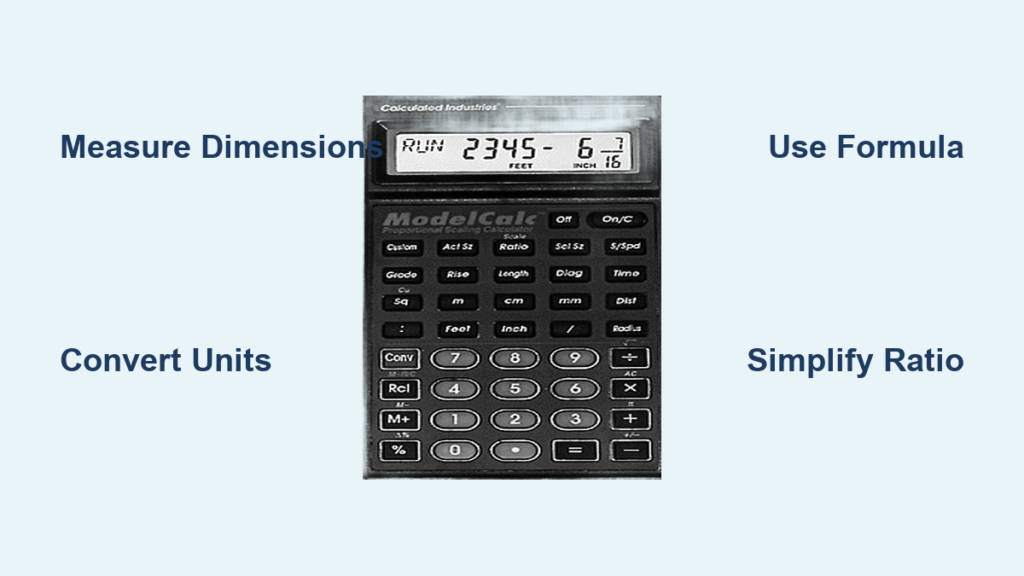
Converting feet to inches is a fundamental skill used in everyday tasks, from measuring rooms for furniture to reading construction blueprints. Whether you are a student, DIY enthusiast, or professional, knowing how to scale feet to inches ensures accuracy in your projects. The key is simple: one foot equals 12 inches. This one-to-12 ratio powers every conversion. In this guide, you will learn step-by-step methods for converting whole feet, decimal feet, and mixed measurements into total inches. You will also discover advanced applications like scaling for architectural drawings and converting area or volume units.
Use the Basic Conversion Formula
The core rule for changing feet into inches is straightforward multiplication. Since each foot contains exactly 12 inches, you scale up by multiplying your feet value by 12 to get the equivalent inches.
Multiply Feet by 12
The formula is simple: Inches = Feet × 12. This formula works for any number, whether whole, decimal, or fraction.
Step-by-Step Example
Start with the measurement in feet. Multiply by 12. Label the result with the unit.
- Start with the measurement in feet (example: 7 ft)
- Multiply by 12: 7 × 12 = 84
- Label the result: 84 inches
More Examples
Here are additional conversions showing how the formula works with different values.
3 ft converts to 36 inches (3 × 12 = 36)
1.5 ft converts to 18 inches (1.5 × 12 = 18)
0.25 ft converts to 3 inches (0.25 × 12 = 3)
This method is fast and essential for quick estimates or calculations involving single-unit measurements.
Convert Mixed Measurements to Total Inches
Many real-world measurements combine feet and inches, such as 6 ft 4 in. To use them in math or comparisons, convert the entire length into total inches using a combined formula.
Apply the Combined Formula
Total inches equals feet multiplied by 12, plus the remaining inches. This breaks the measurement into two parts: the feet converted to inches, plus any remaining inches.
Example: 5 ft 7 in
Convert the feet portion first, then add the extra inches to get your total.
- Convert feet: 5 × 12 = 60 inches
- Add extra inches: 60 + 7 = 67 inches
The full length is now expressed as a single number, making it easier to work with in equations or digital tools.
Common Mistakes to Avoid
Do not add feet and inches directly together. Five feet plus seven inches does not equal 12. Always convert feet first, then sum the result. Double-check your work by reversing the process: 67 inches divided by 12 equals 5.583 feet, which converts back to 5 ft 7 in.
Reference Common Conversions Fast
Memorizing key conversions saves time and improves accuracy, especially during home projects or exams. Keep these common values handy for quick reference.
Quick Feet-to-Inches Chart
This chart shows the most frequently used conversions for easy lookup.
One foot equals 12 inches
Two feet equals 24 inches
Three feet equals 36 inches
Four feet equals 48 inches
Five feet equals 60 inches
Six feet equals 72 inches
Seven feet equals 84 inches
Eight feet equals 96 inches
Nine feet equals 108 inches
Ten feet equals 120 inches
This pattern continues linearly. Just keep adding 12 for each additional foot. Twelve feet equals 144 inches, and 15 feet equals 180 inches. Save this chart on your phone or print it for instant access during shopping, remodeling, or sketching plans.
Scale for Architectural Drawings Using Quarter-Inch Scale
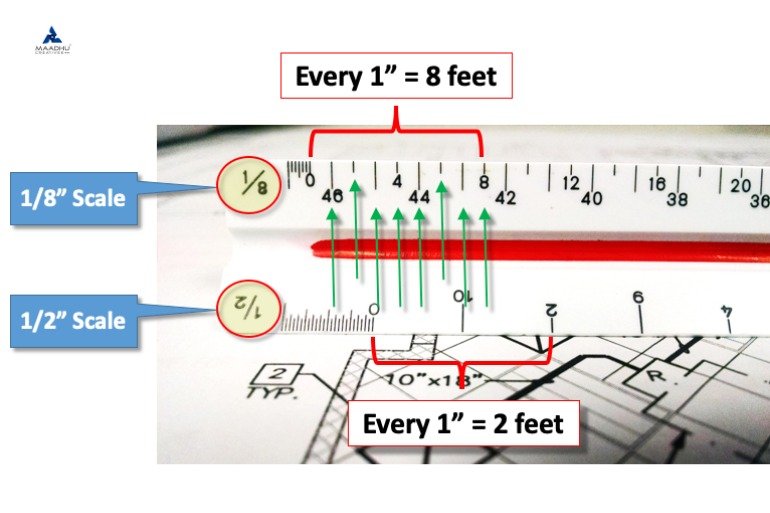
In design and construction, scaling feet to inches often means reducing real-world dimensions to fit on paper using a scale ratio, not unit conversion. The quarter-inch scale is the most common standard used in floor plans and blueprints.
Understand the Quarter-Inch Scale
One-quarter inch on paper equals one real-world foot. This is also written as one-quarter inch equals one foot. This is a reduction scale, commonly used in architectural drawings, that allows large structures like houses to be drawn on small sheets while maintaining accurate proportions.
Convert Real Size to Scaled Drawing Size
Follow these steps to convert real-world measurements to drawing measurements.
Step 1: Turn Feet and Inches into Decimal Feet
Decimal feet equals whole feet plus inches divided by 12. This converts the measurement to a single decimal number.
Example: 8 ft 6 in
Six divided by 12 equals 0.5. Eight plus 0.5 equals 8.5 decimal feet.
Step 2: Multiply by 0.25
Scaled length in inches equals decimal feet multiplied by 0.25. This applies the quarter-inch scale ratio.
Example continued: 8.5 × 0.25 = 2.125 inches. This equals 2 and one-eighth inches. So an 8 ft 6 in wall appears as 2 and one-eighth inches on the drawing.
Quick Reference Table for Quarter-Inch Scale
Use this table for common architectural measurements at the quarter-inch scale.
Six feet converts to 1.5 inches (1 and one-half inches) on the drawing
Eight feet 6 in converts to 2.125 inches (2 and one-eighth inches) on the drawing
Ten feet converts to 2.5 inches (2 and one-half inches) on the drawing
Twelve feet 3 in converts to 3.0625 inches (3 and one-sixteenth inches) on the drawing
Use a ruler marked in eighths or sixteenths to measure these scaled lines accurately.
Handle Area: Square Feet to Square Inches

When dealing with surface area like flooring or painting, convert square feet to square inches using the two-dimensional expansion of the 12-inch rule.
Apply the Area Conversion Formula
Square inches equals square feet multiplied by 144. This works because one foot times one foot equals 12 inches times 12 inches, which equals 144 square inches.
Example: 5 sq ft
Five multiplied by 144 equals 720 square inches. This conversion is useful when buying tiles sold in square inches, calculating coverage for sealants or adhesives, or matching units across measurement systems. Always ensure both dimensions are in the same unit before multiplying length by width.
Convert Volume: Cubic Feet to Cubic Inches
For three-dimensional spaces like storage bins or concrete pours, scale cubic feet to cubic inches using the full three-dimensional expansion.
Use the Volume Formula
Cubic inches equals cubic feet multiplied by 1,728. This works because one cubic foot equals 12 inches times 12 inches times 12 inches, which equals 1,728 cubic inches.
Example: 3 cu ft
Three multiplied by 1,728 equals 5,184 cubic inches. This helps when comparing container sizes, calculating displacement or material volume, or working with engineering specs that require inch-based units. Keep this multiplier handy for precise volumetric calculations.
Switch to Metric: Feet to Centimeters
If you need metric output for international use or science, convert feet to centimeters through inches using a two-step method.
Two-Step Method
First, convert feet to inches by multiplying by 12. Second, convert inches to centimeters by multiplying by 2.54. Since 12 times 2.54 equals 30.48, you can also multiply feet directly by 30.48.
Example: 6 ft
Six multiplied by 12 equals 72 inches. Seventy-two multiplied by 2.54 equals 182.88 cm. Alternatively, six multiplied by 30.48 also equals 182.88 cm. Use this when traveling abroad, ordering materials from global suppliers, or submitting homework with metric requirements.
Prevent Common Conversion Errors
Even small mistakes can lead to costly errors in building or crafting. Avoid these frequent pitfalls to maintain accuracy in your work.
Watch for These Mistakes
Watch for confusing scale with unit conversion. Drawing scales like one-quarter inch equals one foot are not the same as changing units. Watch for forgetting to convert inches in mixed units. Five feet 3 in is not 5.3 ft; it is 5.25 ft. Watch for rounding too early. Keep decimals until the final step. Watch for mislabeling units. Writing in instead of ft causes confusion.
Pro Tips for Accuracy
Use a calculator for decimal or complex values. Verify by reversing the conversion: convert back to check your work. Memorize benchmarks: 0.25 ft equals 3 in, 0.5 ft equals 6 in, and 0.75 ft equals 9 in. Label every number with its unit during calculations. These habits build confidence and precision.
Apply Conversions in Real Life
Understanding how to scale feet to inches has practical value across many fields and everyday situations.
Home Improvement
Measure walls for paint or wallpaper in consistent units. Cut baseboards or trim using exact inch lengths derived from feet measurements.
Construction and Architecture
Read blueprints using quarter-inch scale to estimate real dimensions. Translate field measurements into scaled drawings for planning.
Education
Solve math problems involving unit consistency. Master dimensional analysis for physics or engineering courses.
Manufacturing and Engineering
Ensure parts fit by converting between feet and inches accurately. Calculate raw material needs precisely.
No matter your task, correct conversion prevents waste, rework, and safety issues.
Master Key Formulas at a Glance
Keep this summary handy for quick reference whenever you need to convert measurements.
Essential Conversion Formulas
Use these formulas for common conversion needs.
Feet to inches: inches = feet × 12
Inches to feet: feet = inches ÷ 12
Mixed to total inches: total in = (ft × 12) + in
Square feet to sq in: sq in = sq ft × 144
Cubic feet to cu in: cu in = cu ft × 1,728
Feet to cm: cm = feet × 30.48
Quarter-inch scale drawing: scaled in = decimal_ft × 0.25
Save this table in your notes or print it for your workshop.
Frequently Asked Questions About Converting Feet to Inches
How do you convert feet to inches quickly?
Multiply the number of feet by 12. For example, 5 feet multiplied by 12 equals 60 inches. This is the fastest method for converting whole feet to inches.
What is the formula for converting mixed feet and inches to total inches?
Use the formula: total inches = (feet × 12) + remaining inches. For 5 ft 3 in, calculate (5 × 12) + 3 = 60 + 3 = 63 inches.
How do you convert decimal feet to inches?
Multiply decimal feet by 12. For example, 2.5 ft × 12 = 30 inches. For 2.75 ft, multiply 2.75 × 12 = 33 inches.
What is the quarter-inch scale used in blueprints?
The quarter-inch scale means one-quarter inch on the drawing represents one foot in real life. It is written as one-quarter inch = one foot and is commonly used in architectural floor plans.
How many square inches are in one square foot?
One square foot equals 144 square inches. This is because 12 inches × 12 inches = 144 square inches.
How do you convert cubic feet to cubic inches?
Multiply cubic feet by 1,728. For example, 2 cubic feet × 1,728 = 3,456 cubic inches.
Key Takeaways for Converting Feet to Inches
Converting feet to inches is straightforward when you remember the 12-inch rule. Whether calculating length, area, volume, or scaling for design, applying the correct formula ensures accuracy in every project. The basic formula (feet × 12) works for simple conversions, while mixed measurements require adding the converted feet portion to remaining inches. For advanced applications like architectural drawings, convert to decimal feet first, then multiply by the scale factor. Use the reference charts, memorize key benchmarks like 0.5 ft = 6 in, and always double-check your work by reversing the conversion. With these tools, you can confidently scale any measurement from feet to inches, anytime, anywhere.