You step on the scale each morning expecting consistency, yet today’s number is wildly different from yesterday’s, even though your habits have not changed. Is your weight fluctuating that dramatically, or is the scale lying? The truth is, how to know if a scale is wrong is not always obvious. Many factors, from hidden damage to user error, can distort readings without clear warning signs.
This guide reveals the real signs of scale inaccuracy, proven testing methods, and when to fix, recalibrate, or replace your scale. You will learn how to test your scale like a professional using everyday items, spot subtle malfunctions, and avoid common mistakes that mimic inaccuracy.
Test Repeatability and Watch for Drifting
Check for Inconsistent Readings
Weigh the same object three times in a row, removing it between each measurement. If the numbers jump significantly, like 152 lb, 156 lb, then 149 lb, your scale lacks repeatability. Small variations are normal on home bathroom scales, but wide swings signal internal instability.
Use a heavy, stable object like a dumbbell or a full water bottle. Avoid loose items that shift on the platform.
Place a weight on the scale and observe the screen for 30 seconds. If the number climbs or drops without explanation, the scale is drifting. This often points to a failing load cell or electronic interference. Drift over 1 lb in under a minute means the scale is unreliable.
Drifting can mimic user error, so do not assume it is you until you rule out the scale.
Compare Against a Known Weight
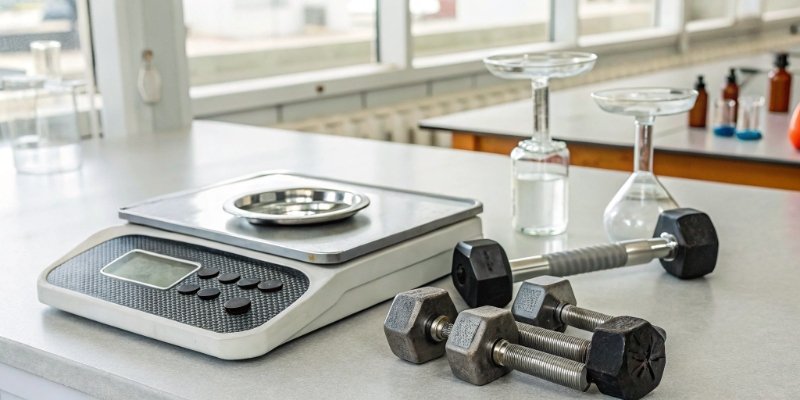
Use Household Items for Accuracy Tests
You do not need professional calibration weights. Common items work perfectly for testing.
A 1 liter bottle of water weighs approximately 2.2 lb. A 5 lb bag of flour should read close to 5 lb. A 16-oz dumbbell weighs exactly 1 lb.
Place the item in the center of the scale. If a 10 lb weight reads 8.5 lb or 11.3 lb, the scale is off. Consistent deviation, like always reading 0.8 lb low, may be fixable with recalibration. Random errors mean replacement is likely needed.
Try the Water Volume Method
No weights at home? Use water. Measure exactly 1 liter using a graduated container. Weigh the empty container first. Add water, weigh again, and subtract the container’s weight. The result should be approximately 2.2 lb. Significant deviation confirms inaccuracy.
Temperature affects water density slightly, but for home testing, this method is accurate enough.
Diagnose Zero and Tare Problems
Verify Proper Zero Return
Turn on the scale and wait for it to stabilize. It should display zero with nothing on it. If it shows 2.0 lb or negative 1.5 lb, the scale is not zeroing correctly. Try pressing the tare or reset button. If it still will not zero, the sensor may be damaged.
Replace batteries and power cycle the scale. Some digital scales fail to reset when power is low.
Test Tare Function with Containers
Place a bowl on the scale and press tare. It should read zero. Now add water. The reading should reflect only the water’s weight. If it includes the bowl’s weight, the tare function is broken. This is common in older or low-quality scales.
Perform the Body Plus Object Test
:max_bytes(150000):strip_icc()/hlt-otk-bathroom-scales-test-withings-body-comp-11-89f88eb409e7452b8e9754640d065593.jpeg)
Confirm Proportional Response
Weigh yourself normally, say 180 lb. Stay on the scale and pick up a 5 lb dumbbell. The new reading should be approximately 185 lb. If it jumps to 190 lb or barely moves to 182 lb, the scale is not responding linearly.
This test checks responsiveness, not just static accuracy. A scale that fails here likely has a damaged load cell or internal circuit issue.
Avoid Posture-Induced Errors
Leaning forward or shifting your weight changes readings. Stand straight, feet centered, arms at your sides. Repeat the body plus object test three times. If results vary more than 2 lb, the inconsistency may be you, not the scale.
One study found human movement caused errors up to ±3.6 lb, while the same scale tested with a static weight varied only ±1.8 lb.
Inspect for Physical and Display Damage
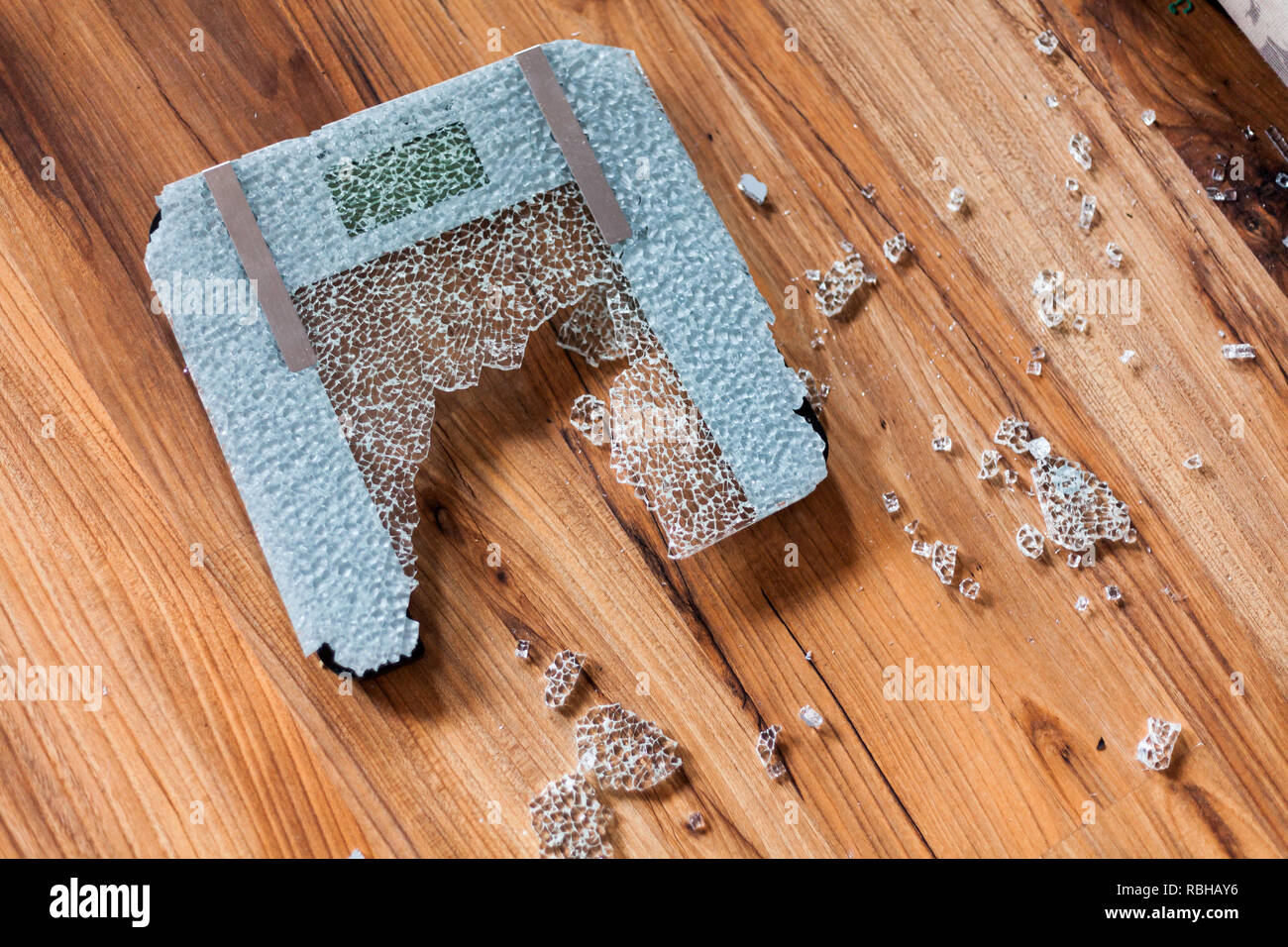
Look for Cracks, Dents, or Warping
Even small cracks under the platform can misalign sensors. Check the corners and edges. If the scale wobbles on a flat floor, the base is warped. A damaged platform leads to uneven weight distribution and false readings.
Place the scale on a hard surface like tile or wood. If it stabilizes, the issue was flooring, not damage.
Identify Flickering or Missing Digits
A dim, flickering, or partially blank display often means failing electronics. Replace batteries first. If the problem persists, the circuit board or LCD is likely damaged. Some modern scales show error codes. Check the manual for alerts.
Intermittent display failure suggests moisture damage or internal corrosion.
Evaluate Environmental Influence
Ensure a Level, Hard Surface
Scales must sit on flat, solid flooring, not carpet, rugs, or vinyl that compress. Uneven surfaces cause weight to shift, leading to low or erratic readings. Use a spirit level to confirm the floor is even.
Tape a piece of cardboard under one foot to level a wobbly scale, but only as a temporary test.
Avoid Drafts and Vibrations
Air currents from fans, AC units, or open windows can affect sensitive scales. In labs or kitchens, even foot traffic can cause vibrations. Isolate the scale on a stable countertop away from appliances.
This is critical for precision scales used in pharmacies, labs, or food prep.
Understand Common Causes of Inaccuracy
Load Cell Wear and Shock Damage
The load cell is a sensor converting weight into electrical signals. It degrades over time. Dropping the scale or overloading it can permanently damage it. Once bent or cracked, it cannot be repaired, only replaced.
Signs of load cell failure include drifting readings, inconsistent results, or failure to register weight at all.
Temperature and Humidity Effects
Extreme cold or heat expands and contracts metal parts, throwing off calibration. High humidity causes rust inside digital scales, especially in bathrooms. Store scales in dry, climate-controlled areas.
Use corrosion-resistant scales in damp or outdoor environments.
Calibration Drift Over Time
All scales drift. Digital models may auto-calibrate, but relocation or impact requires manual recalibration. If you have moved the scale recently, recalibrate before testing accuracy.
Calibrate bathroom scales every 3 to 6 months. Calibrate industrial scales every 6 to 12 months.
Apply Diagnostic Best Practices
Test in a Controlled Setting
For reliable results, use fresh batteries and power cycle the scale. Wait for auto-zero. Test on hard, level flooring. Avoid distractions or movement.
Repeat each test 3 to 5 times to spot patterns.
Record Minimum, Maximum, and Average
Track results in a notebook or app. Record each trial reading. Calculate the average and the range. A range over 1 lb suggests unreliability.
Example: 150.2 lb, 151.0 lb, and 149.8 lb average to 150.3 lb with a 1.2 lb range.
Decide: Recalibrate or Replace
Recalibrate If Offset Is Consistent
If your 10 lb test weight always reads 11.5 lb, the scale is offset but stable. Many digital scales allow user calibration.
Turn on the scale and wait for zero. Press and hold the calibration button. Enter calibration mode using the manual. Place the known weight on the platform and confirm calibration.
Post-calibration, the known weight should read correctly across multiple tests.
Replace If Damage or Instability Is Present
Replace the scale if readings drift uncontrollably, the display is failing, there is visible damage or rust, calibration does not fix errors, or the scale is used in medical, shipping, or dosing applications.
When accuracy affects health or safety, never risk using a suspect scale.
Maintain Your Scale for Longevity
Clean and Store Properly
Wipe the platform with a damp cloth. Never spray cleaner directly on the scale. Avoid bleach or ammonia. Let it dry fully before use.
Store in a cool, dry place. Do not leave it in bathrooms long-term due to humidity.
Prevent Overloading
Never exceed the maximum capacity. Even one overload event can bend load cells permanently. A 400 lb max scale should not be used by someone over 400 lb, even briefly.
Replace Batteries Promptly
Leaking batteries corrode contacts and damage circuits. Use alkaline batteries. Avoid rechargeables with unstable voltage.
Check battery level monthly on digital models.
Key Takeaways for Identifying a Faulty Scale
The most reliable way to know if a scale is wrong involves testing with known weights, checking for consistent zero return, and observing repeatability across multiple measurements. Look for drifting displays, physical damage like cracks or warping, and failure to respond proportionally to added weight. Environmental factors matter significantly. Always test on a hard, level surface away from drafts and vibrations. User-induced errors often cause more variation than the scale itself, so test with a static weight first to isolate the problem. If your scale fails multiple diagnostic checks, recalibrate if the error is consistent and fixable. Replace the scale if it shows unstable readings, visible damage, or fails accuracy tests after recalibration. For medical or industrial applications, accuracy is critical, so remove questionable scales from service immediately.
Frequently Asked Questions About Scale Accuracy
Why does my weight fluctuate so much on the same scale?
Weight fluctuates throughout the day due to hydration, food intake, and clothing changes. However, if fluctuations exceed 2 lb on a stable object, the scale may be unreliable. Test with a known weight to determine if the issue is the scale or natural variation.
Can a bathroom scale be recalibrated at home?
Many digital bathroom scales have user-accessible calibration. Check your manual for instructions. Generally, you turn on the scale, wait for zero, press and hold the calibration button, place a known weight on the platform, and confirm. Not all models support this feature.
How do I know if my scale is accurate without calibration weights?
Use household items with known weights. A 1 liter bottle of water weighs approximately 2.2 lb. A 5 lb bag of flour or a 1 lb dumbbell works well. Place the item centrally and compare the reading to the expected weight.
What causes a scale to give different readings each time?
Inconsistent readings stem from several causes. The scale may have a damaged load cell, electronic interference, or unstable power. Alternatively, the surface may be uneven or soft. User error like shifting posture also creates variation. Test systematically to identify the cause.
Should I replace my scale if it is slightly off?
It depends on the application. For personal weight tracking, slight consistent offset is acceptable as long as readings are repeatable. For medical, shipping, or dosing purposes, any inaccuracy warrants replacement. Recalibration can fix consistent offset errors.
How often should I replace my bathroom scale?
Bathroom scales typically last 3 to 5 years with proper care. Replace sooner if you notice visible damage, persistent display issues, consistent inaccuracy despite recalibration, or failure to zero properly.