A dirty digital scale might still turn on, but it will not give you accurate readings. Dust, food residue, sticky spills, and moisture buildup can interfere with the sensitive load cell inside your scale, causing measurement errors and potentially permanent damage. Whether you are using a kitchen scale for baking, a lab balance for experiments, or an industrial weigh station for manufacturing, knowing how to clean a digital scale properly is essential for precision and longevity.
This guide walks you through every step, from safe cleaning agents to post-cleaning recalibration, so you protect your device while keeping it spotless. You will learn what not to do, how to disinfect without causing damage, and simple protective tricks that reduce cleaning time long-term.
Power Off Before Cleaning
Always Unplug and Remove Power Sources
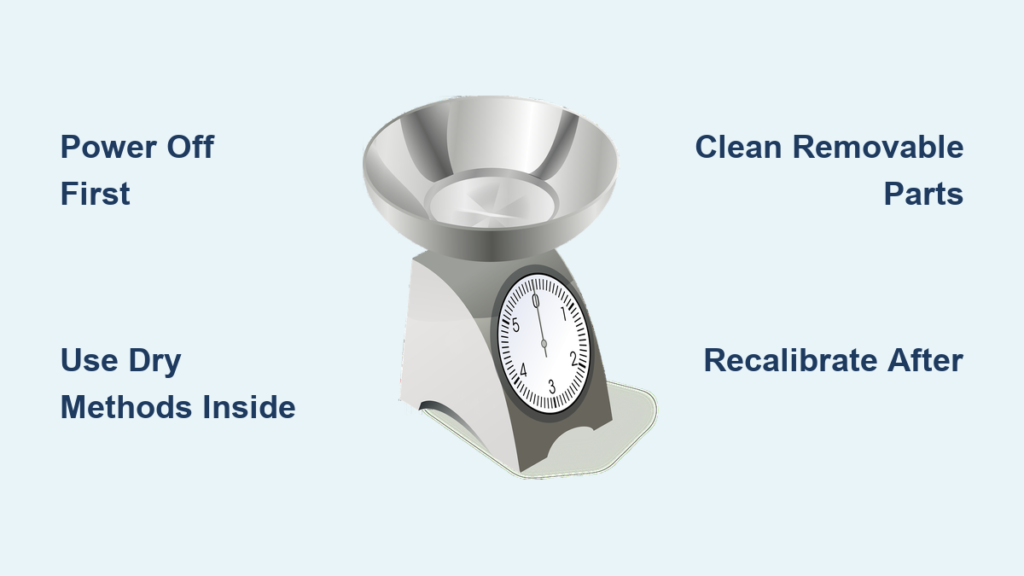
Before touching any cleaning cloth, turn off the scale and disconnect all power sources. Unplug the AC adapter and remove batteries if they are accessible. This prevents electrical shorts, protects internal circuitry, and ensures your safety during cleaning.
Applying liquid to a powered device increases the risk of short circuits and component damage. Never clean a scale that is turned on or charging. Always remove the power source first, even if you plan to do a quick wipe.
Use Safe Cleaning Materials
Choose Non-Damaging Tools and Solutions
Using the wrong cleaner can cloud displays, corrode metal pans, or void your warranty. Stick to safe, effective supplies that will not harm your scale.
Safe materials include a microfiber cloth that is lint-free and scratch-resistant, mild dish soap mixed with warm water for general cleaning, 70% isopropyl alcohol for disinfecting external surfaces only, distilled water to prevent mineral streaks on screens, and a soft white eraser for cleaning oxidation from pogo pins if your scale has them.
Apply all liquids to the cloth, never directly onto the scale. Spraying or pouring cleaner on the device causes liquid to seep into internal components and damage electronics.
Wipe Exterior Surfaces Safely
Clean Housing, Screen, and Buttons Gently
Gently wipe the case, display, and control buttons with a slightly damp microfiber cloth. Focus on seams, edges, and corners where dust and oils accumulate over time. For stubborn grime, use a drop of mild soapy water on the cloth.
Use distilled water on the screen to avoid leaving mineral deposits. Never press hard on the display because LCDs are fragile and easily damaged. Avoid letting moisture seep into openings around the display or buttons, and take extra care near USB or charging ports.
Clean the Weighing Platform Carefully

Handle Removable or Fixed Pans Differently
If the platform is removable, lift it off carefully according to the manufacturer instructions. Wash with warm, soapy water, rinse with distilled water if needed, and dry completely before reattaching.
If the platform is fixed, wipe gently with a damp, not wet, microfiber cloth. Do not submerge or rinse under water unless your scale has an IP67 or higher water resistance rating. Avoid pooling liquid near the edges where sensors lie beneath.
Never immerse non-waterproof scales. Most household and laboratory models are not designed for submersion, and water exposure can destroy the internal electronics.
Clean Sensors and Contacts When Applicable
Remove Oxidation from Pogo Pins
Some digital scales use pogo pins or exposed electrical contacts to transmit data between the platform and base. Over time, these can collect oil, dust, and oxidation that affects conductivity.
Locate the pins, which are usually on the underside of the platform or base. Use a soft white eraser to gently rub each pin and remove buildup. Wipe away debris with a dry microfiber cloth. Reconnect only when fully clean and dry.
Never use metal tools, alcohol-soaked cloths, or abrasives on these contacts. These materials can scratch or permanently damage conductivity.
Dry Thoroughly Before Use
Prevent Moisture Damage
After cleaning, let the scale air-dry for at least 10 to 15 minutes. Wipe all surfaces with a dry microfiber cloth to remove any remaining dampness. Ensure no moisture remains under the platform or in crevices.
Wait before powering on. Even invisible moisture can affect electronics and cause short circuits. If you are uncertain whether the scale is dry enough, wait 30 minutes before turning it back on.
Avoid Common Cleaning Mistakes
Do Not Spray, Soak, or Scrub
Spraying liquid directly onto the scale causes it to enter internal components, creating risk of short circuits and sensor failure. Always apply cleaners to your cloth first.
Using harsh chemicals damages your scale. Bleach, ammonia, acetone, and industrial degreasers cloud plastic screens, corrode metal parts, and degrade rubber seals and load cell coatings.
Applying excessive pressure during cleaning is dangerous. The load cell detects tiny forces, and pressing down hard can overload and permanently damage this sensitive component.
Using abrasive tools creates problems. Steel wool, scouring pads, and rough sponges scratch surfaces and create dirt traps that are harder to clean later.
Forgetting to power off increases risk of electric shock and moisture-related damage. Always disconnect before cleaning.
Submerging non-waterproof scales destroys electronics. Unless your scale is rated IP67 or higher, it should never go in water, not even briefly.
Recalibrate After Cleaning
Restore Accuracy After Handling
Cleaning often involves moving, tilting, or wiping the platform, actions that can shift sensor alignment. Recalibration is strongly recommended after any thorough cleaning.
Recalibrate when the scale has been moved, after deep cleaning, or when readings seem inconsistent. Place the scale on a level, stable surface, power on, and wait 5 to 10 minutes for stabilization. Clear the platform and press zero or tare. Enter calibration mode by holding the Cal, Mode, or Zero button for 5 or more seconds. When prompted, place a certified calibration weight in the center of the platform. Wait for the scale to register and display pass or return to zero. Remove the weight and confirm the scale resets correctly.
Use traceable certified weights for accuracy. In laboratory or commercial settings, schedule professional calibration every 6 to 12 months.
Protect Your Scale Between Cleanings
Reduce Dirt Buildup with Smart Barriers
One of the most effective tricks is placing your scale inside a resealable plastic bag. Use a gallon-sized clear zip-top bag, insert the scale while routing the power cord through the top, and seal leaving buttons and display accessible. Use the scale normally because accuracy is unaffected.
This method blocks spills, dust, and sticky residues. Replace the bag when it becomes dirty, and no cleaning of the scale itself is needed. This works especially well in kitchens, laboratories, and workshops.
For rugged use, some scales support snap-on CNC backplates that reinforce structural stability, shield against impacts, and prevent dust ingress from the sides. Store your scale in a closed container or dust cover when not in use for extended periods.
Maintain Long-Term Performance
Build a Routine That Lasts
Replace disposable batteries every 6 to 12 months, even if they are not dead. Do not mix old and new batteries. Turn off the scale after each use to extend battery life.
Store your scale in a dry, temperature-stable area between 15 and 25 degrees Celsius. Avoid direct sunlight, high humidity near sinks or ovens, and vibration-prone surfaces.
Never exceed the maximum weight capacity because this permanently damages load cells. Place items gently in the center of the platform and press buttons softly to avoid mechanical wear.
Frequently Asked Questions About Cleaning a Digital Scale
Can I use water to clean my digital scale?
You can use a damp microfiber cloth with mild soapy water on external surfaces, but never submerge the scale unless it has an IP67 or higher rating. Apply water to the cloth, never directly on the device.
How often should I clean my digital scale?
Clean the exterior after each use in high-risk environments like kitchens. For general use, wipe down the scale daily or after every few uses. Deep clean monthly or when you notice buildup affecting accuracy.
Why does my scale need recalibration after cleaning?
Cleaning involves moving, tilting, or applying pressure to the platform, which can shift sensor alignment. These micro-shifts affect baseline accuracy, making recalibration necessary to restore precise measurements.
What happens if I spray cleaner directly on my scale?
Spraying liquid directly causes it to enter internal components, leading to short circuits, corrosion, and permanent sensor failure. Always apply cleaning solutions to your cloth first.
Can I use alcohol to disinfect my digital scale?
Yes, 70% isopropyl alcohol is safe for disinfecting external surfaces when applied to a cloth first. Never spray alcohol directly on the scale, and avoid letting it seep into openings.
How do I know if my scale needs recalibration?
Signs include fluctuating readings for the same object, failure to return to zero, drifting values over time, and discrepancies compared to another known-accurate scale.
Key Takeaways for Keeping Your Digital Scale Clean
Keeping your digital scale clean is not just about hygiene, it is about calibration hygiene. A dirty scale cannot be accurate, no matter how expensive or well-made it is.
Always power off and unplug before cleaning. Use only safe materials like microfiber cloths, mild soap, and 70% isopropyl alcohol applied to your cloth, never directly on the device. Avoid harsh chemicals, abrasive tools, and excessive pressure. Clean the platform carefully based on whether it is removable or fixed, and never submerge non-waterproof models.
Recalibrate after any thorough cleaning or when you notice accuracy issues. Protect your scale between cleanings using the plastic bag method or protective covers. With consistent care, your digital scale will deliver reliable, precise measurements for years to come.