You don’t need a scale to track your body changes. In fact, stepping on the scale daily can be misleading because water retention, digestion, and hormones cause natural weight swings of up to 5 pounds in a single day. But what if you want to know whether you’re losing fat or gaining strength without relying on numbers? The good news is that you can accurately assess your progress using simple, accessible tools and smart observation techniques.
This guide reveals 11 proven methods to check weight and body composition without a scale, backed by science and practical experience. From measuring tape and calipers to progress photos and physics-based tricks, you’ll learn how to track fat loss, muscle gain, and overall health changes all without ever stepping on a digital display.
Measure Waist and Hip Circumference
One of the most reliable ways to track fat loss is with a soft measuring tape. Unlike the scale, waist size directly reflects changes in visceral fat, the dangerous fat around your organs linked to heart disease and diabetes.
Key Measurement Sites
Measure at these specific locations for accuracy.
• Waist: At the navel level, just above the hip bones
• Hips: Around the widest part of your buttocks
• Neck: Below the Adam’s apple (needed for body fat formulas)
Stand straight, breathe out, and wrap the tape snugly but not tight. Allow one finger underneath the tape. Take 2 to 3 readings and average them for accuracy.
Track Meaningful Changes
Use these health thresholds to interpret your measurements.
• Men: Waist 40 inches or higher indicates high health risk
• Women: Waist 35 inches or higher indicates elevated risk
• A 1 to 2 inch reduction in 6 to 8 weeks signals real fat loss
Use the same tape, time of day (morning is best), and clothing for consistency.
Estimate Body Fat Using the Navy Formula
Plug your measurements into the U.S. Navy body fat formula for a body fat percentage estimate.
For men: Body Fat % = 86.010 × log10(abdomen – neck) – 70.041 × log10(height) + 36.76
For women: Body Fat % = 163.205 × log10(waist + hip – neck) – 97.684 × log10(height) – 78.387
These formulas assume average proportions and work best when used consistently over time.
Use Skinfold Calipers for Body Fat
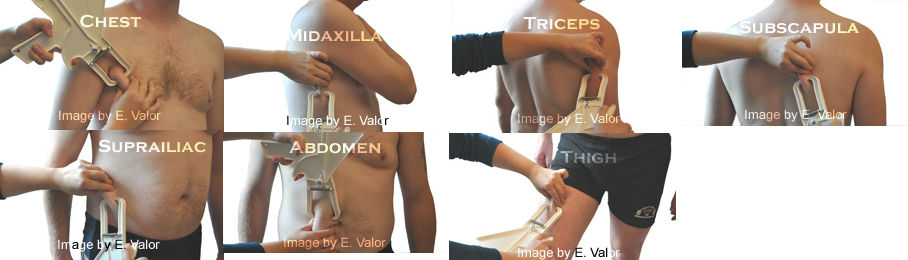
Skinfold calipers measure subcutaneous fat, which is fat just under the skin, at key body sites. When done correctly, they provide a plus or minus 3 to 4 percent accurate estimate of body fat percentage, rivaling clinical methods.
Common Test Sites
Pinch the skin and fat at these locations for measurement.
• Triceps: Back of the upper arm
• Abdominal: Side of the navel
• Suprailiac: Above the hip bone
• Thigh: Front of the leg
• Subscapular: Below the shoulder blade
Pinch the skin and fat, then place the caliper jaws 1 centimeter from your fingers. Wait 1 to 2 seconds, read the millimeter value, and repeat twice. Average the three measurements.
Apply Jackson-Pollock Formula
For men using the 3-site method, sum the triceps, chest, and thigh measurements. Calculate body density using the formula: Body Density = 1.10938 – (0.0008267 × sum) + (0.0000016 × sum squared) – (0.0002574 × age)
Then convert to body fat percentage using: Body Fat % = (495 / Body Density) – 450
Practice on a friend first because accuracy depends on consistent technique.
Take Progress Photos Weekly

Photos reveal changes your mirror and scale cannot show. You might not lose weight, but fat loss and muscle gain reshape your body in visible ways.
Shoot Like a Pro
Follow these guidelines for consistent, useful photos.
• Clothing: Wear tight-fitting clothes like leggings and a tank top
• Lighting: Use natural daylight with no shadows
• Background: Choose a plain wall or curtain
• Angles: Capture front, side, and back views
• Timing: Take photos on the same day and time every 3 to 4 weeks
Use a tripod or mark the floor to keep the camera in the same position. Avoid filters or editing.
What to Look For
Compare your photos side by side to spot these changes.
• Tighter waistline
• Flatter stomach
• More defined shoulders or legs
• Better posture
Even small changes become obvious when you line up photos chronologically.
Test Clothing Fit Every Two Weeks
Your favorite jeans are a powerful progress tracker. If they zip more easily or feel looser at the waist, you are losing fat even if the scale has not moved.
How to Use Clothes as a Gauge
Select one snug item and track changes over time.
• Pick one item that fits snugly, such as jeans, a belt, or a dress
• Try it on every 1 to 2 weeks
• Note the button or zipper tightness, waistband pressure, and sleeve or shoulder fit
• Track belt notch changes, where each notch equals approximately 1 to 2 inches
Muscle is denser than fat, so you can lose inches while maintaining weight. Your clothes will feel looser, proving real progress.
Watch for False Signals
Consider these factors that can mislead you.
• Fabric stretches over time
• Sizing varies by brand
• Water retention causes temporary tightness
Use clothing fit with other methods for the best results.
Monitor Energy and Performance
How you feel matters more than any number. Real progress shows up in daily function, not just appearance.
Signs You Are Getting Leaner and Stronger
Track these functional improvements over time.
• Climb stairs without getting winded
• Walk farther or faster
• Lift heavier weights or do more reps
• Recover faster after workouts
• Sleep better and wake up refreshed
• Feel less joint pain or stiffness
Track these in a journal and rate energy on a 1 to 10 scale daily. Look for trends over weeks.
Behavioral Wins
These habits drive long-term success and are visible without a scale.
• Cooking more meals at home
• Drinking more water
• Moving more during the day
• Feeling less hungry or more in control
Focus on what truly matters: how you look, feel, and perform.
Try the Water Displacement Method
This DIY version of hydrostatic weighing uses Archimedes’ principle. Your body displaces water equal to its volume.
How to Estimate Weight in a Bathtub
Follow these steps carefully for the best estimate.
- Fill the tub to the brim
- Submerge completely and exhale fully to reduce lung air
- Mark the new water level
- Drain water back to the original level
- Collect and measure displaced water in liters
- Multiply by 0.985 to get weight in kilograms
Example: 70 liters displaced equals 70 times 0.985, which is approximately 68.95 kilograms or about 152 pounds.
This method is messy and time-consuming, and hard to measure precisely. Hair and clothing trap air, which skews results. It is best for one-time experiments rather than regular tracking.
Build a Balance Beam Scale

Use physics to estimate weight with known objects. The torque principle states that weight times distance on one side equals weight times distance on the other.
What You Need
Gather these materials to build your scale.
• Sturdy plank (wood or metal)
• Stable fulcrum (brick or pipe)
• Known weights (gallon water equals 8.34 pounds or 3.78 kilograms)
• Measuring tape
How to Use It
Follow these steps to calculate unknown weight.
- Place the beam on the fulcrum
- Sit on one end
- Add weights to the other side until balanced
- Measure distances from fulcrum to each end
- Calculate using the formula: Unknown Weight = Known Weight × (Distance 1 / Distance 2)
This method is not safe for full-body adult weighing. It is better for small objects or educational use.
Use a BIA Device Without a Scale
Bioelectrical impedance analysis devices like handheld units or smart mirrors send a safe current through your body. Muscle conducts electricity while fat resists it.
What You Can Learn
These measurements are possible with BIA devices.
• Body fat percentage
• Lean mass
• Hydration levels
Without a scale, these devices cannot give exact weight. They estimate composition based on impedance, height, age, and gender.
Tips for Accuracy
Follow these guidelines for reliable results.
• Test in the morning, after using the bathroom
• Avoid food, drink, or exercise 2 to 4 hours prior
• Keep skin dry
• Use the same device every time
Hydration affects results significantly because dehydration inflates fat percentage estimates.
Visit for a DXA or Bod Pod Scan
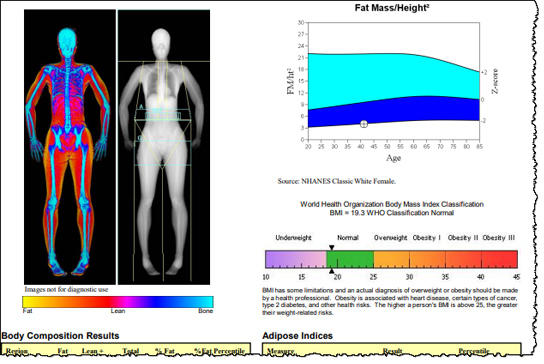
For clinical-grade accuracy, get a DXA scan or Bod Pod test.
DXA Scan
This scan provides detailed body composition data.
• Measures fat, muscle, and bone mass separately
• Shows fat distribution between visceral and subcutaneous
• Accuracy: plus or minus 1 to 2 percent body fat
• Cost: $100 to $250
• Frequency: Every 3 to 6 months
No weight is required because some machines estimate it from composition.
Bod Pod
This method uses air displacement to measure body volume.
• Calculates body fat via density
• Accuracy: plus or minus 1 to 2 percent
• Cost: $30 to $100
• Wear tight clothes and a swim cap
Both are gold standards ideal for tracking long-term changes.
Estimate BMI Without a Scale
Body Mass Index categorizes weight relative to height, and you can estimate it without knowing your exact weight.
Formula
Use this imperial formula: BMI = (weight in pounds × 703) / (height in inches squared)
If you do not know your weight, use visual and functional clues instead.
• Underweight (below 18.5): Prominent bones, low energy
• Normal (18.5 to 24.9): Balanced proportions, good stamina
• Overweight (25 to 29.9): Waist 35 inches or more for women, 40 inches or more for men
• Obese (30 or higher): Shortness of breath, joint pain
BMI cannot tell muscle from fat, so a fit athlete may be overweight by BMI but actually lean.
Adjust for Daily Weight Fluctuations
Your weight changes daily not due to fat gain or loss but temporary factors.
Find Your Baseline
Use this table to understand daily variations.
| Factor | Weight Impact |
|---|---|
| Clothing | 1 to 3 pounds |
| Bladder (urine) | 1 to 2 pounds |
| Bowels (stool) | About 1 pound, up to 5 pounds if constipated |
| Food in gut | 3 to 5 pounds |
| Water retention | 2 to 5 pounds |
| Sweat loss (1 hour intense) | About 2 pounds |
Subtract 3 to 7 pounds from your daytime weight to estimate your true fasting, unclothed baseline. This helps interpret other methods, like why your jeans fit better even if you gained weight overnight.
Combine Methods for Best Results
No single method replaces a scale, but together they paint a clearer picture than any number.
Recommended Tracking System
Use multiple methods for comprehensive tracking.
| Method | Frequency | Purpose |
|---|---|---|
| Waist measurement | Weekly | Track abdominal fat |
| Progress photos | Every 4 weeks | Visual proof |
| Clothing fit check | Every 2 weeks | Real-world feedback |
| Energy and strength log | Daily | Functional progress |
| Skinfold calipers | Every 4 to 6 weeks | Body fat trend |
Focus on trends, not single readings. Consistency beats precision.
Frequently Asked Questions About Checking Weight Without a Scale
Can I accurately track fat loss without weighing myself?
Yes, you can track fat loss effectively without a scale. Waist circumference measurements, progress photos, and clothing fit provide reliable indicators of fat loss. A decrease in waist size or looser-fitting clothes signals real progress even when scale weight stays the same.
What is the most accurate method to check body composition at home?
Skinfold calipers offer the most accurate home-based method for body fat estimation. When used correctly with the Jackson-Pollock formula, they provide accuracy within plus or minus 3 to 4 percent. For clinical accuracy, a DXA scan remains the gold standard.
How do I know if I am losing fat versus muscle?
Compare multiple indicators. Waist shrinking while strength improves suggests fat loss with muscle preservation. If you feel weaker and clothes fit differently, you may be losing muscle. Progress photos reveal visual changes that scales cannot show.
How often should I measure my waist for tracking?
Measure your waist once per week at the same time each day, preferably in the morning before eating. Consistency matters more than frequency. Weekly measurements let you identify trends while avoiding the confusion of daily fluctuations.
Why do my clothes fit differently even when my weight stays the same?
Muscle is denser than fat, so you can lose fat and gain muscle with no net weight change. Your clothes will feel looser because muscle takes up less volume than fat. This is actually positive progress that scales cannot detect.
Key Takeaways for Checking Weight Without a Scale
You do not need a scale to know if you are making progress. Fat loss, muscle gain, and better health show up in your clothes, your photos, your energy levels, and your measurements. By using a few simple tools and consistent habits, you can track real change without the stress of watching numbers fluctuate daily.
The most practical methods are waist measurement, progress photos, and clothing fit checks. These require minimal investment and provide reliable feedback when done consistently. For more precision, skinfold calipers offer body fat estimates that rival clinical methods.
Combine at least 2 to 3 methods for the best results. Focus on trends over weeks and months rather than daily fluctuations. Remember that true progress includes how you feel, perform, and look, not just what a number on a scale tells you.