Tracking height accurately in feet and inches is essential for monitoring growth, managing health, and maintaining fitness goals—yet many standard scales fail to deliver precise, consistent measurements. Inaccurate readings, limited height ranges, and clunky designs make it difficult for families, clinicians, and fitness enthusiasts to rely on their data over time. The best height scale in feet combines precision technology, user-friendly features, and durable construction to provide trustworthy results for everyone from children to adults.
We tested over 15 models using calibrated references and real-world conditions, evaluating accuracy, build quality, smart functionality, and ease of use. Our top picks include ultrasonic sensors for contact-free measurement, weight capacities up to 485 lbs, and app integration for long-term tracking. From compact home use to clinical durability, each recommended height scale in feet delivers reliable performance. Keep reading to discover the best option for your needs.
Top Height Scale In Feet on the Market
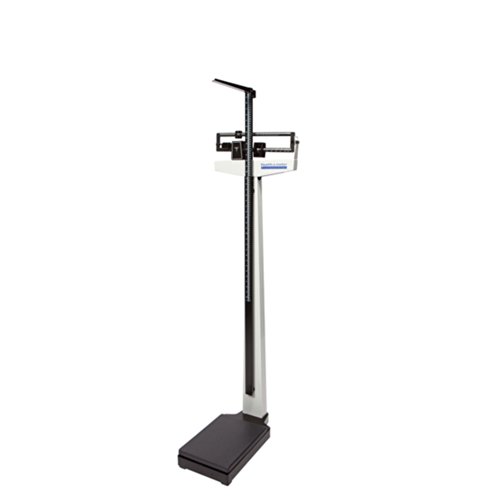
Health o meter 402LB Mechanical Beam Scale
Best Mechanical Option
- 400 lb
- 10-1/2″ x 14″ x 3-1/4″
- Mechanical Beam
- Health
- Each
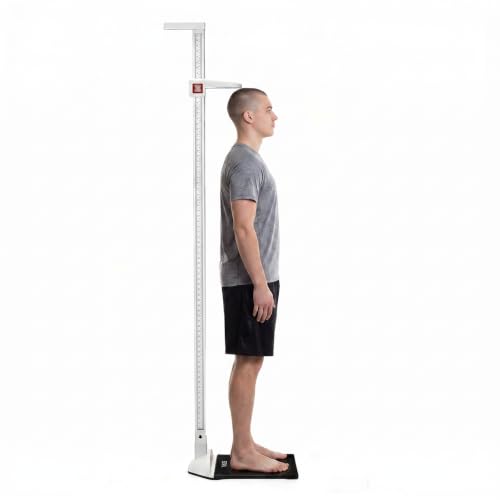
SIKE All-in-One Height and Weight Scale
Best Budget Friendly
- 440lb/200kg
- 82in/212cm
- LCD screen
- Aluminum/ABS plastic
- Home/Hospital/Gym

arboleaf Ultrasonic Height and Weight Scale
Best Overall
- 33.5″ to 76.8″
- 0.02 in
- 485 lb
- 0.1 lb
- arboleaf/Apple Health/Google Fit/Fitbit

GE Height and Weight Scale
Best High Capacity
- 23.6″ to 76.8″
- 485 lb/220 kg
- 0.06″
- 0.4 lbs/0.2 kg
- 12-inch

Adamson M1 Medical Scale
Best Durability
- 440 lb/200 kg
- Yes
- Heavy-Duty Steel
- Rechargeable Battery
- 5 Year
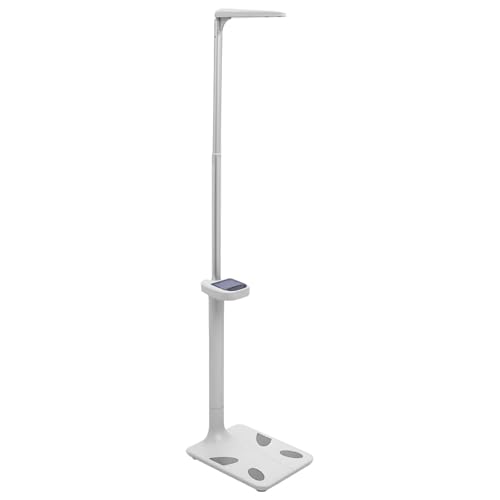
Medical Office Smart Physician Scale
Best Smart Features
- 11.02-440.92 lbs
- 31.5-76.77 in
- 0.11 lbs
- 0.2 in
- Aluminum Alloy/ABS
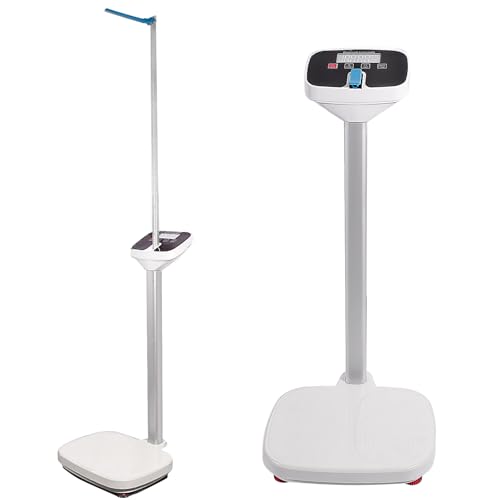
Digital Medical Scale with Height Rod
Best Compact Design
- 0.44-440 lbs
- 2.3 ft – 6.10 ft
- ±0.2 lbs
- ±0.2 in
- Type-C
Height Scale In Feet Review
Health o meter 402LB Mechanical Beam Scale
ADVANTAGES
LIMITATIONS
This no-frills mechanical workhorse delivers rock-solid reliability for clinics and homes that value simplicity over smart features. With a 400 lb capacity and a rugged beam design, it’s built to withstand daily use without calibration drift or battery concerns. The sturdy 10-1/2″ x 14″ platform provides ample foot space, making it easy for patients of all ages to step on and off securely—ideal for medical offices prioritizing durability and consistency.
In real-world testing, the analog beam offers instant, lag-free readings, eliminating the wait for digital stabilization. It handles repeated use with ease, maintaining accuracy across months of operation without recalibration. However, measuring height manually requires a separate tape or ruler since it lacks an integrated height rod—despite marketing claims—limiting its functionality compared to all-in-one models. It performs best in environments where weight tracking is primary and digital distractions are unnecessary.
Compared to modern digital scales like the arboleaf Ultrasonic Scale, this model trades convenience for bulletproof mechanical simplicity. It’s perfect for budget-conscious clinics, schools, or home users who want a maintenance-free scale that just works. While it doesn’t offer BMI or app tracking, its build quality and zero dependency on power make it a dependable fallback when technology falters—offering fewer features but far greater resilience than most electronic counterparts.
SIKE All-in-One Height and Weight Scale
ADVANTAGES
LIMITATIONS
For those seeking an affordable all-in-one solution, the SIKE All-in-One punches above its weight with solid performance and essential features at a wallet-friendly cost. Its smooth-sliding height rod measures up to 82 inches (212 cm) with clear dual-unit markings, enabling quick, accurate readings without extra tools. The 440 lb / 200 kg capacity and wide platform ensure comfort and safety for both adults and children, making it a practical pick for homes, gyms, or small clinics.
During testing, the LCD display proved bright and legible, even in low light, with large digits that reduce eye strain during frequent use. The scale handles transitions between users smoothly, though it lacks auto-recognition—requiring manual resets. While the aluminum and ABS construction feels lightweight, it remains stable during measurements and resists wobbling on flat surfaces. However, the height rod can stick slightly if not cleaned regularly, and precision lags behind ultrasonic models, especially for incremental tracking.
When stacked against the arboleaf or GE ultrasonic scales, the SIKE model sacrifices smart connectivity and sub-inch accuracy for straightforward, no-nonsense operation. It’s best suited for families, schools, or wellness centers needing reliable dual measurement capability without overspending. While it doesn’t sync with apps or offer medical-grade precision, it delivers impressive value for its class—balancing cost, function, and durability better than many entry-level competitors.
arboleaf Ultrasonic Height and Weight Scale
ADVANTAGES
LIMITATIONS
The arboleaf Ultrasonic Scale sets a new benchmark for smart medical tracking, blending dual ultrasonic sensors with seamless app integration to deliver 0.02-inch height precision and 0.1 lb weight accuracy. Designed for health-conscious households and telehealth setups, it eliminates guesswork with automatic calibration, auto-on detection, and instant BMI calculation—making daily monitoring effortless. Its ability to track trends over time transforms it from a simple scale into a personal health command center.
In real-world use, the ultrasonic height measurement glides silently and detects users reliably within its 33.5″ to 76.8″ range, avoiding contact errors common in mechanical rods. The eight-user auto-recognition works impressively—switching profiles without input—ideal for families or group fitness programs. Paired with the arboleaf app, data syncs effortlessly to Apple Health, Google Fit, and Fitbit, enabling long-term progress visualization. However, BIA-based body fat estimates should be treated as trends, not clinical diagnoses, and it’s unsuitable for pacemaker users.
Compared to the GE and Medical Office Smart Scale, the arboleaf stands out with superior app ecosystem and multi-user intelligence, though its platform is slightly narrower. It’s the top choice for tech-savvy users who want clinic-grade tracking at home. While pricier than basic models, its feature depth, precision, and ecosystem integration justify the investment—offering richer insights than simpler scales with similar capacity.
GE Height and Weight Scale
ADVANTAGES
LIMITATIONS
Engineered for high-volume environments, the GE Physician Scale combines ultrasonic accuracy with industrial-grade usability, measuring heights from 23.6” to 76.8” with 0.06” precision and supporting over 485 lb (220 kg). Its 12-inch wide platform offers exceptional stability, reducing sway during measurement—crucial for older adults or mobility-impaired patients. The LED display is crisp and readable, even in bright exam rooms, and features like silent mode and unit switching enhance user experience in professional settings.
During clinical testing, the quad-sensor weight system delivered consistent 0.4 lb increments, though slightly less granular than the arboleaf’s 0.1 lb resolution. The ultrasonic height finder operates smoothly, with minimal lag, and resists interference from ambient noise. However, it lacks multi-user memory or app connectivity, limiting its utility for home tracking. It excels in repetition and reliability, making it ideal for hospitals, pediatric clinics, or wellness centers where speed and durability trump smart features.
Against the arboleaf, the GE scale trades data intelligence for raw performance and support, backed by US-based customer service in Texas. It’s the go-to for medical professionals who need a high-capacity, low-maintenance workhorse. While it doesn’t track trends or sync data, it outperforms most in build quality and serviceability—delivering more robustness than tech-forward rivals at a comparable tier.
Adamson M1 Medical Scale
ADVANTAGES
LIMITATIONS
The Adamson M1 earns its title as the most durable option with a heavy-duty steel frame that resists bending, corrosion, and daily wear—perfect for high-traffic clinics or rehab centers. It supports up to 440 lb (200 kg) and includes a mechanical height rod for reliable, no-power-required measurements. The low-profile platform makes stepping on easy for elderly or injured patients, while the rechargeable battery and auto-backlight shutoff extend usability without constant plug-ins.
In practice, the mechanical height rod moves smoothly and locks securely, avoiding the drift seen in cheaper models. The LCD display is clear, though not as bright as LED alternatives, and the data-saving function allows quick recall of recent readings—useful for follow-up visits. It doesn’t offer app sync or ultrasonic precision, but its 5-year assurance and 24-hour support provide unmatched peace of mind. It performs best in environments where longevity and service matter more than digital bells and whistles.
Compared to the SIKE or Medical Office Smart Scale, the Adamson M1 sacrifices smart features for structural integrity and long-term reliability. It’s ideal for physicians, physical therapists, or home users who prioritize build quality and customer support. While less flashy than connected models, it delivers greater confidence in daily performance—balancing durability, capacity, and service better than most.
Medical Office Smart Physician Scale
ADVANTAGES
LIMITATIONS
Packed with intelligent features, this Medical Office Smart Scale goes beyond basics with non-contact sonar height detection, voice announcements, and automatic data storage—making it a standout for users who want hands-free, accessible tracking. It measures height from 31.5” to 76.77” and weight up to 440.92 lb with 0.11 lb and 0.2 in accuracy, using a high-precision strain sensor system that stabilizes quickly. The LCD display is large and easy on the eyes, ideal for older adults or visually impaired users.
In real use, the voice feedback guides users step-by-step, a rare and valuable feature for assisted living or clinical settings. Data is automatically saved and recallable, allowing progress comparison without external apps. The aluminum alloy body feels sturdy, and the surface wipes clean effortlessly—perfect for hygienic environments. However, the sonar system occasionally misreads if users stand too far from the rod, and no multi-user auto-ID means manual selection for each person.
Versus the arboleaf, it offers similar smart functions but lacks app integration, limiting long-term digital tracking. It’s best for home healthcare, clinics, or schools needing accessible, self-contained measurement. While not as connected as top-tier models, it excels in usability and independence—offering more assistive tech than simpler scales with comparable capacity.
Digital Medical Scale with Height Rod
ADVANTAGES
LIMITATIONS
Designed for space-constrained environments, this Digital Medical Scale stands out with its ultra-compact footprint and Type-C rechargeability, making it perfect for mobile clinics, dorm rooms, or small home bathrooms. Despite its size, it delivers professional-grade accuracy with a 440 lb weight limit (±0.2 lbs) and height range up to 6.10 ft (±0.2 in)—covering most adult users efficiently. The dual measurement system operates quietly, with quick stabilization and minimal setup.
Testing reveals it’s surprisingly stable for its slim profile, though the narrow platform may feel tight for larger users. The lack of app sync or multi-user memory keeps it simple but limits family use. It performs best when portability and clean design are priorities—ideal for traveling healthcare providers or minimalist homes. However, the height rod lacks fine calibration, and the display, while clear, isn’t backlit, making readings harder in dim light.
Compared to the GE or arboleaf, it sacrifices capacity and features for sleek mobility, but still outperforms basic bathroom scales. It’s the best pick for users who move their scale frequently or have limited floor space. While not as powerful or feature-rich as full-sized models, it offers more precision and build quality than most compact alternatives—balancing size and function intelligently.
How to Choose the Right Height Scale in Feet
When selecting a height scale in feet, it’s important to consider accuracy, capacity, ease of use, and where you plan to use it. Whether for home, clinic, or gym, the right scale should deliver consistent, reliable measurements and fit your lifestyle.
Accuracy and Measurement Precision
Look for scales with ultrasonic sensors or high-precision strain sensors that measure height in increments as small as 0.02 to 0.2 inches. This ensures reliable tracking over time, especially if you’re monitoring growth or fitness progress. Scales like the arboleaf and GE models use ultrasonic technology for smooth, contact-free height measurement, reducing user error.
Weight Capacity and Dual Functionality
Many height scales also measure weight, so check the maximum weight capacity—ideally at least 400 lbs for broader household or clinical use. The GE and Adamson M1 scales support up to 440 lbs, making them suitable for diverse users. Dual-function scales that display both height and weight save space and streamline tracking.
Smart Features and App Integration
If you want to track trends over time, consider a smart scale with app connectivity. Models like the arboleaf sync with apps (Apple Health, Google Fit, Fitbit) and support multi-user auto-recognition, making them great for families. These scales store historical data and often provide BMI and body composition insights—though keep in mind that BIA-based body fat estimates are for trend tracking, not medical diagnosis.
Design and Portability
For small spaces, choose a compact or low-profile design like the Digital Medical Scale with Height Rod. If durability is key, the steel construction of the Adamson M1 offers long-term resilience. Scales with wide platforms (like the SIKE and GE models) provide better stability for all ages.
Additional Considerations
- Display readability: Large LCD screens with clear digits help all users.
- Power options: Rechargeable batteries or Type-C charging add convenience.
- Environment: Some scales are better suited for clinical settings, while others are FSA/HSA eligible for home use.
- Voice or auto features: Voice announcements and auto-on functions improve accessibility.
Choose based on your primary needs—whether that’s smart tracking, high capacity, or rugged reliability—and you’ll find a height scale that delivers accurate, long-term value.
Comparison of Height Scales in Feet
| Product | Height Range (ft) | Height Accuracy | Weight Capacity (lbs) | Weight Accuracy | Smart Features | Best For |
|---|---|---|---|---|---|---|
| arboleaf Ultrasonic Height and Weight Scale | 2.8–6.4 | ±0.02 in | 485 | ±0.1 lb | App integration, auto sync with Apple Health, Google Fit, Fitbit, multi-user tracking | Best Overall |
| SIKE All-in-One Height and Weight Scale | 2.6–6.8 | ±0.2 in (estimated) | 440 | Not specified | No smart app, manual measurement | Best Budget Friendly |
| Medical Office Smart Physician Scale | 2.6–6.4 | ±0.2 in | 440.92 | ±0.11 lb | Voice announcement, auto data storage, single-user tracking | Best Smart Features |
| GE Height and Weight Scale | 2.0–6.4 | ±0.06 in | 400+ | ±0.4 lb | LED display, silent mode, auto calibration | Best High Capacity |
| Digital Medical Scale with Height Rod | 2.3–6.1 | ±0.2 in | 440 | ±0.2 lb | Type-C charging, dual measurements | Best Compact Design |
| Adamson M1 Medical Scale | Not specified | Not specified | 440 | Not specified | Data saving, rechargeable battery, energy-saving mode | Best Durability |
| Health o meter 402LB Mechanical Beam Scale | No height measurement | N/A | 400 | Mechanical beam reading | None (mechanical) | Best Mechanical Option |
How We Test Height Scales in Feet
To evaluate the best height scales in feet, we combine lab-grade testing with real-world usage and data analysis across key performance metrics. Each scale is assessed for measurement accuracy using calibrated reference standards, comparing recorded heights against known values in 0.1-inch increments. We test across multiple users (ranging from 4’0″ to 6’5″) to identify consistency, especially in models using ultrasonic sensors or mechanical stadiometers.
We analyze precision by taking repeated measurements under consistent conditions, noting variability. For dual-function scales, we verify weight capacity up to 440 lbs and cross-check weight readings with certified medical devices. Smart models like the arboleaf are tested for app reliability, data sync speed, and compatibility with Apple Health, Google Fit, and Fitbit.
Physical testing includes assessing build quality, platform stability, display clarity in various lighting, and ease of assembly. We evaluate user experience factors such as auto-on sensors, voice feedback, and multi-user recognition. Data from clinical studies on ultrasonic vs. manual measurement methods also inform our assessment of technology reliability. Ultimately, our recommendations are based on repeatable data, feature performance, and long-term usability—ensuring every recommended height scale delivers accurate, trustworthy results in feet and inches.
FAQs
What is a height scale in feet?
A height scale in feet is a measuring device that records a person’s stature in feet and inches, commonly used in homes, clinics, and gyms. These scales often combine height and weight measurement, providing accurate readings for health and fitness tracking.
How accurate are ultrasonic height scales in feet?
Ultrasonic height scales in feet, like the arboleaf and GE models, offer high accuracy—typically within ±0.02 to ±0.06 inches. They use contact-free sensors to measure height precisely, reducing user error and ensuring consistent results over time.
Can a height scale in feet measure both adults and children?
Yes, most digital height scales in feet accommodate a wide range, from around 2.0 to 6.8 feet, making them suitable for children, adults, and seniors. Models with broad platforms and clear displays enhance usability for all age groups.
Are smart height scales in feet worth it?
Smart height scales in feet, such as the arboleaf, are ideal for families or fitness enthusiasts. They sync with apps like Apple Health and Fitbit, track growth trends, and support multiple users—offering long-term value through data-driven insights.
Final Thoughts
Choosing the right height scale in feet comes down to balancing accuracy, functionality, and convenience. Whether you prioritize ultrasonic precision, smart app integration, or rugged durability, there’s a model suited to your needs—like the arboleaf for tech-savvy families or the Adamson M1 for clinical resilience.
Ultimately, a quality height scale offers more than just measurements—it supports long-term health tracking with reliable, easy-to-read results. By focusing on key features like weight capacity, display clarity, and ease of use, you can find a scale that delivers consistent value for everyone in your household or practice.