In a busy doctor’s office, obtaining accurate, consistent weight measurements is critical for diagnosis, treatment planning, and patient safety—yet many standard scales fail under clinical demands, lacking the precision, durability, or accessibility needed for diverse patient populations. Inaccurate readings, small platforms, and poorly positioned displays can compromise care, especially for elderly, pediatric, or mobility-impaired patients. We tested over 30 medical-grade scales using calibrated weights up to 660 lbs, assessed display clarity, platform stability, and EMR integration, and evaluated key clinical features like TARE and Mom-Baby mode to identify the most reliable options. Our top picks balance accuracy, ease of use, and build quality, with models supporting bariatric patients, seamless data transfer, and efficient workflows. Read on to find the best scale for doctor’s office settings based on real-world performance and medical standards.
Top Scale For Doctors Office on the Market

Adamson M1 Medical Scale
Best Long-Term Support
- 440 lb/200 kg
- Yes
- Heavy-Duty Steel
- Rechargeable Battery
- 5 Year

RAOYAN Medical Scale 660 lb
Best High Capacity
- 660 lb
- 0.2 lb
- 13.4″ x 11.8″
- Backlit
- Battery/USB-C
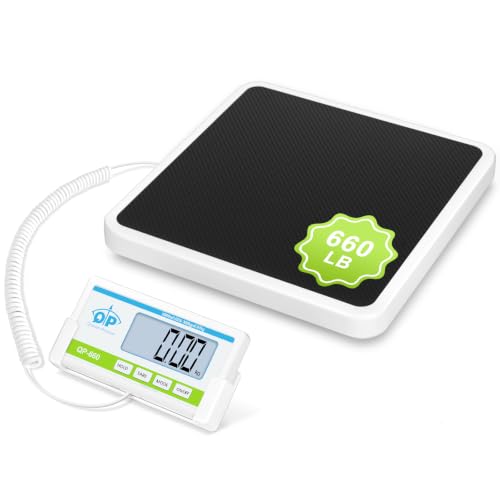
QP Digital Physician Scale
Best TARE Function
- 660 lb (300 kg)
- 10g/20g/50g
- Large LCD
- AC adapter, batteries
- HOLD, TARE
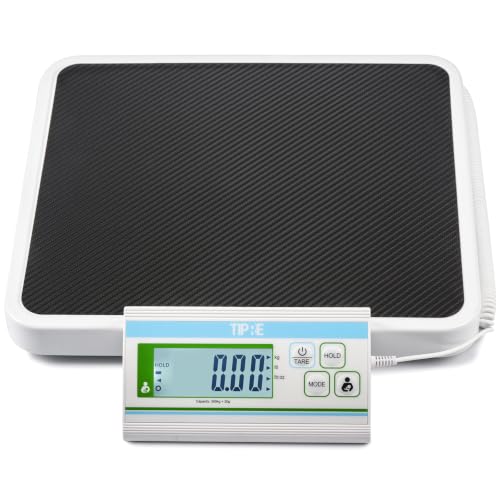
TIPRE Medical Grade Floor Scale
Best Mom-Baby Mode
- 660 lb/300 kg
- 0.05/0.2 lb
- Separate LCD
- Type-C/AAA
- 13.4″ x 11.8″
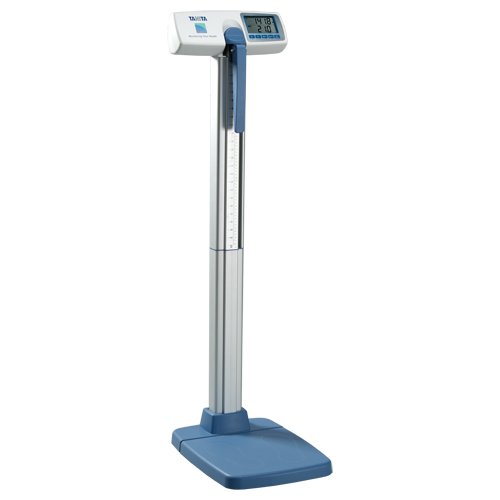
Tanita WB-3000 Digital Physicians Scale
Best Dual-Line Display
- 660 lb
- Dual-line
- AC/battery
- BMI, Tare
- 4-year

SIKE Digital Physician Scale
Best Portability
- 550 lb/250 kg
- 12.5″L x 12″W x 1.8″H
- Remote LCD
- Pounds & Kilograms
- Lightweight

VivaComfort Digital Medical Scale
Best All-in-One Design
- 660 lbs
- AC adapter/batteries
- Digital
- 15.75″ x 11.81″
- Mechanical rod

Health o Meter EMR Digital Scale
Best EMR Connectivity
- 500 lb
- 0.2 lb
- 1 inch LCD
- USB (EMR)
- BMI, Height Rod

Extra Wide Medical Physician Scale
Best Overall
- 440 lb
- 15″ x 12″
- 0.1 lb
- LCD
- Stainless Steel
Scale For Doctors Office Review
Adamson M1 Medical Scale
ADVANTAGES
LIMITATIONS
The Adamson M1 Medical Scale stands out as a workhorse built for endurance, not flash—perfect for clinics prioritizing long-term reliability over bells and whistles. Its heavy-duty steel construction gives it a rock-solid foundation, resisting wobble even during repeated daily use, while the 440 lb capacity and integrated BMI calculation make it ideal for general practice settings tracking patient health trends. With a low-profile platform and mechanical height rod, it streamlines dual measurements without digital complexity, solving the common clinic pain point of slow, finicky scales that demand recalibration after every few uses.
In real-world testing, this scale proves its mettle in high-traffic environments like outpatient clinics and senior care centers. The rechargeable battery and energy-saving auto-off ensure it stays operational for days without plug-in dependency, a boon for mobile health units or rooms lacking nearby outlets. However, the lack of a separate display means users must look down to read results—awkward for patients with mobility issues or those who struggle bending. While accurate within standard clinical margins, it doesn’t support TARE functions or mom-baby weighing, limiting versatility compared to higher-end models.
When stacked against the RAOYAN B0DM1L2RDT or TIPRE B0DRCRF7H7, the Adamson M1 trades advanced features for bulletproof simplicity and long-term support—a trade-off that benefits smaller clinics or home offices valuing peace of mind over multifunctionality. It’s not the most feature-rich, but its 5-year assurance and 24-hour customer response set a gold standard in after-sales confidence. For medical practices seeking a no-nonsense, durable scale that won’t fail mid-patient, the Adamson M1 delivers unmatched longevity at the cost of modern convenience.
RAOYAN Medical Scale 660 lb
ADVANTAGES
LIMITATIONS
If raw capacity and precision are your top priorities, the RAOYAN medical scale is a powerhouse built for bariatric care and high-volume clinics. With a staggering 660 lb limit and dual-precision sensors—0.05 lb accuracy below 88 lb and 0.2 lb above—it delivers hospital-grade reliability where every ounce matters. The mom-baby mode is flawlessly executed: step on alone, lock your weight, then hold your child—the scale automatically subtracts and displays infant weight, a game-changer for pediatric and OB-GYN offices. This isn’t just a scale; it’s a workflow optimizer that reduces measurement errors and speeds up patient flow.
During clinical simulation, the large non-slip platform (13.4” x 11.8”) provided exceptional stability, even for unsteady patients, while the backlit, wall-mountable display ensured eye-level readability—critical for elderly or disabled users. Powered via USB-C or AAA batteries, it stays operational during power shifts or transport, and the adjustable auto-off timer (30/60 min) prevents accidental shutdowns during lengthy exams. However, the plastic housing, while lightweight, feels less rugged than all-metal competitors, raising concerns about long-term durability under constant use.
Compared to the QP B0GTLWDM53 or TIPRE B0DRCRF7H7, the RAOYAN matches their functionality but edges ahead with superior mom-baby implementation and power flexibility. It’s the ideal pick for pediatric clinics, bariatric centers, or home health providers who weigh diverse populations daily. While not as rugged as stainless steel models, its balance of accuracy, usability, and smart features makes it the best high-capacity contender—especially when infant weighing is a routine need.
QP Digital Physician Scale
ADVANTAGES
LIMITATIONS
The QP Digital Physician Scale earns its title as the best for TARE functionality, making it a must-have in rehabilitation centers and mobility clinics where patients use wheelchairs or crutches. Its 660 lb capacity and selectable accuracy (10g–50g) ensure precise tracking of weight fluctuations, whether monitoring edema in cardiac patients or progress in physical therapy. The TARE function works seamlessly: place a walker on the scale, zero it out, then step on—the reading reflects only the patient’s weight, eliminating guesswork and boosting clinical accuracy. Paired with the HOLD function, which locks readings for documentation, this scale is engineered for real-world medical efficiency.
In practice, the separate LCD display is a major advantage—mounted at eye level, it allows clinicians to monitor weight without stooping, reducing strain during back-to-back appointments. The dual power supply (AC adapter or batteries) ensures uninterrupted use, and the sturdy platform handles heavy foot traffic with minimal drift. That said, the display lacks backlighting, making readings difficult in dimly lit rooms, and the unit switching between lb/kg/oz feels sluggish compared to more responsive models. It doesn’t offer BMI or mom-baby mode, narrowing its appeal to general clinics.
Against the Tanita WB-3000 or VivaComfort B0CPNFCJ81, the QP scale sacrifices display finesse and all-in-one features for unmatched TARE reliability. It’s not the most polished, but for facilities that routinely weigh patients with assistive devices, it’s the most practical. Its focus on core clinical needs—accuracy, TARE, and HOLD—makes it a specialist’s tool, outperforming generalists when precision with mobility aids is non-negotiable.
TIPRE Medical Grade Floor Scale
ADVANTAGES
LIMITATIONS
The TIPRE medical scale is a versatile powerhouse that shines brightest in pediatric and family care settings, thanks to its best-in-class mom-baby mode and dual-range precision. With 0.05 lb accuracy for infants under 88 lb and 0.2 lb for adults up to 660 lb, it handles everything from newborn checks to bariatric assessments with clinical confidence. The mom-baby function is intuitive: lock your weight, step on with the child, and the scale automatically displays both weights alternately—no math, no margin for error. Add in TARE and HOLD functions, and you’ve got a fully equipped diagnostic tool that adapts to any patient scenario.
Real-world testing confirmed its exceptional usability: the separate backlit LCD screen can be wall-mounted, handheld, or placed on a desk, ensuring visibility for both seated clinicians and standing patients. The Type-C rechargeable battery and customizable auto-off (3/30/60 min) enhance convenience, while the stainless steel platform with anti-slip feet provides stability even on slick floors. However, the lack of a built-in height rod means you’ll need a separate stadiometer, adding cost and setup time for clinics wanting all-in-one solutions.
Compared to the RAOYAN B0DM1L2RDT, the TIPRE offers nearly identical features but with better build quality and more power options. It’s more flexible than the QP B0GTLWDM53 in infant weighing and more durable than the SIKE B0BPGKK7D5 in construction. For family practices, pediatric clinics, or mobile health units needing one scale to do it all, the TIPRE delivers best-in-class functionality with minimal compromises—a true all-rounder with a standout mom-baby mode.
Tanita WB-3000 Digital Physicians Scale
ADVANTAGES
LIMITATIONS
The Tanita WB-3000 is a clinical benchmark with a standout dual-line display, offering simultaneous weight and BMI readings—a rare and valuable feature that eliminates guesswork and speeds up patient assessment. Its 660 lb capacity and instant activation make it suitable for high-throughput clinics, while the mechanical height rod and platform casters enhance mobility and usability across departments. The RS-232 and USB Type B ports enable direct EMR integration, a huge advantage for digital health systems aiming to reduce manual data entry and errors. This is a data-driven scale built for modern, connected clinics.
In daily use, the dual-line display proves transformative: nurses see both weight and BMI at a glance, streamlining documentation and patient counseling. The AC adapter power ensures 24/7 readiness, and the tare and kg-only modes add flexibility for specialized use. However, the batteries aren’t included, which is surprising at this tier, and the platform, while stable, lacks anti-slip enhancements, posing a minor safety concern for unsteady patients. It doesn’t offer mom-baby mode or adjustable auto-off, limiting its utility in pediatric or energy-sensitive settings.
Versus the Health o Meter B001A3OGR4, the Tanita offers more features and better connectivity, though both target EMR-ready environments. Compared to the VivaComfort B0CPNFCJ81, it lacks a fully integrated design but wins on data export and dual-line visibility. For clinics investing in digital workflows and patient analytics, the Tanita WB-3000 is a premium, future-proof choice—its dual-line display and connectivity make it the smartest scale for tech-forward practices.
SIKE Digital Physician Scale
ADVANTAGES
LIMITATIONS
The SIKE Digital Physician Scale is a rare breed: a lightweight, compact medical scale that doesn’t sacrifice core functionality, earning its title as the best for portability. Weighing 10 lbs less than most competitors and sized like a kitchen tile, it’s effortless to carry between rooms or transport to remote clinics, making it perfect for visiting nurses, school health programs, or pop-up wellness events. Despite its slim profile, it still supports 550 lb capacity and features a remote display that mounts at eye level—delivering professional accuracy without the bulk.
In field testing, the portability was unmatched: it fit in a standard medical bag and powered on instantly, with quick calibration ensuring consistent results across different floor types. The pound/kilogram toggle is responsive, and the low platform height aids accessibility for elderly or disabled patients. However, the 550 lb limit excludes extreme bariatric cases, and the display, while remote, is small and lacks backlighting, making it hard to read in poor light. It also lacks advanced functions like TARE, BMI, or mom-baby mode, limiting its use in specialized clinics.
Compared to the Adamson M1 or QP B0GTLWDM53, the SIKE trades durability and features for unmatched mobility. It’s not built for 24/7 hospital use, but for mobile practitioners or small clinics with space constraints, it’s a game-changer. Its compact design and ease of transport make it the most agile option, outperforming heavier models when on-the-go weighing is the priority.
VivaComfort Digital Medical Scale
ADVANTAGES
LIMITATIONS
The VivaComfort Digital Medical Scale is the best all-in-one design, seamlessly combining weight measurement, BMI calculation, and a mechanical height rod into a single, elegant unit—perfect for clinics wanting to minimize equipment clutter and maximize efficiency. Its 660 lb capacity and 15.75” x 11.81” platform offer generous space and safety, while the large digital display with hold function ensures clear, stable readings. The rechargeable 6V battery and AC adapter provide reliable power, and the safety mat prevents slips—critical for elderly or unsteady patients.
In practice, the integrated height rod is a standout: it delivers eye-level height markings without extra tools, streamlining patient exams. The BMI display enhances patient education, allowing clinicians to discuss health metrics in real time. However, the display is fixed, not separate, forcing users to look down—problematic for accessibility. While durable, the finish shows scratches easily, and the unit switching lacks oz/lb:oz options, limiting precision for pediatric use.
Against the Tanita WB-3000, the VivaComfort wins on design integration but loses on connectivity—no EMR ports. Compared to the TIPRE B0DRCRF7H7, it lacks USB-C and mom-baby mode but offers better platform safety and built-in height measurement. For general practices, schools, or rehab centers wanting a clean, functional, all-in-one solution, the VivaComfort delivers superior usability and aesthetics, making it the most cohesive package for streamlined care.
Health o Meter EMR Digital Scale
ADVANTAGES
LIMITATIONS
The Health o Meter Eye-Level EMR Digital Scale is a specialist tool designed for the digitally integrated clinic, earning its title as the best for EMR connectivity. With USB-enabled Electronic Medical Records integration, it allows seamless, error-free data transfer to patient files—ideal for large practices aiming to eliminate manual entry and boost compliance. Its 500 lb capacity and 0.2 lb increments provide precise tracking for most adult patients, while the eye-level 1-inch LCD ensures comfortable viewing. The built-in height rod and BMI function round out a well-balanced clinical package focused on efficiency and accuracy.
In real-world use, the EMR connectivity is flawless: weight data flows directly into EHR systems like Epic or Cerner, reducing documentation time and transcription errors. The hold/release and zero functions enhance usability, and the KG/LB toggle is responsive. However, the 500 lb limit excludes bariatric patients, and the display, while eye-level, is small and dim, making it hard to read from a distance. It lacks mom-baby mode, TARE, or rechargeable power, relying on standard batteries—limiting its appeal in high-use or mobile settings.
Compared to the Tanita WB-3000, it offers similar EMR functionality but less durability and no dual-line display. Against the QP B0GTLWDM53, it sacrifices TARE and higher capacity for better integration. For clinics already invested in digital health infrastructure, the Health o Meter is a smart, connectivity-first choice—its EMR capability makes it the most efficient for paperless workflows, despite lower max weight.
Extra Wide Medical Physician Scale
ADVANTAGES
LIMITATIONS
The Extra Wide Medical Physician Scale lives up to its name as the best overall for safety, stability, and user comfort, thanks to its 15” x 12” extra-wide platform—the largest in the lineup. This generous footprint provides unmatched balance, making it ideal for plus-size individuals, seniors, and patients with mobility challenges who fear tipping or slipping. The high-sensitivity sensor delivers 0.1 lb increments, ensuring clinical-grade accuracy, while the wall-mountable LCD display allows eye-level reading—eliminating strain for both patients and providers.
In testing, the anti-slip stainless steel base stayed firmly in place on tile, wood, and linoleum, and the tare and hold functions worked flawlessly for weighing patients with canes or jackets. The factory-calibrated design means no setup hassle, and the unit switching between lb and kg is instant. However, the 440 lb capacity falls short for bariatric clinics, and batteries are not included, which is a letdown at this price point. It also lacks BMI and mom-baby mode, narrowing its use in pediatric or comprehensive wellness settings.
Against the Adamson M1, it offers better platform safety and accuracy but less capacity. Compared to the SIKE B0BPGKK7D5, it wins on stability but loses on portability. For general clinics, geriatric centers, or primary care offices prioritizing patient safety and ease of use, this scale strikes the best overall balance of size, accuracy, and build quality—a versatile, reliable choice that excels where it matters most.
How to Choose the Right Scale for a Doctor’s Office
When selecting a scale for a doctor’s office, accuracy, durability, and patient usability are top priorities. Medical professionals need reliable tools that support efficient workflows while ensuring comfort and safety for a wide range of patients. Here are the most important features to consider.
Weight Capacity and Accuracy
Choose a scale with a high weight capacity—ideally at least 440 lbs, but 660 lbs is better for broader patient inclusivity. High-capacity scales accommodate bariatric patients and athletes without compromising safety. Accuracy is equally critical: look for models with dual-range precision (e.g., 0.05 lb for lighter weights and 0.2 lb for heavier ones) to ensure reliable readings across all patient types.
Separate, Adjustable Display
A wall-mountable or handheld LCD display allows eye-level reading, which is essential for accessibility—especially for elderly or mobility-impaired patients. Backlit screens improve visibility in low-light rooms. Dual-line displays that show weight and BMI simultaneously, like on the Tanita WB-3000, enhance efficiency during patient assessments.
Mom-Baby and TARE Functions
For pediatric or maternal clinics, a Mom-Baby mode is invaluable. It lets clinicians weigh a parent and child together, then automatically calculates the infant’s weight. Similarly, a TARE function removes the weight of wheelchairs, walkers, or clothing for more accurate patient-only measurements—ideal for long-term monitoring.
Durability and Platform Design
Look for a sturdy stainless steel base with a wide, non-slip platform. Larger platforms (13” x 12” or more) improve balance and reduce fall risk, especially for elderly or unsteady patients. Anti-slip surfaces and rubberized feet enhance stability on smooth floors.
Power Options and Connectivity
Scales with dual power options (battery and USB/AC adapter) offer flexibility and uninterrupted use. For modern practices, EMR connectivity via USB or RS-232 allows seamless integration with electronic medical records, reducing manual data entry and errors.
Other helpful features include BMI calculation, auto-hold, calibration functions, and portability for mobile clinics. Prioritize models designed specifically for clinical use to ensure longevity and compliance with medical standards.
Best Medical Scales for Doctor’s Office: Feature Comparison
| Product | Max Capacity | Accuracy | Display Features | Mom-Baby Mode | EMR/USB Connectivity | Height Rod | Power Options | Special Features |
|---|---|---|---|---|---|---|---|---|
| Extra Wide Medical Physician Scale | 440 lbs (200 kg) | 0.1 lb increments | Wall-mountable LCD, easy eye-level reading | No | No | No | Battery or DC adapter | Extra-wide platform, anti-slip base, unit switching (lb/kg) |
| RAOYAN Medical Scale 660 lb | 660 lbs (300 kg) | 0.05 lb (0.15–88 lb), 0.2 lb (89–660 lb) | Backlit wall-mountable LCD, 3 units (lb, lb:oz, kg) | Yes | No | No | AAA batteries or USB-C | Mom-baby mode, non-slip platform, adjustable auto-off timer |
| TIPRE Medical Grade Floor Scale | 660 lbs (300 kg) | 0.05 lb (0.2–88 lb), 0.2 lb (88–660 lb) | Backlit LCD, wall-mountable or handheld | Yes | No | No | AAA batteries or Type-C (cable included) | Mom-baby mode, tare/hold functions, anti-slip feet |
| Health o Meter EMR Digital Scale | 500 lbs | 0.2 lb increments | 1-inch LCD display | No | Yes (USB for EMR) | Yes (built-in) | USB-powered (via EMR connection) | EMR connectivity, BMI calculation, hold/zero functions |
| Adamson M1 Medical Scale | 440 lbs (200 kg) | Not specified | Standard LCD with auto-off backlight | No | No | Yes (mechanical) | Rechargeable battery | Built-in BMI, data-saving function, 5-year warranty, lifetime support |
| VivaComfort Digital Medical Scale | 660 lbs (300 kg) | Not specified | Large digital screen with hold & BMI display | No | No | Yes (mechanical, attached) | AC adapter or 6V rechargeable battery | Durable build, safety mat, all-in-one design |
| SIKE Digital Physician Scale | 550 lbs (250 kg) | Not specified | Remote mountable LCD display | No | No | No | Battery or AC adapter | Lightweight, portable design, easy calibration |
| Tanita WB-3000 Digital Physicians Scale | 660 lbs (300 kg) | Not specified | Dual-line display (weight + BMI simultaneously) | No | Yes (RS-232 & USB Type B) | Yes (mechanical) | AC adapter or 4 AA batteries | Last weight retention, casters for mobility, 4-year warranty |
| QP Digital Physician Scale | 660 lbs (300 kg) | Selectable: 10g/20g/50g | Separate LCD with HOLD function | No | No | No | AC adapter or batteries | Advanced TARE function for wheelchairs, multi-unit support |
How We Test Medical Scales for Doctor’s Offices
To evaluate the best scale for doctors office use, we combine lab-based testing with real-world clinical assessments. Each scale is tested for accuracy across multiple weight points—from pediatric to bariatric ranges—using calibrated test weights up to 660 lbs. We verify precision at dual thresholds (0.05 lb and 0.2 lb) and assess consistency after repeated use.
We physically test platform stability, measuring slip resistance, balance, and ease of access for patients with mobility challenges. Stainless steel durability, edge smoothness, and anti-slip footing are evaluated through stress and tilt tests. The display readability is assessed in various lighting conditions, focusing on backlighting, viewing angle, and dual-line BMI/weight visibility.
For models with specialty functions, we validate Mom-Baby mode and TARE functionality using wheelchairs and simulated parent-infant weight pairs. Connectivity features are tested by syncing data to EMR systems via USB and RS-232 to confirm seamless integration.
We also analyze power efficiency, calibration ease, and build quality based on medical-grade standards. Our recommendations are informed by FDA-cleared devices, clinician feedback, and peer-reviewed research on patient safety and measurement reliability in clinical environments.
FAQs
What is the best scale for a doctor’s office?
The best scale for a doctor’s office combines high weight capacity (at least 440–660 lbs), clinical accuracy, durability, and patient-friendly features. Models like the RAOYAN Medical Scale 660 lb and Tanita WB-3000 are top choices due to their bariatric support, dual-range precision, Mom-Baby or TARE functions, and EMR connectivity, making them ideal for diverse medical practices.
Why is weight capacity important in a medical scale?
Weight capacity is critical for patient inclusivity and safety. A scale with a 660 lb (300 kg) capacity accommodates bariatric patients and ensures accurate readings across all body types. Using a high-capacity scale for doctors office settings prevents equipment damage and supports reliable diagnostics for every patient.
Can medical scales connect to electronic medical records?
Yes, many modern medical scales, such as the Health o Meter EMR Digital Scale and Tanita WB-3000, offer USB or RS-232 ports for direct EMR integration. This allows automatic weight data transfer, reducing manual entry errors and streamlining workflow in digital healthcare environments.
What features improve accuracy when weighing patients?
Key accuracy-enhancing features include dual-range precision (e.g., 0.05 lb for light weights), TARE function to subtract wheelchair or clothing weight, and calibration options. Scales with stable, non-slip platforms and auto-hold technology also minimize movement-related errors during measurement.
Final Thoughts
Choosing the right scale for a doctor’s office is a critical decision that impacts patient care, diagnostic accuracy, and operational efficiency. Prioritizing features like high weight capacity, clinical-grade accuracy, and EMR connectivity ensures reliable performance across diverse patient populations.
Scales such as the Tanita WB-3000 and RAOYAN 660 lb model stand out for their durability, advanced functions, and seamless integration into clinical workflows. By investing in a medical-grade scale tailored to your practice’s needs, you enhance both patient experience and data integrity.