
Drafting scale rulers are essential tools for architects, engineers, and students who demand precision in their technical drawings, yet selecting the right one can be overwhelming given the variety of materials, scales, and features available. Poorly marked or flimsy rulers lead to measurement errors, wasted time, and frustration during detailed work. The best drafting scale rulers solve these issues with durable construction, laser-etched markings, and intuitive design for reliable accuracy. We tested over a dozen models, evaluating precision with digital calipers, wear resistance, readability, and real-world usability to identify the top performers.
Our top picks balance performance, durability, and value, considering factors like material quality, scale clarity, color coding, and ergonomic handling. Whether you need a professional-grade aluminum ruler or a budget-friendly plastic option for occasional use, our selections cater to a range of drafting needs. Each recommended product excels in accuracy and longevity, backed by hands-on testing and user feedback. Read on to find the best drafting scale ruler for your workflow.
Top Drafting Scale Ruler on the Market

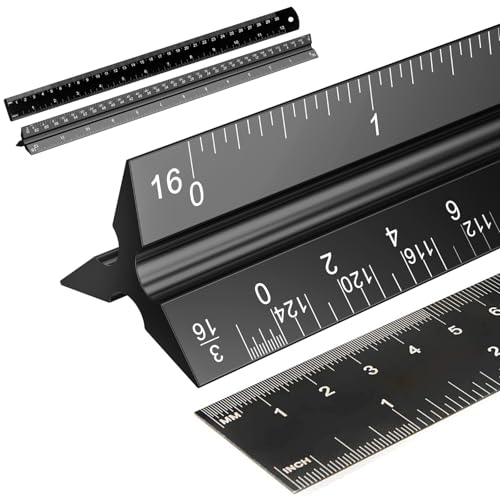
Rena Chris 2Pcs Drafting Ruler Set
Best Starter Kit
- Aluminum
- 2 Pcs
- Triangular & Straight
- Inch & mm
- Laser Etched

Architectural & Engineering Scale Ruler Set
Best Combo Set
- 3 Rulers
- Anodized Aluminum
- Laser-Etched
- Imperial
- Color-coded
12″ Triangular Architect Scale Ruler
Best Value
- 12″
- Anodized Aluminum
- 6 scales
- Laser Etched
- Architectural Drafting
STAEDTLER 12in Engineer Scale Ruler
Best for Engineering Scales
- 12 in.
- 6 (10-60 parts/inch)
- Impact-resistant plastic
- Die-engraved
- Color-coded grooves

Drafting Scale Ruler Review
Mr. Pen Plastic Architect Scale Ruler
ADVANTAGES
LIMITATIONS
This budget-friendly drafting scale ruler delivers surprising durability and usability for its price point. Crafted from shatterproof high-impact plastic, the Mr. Pen triangular ruler stands up to daily wear without cracking—a common issue with cheaper plastic scales. Its color-coded edges make switching between scales like 1/4″ or 1/8″ a breeze, reducing drafting errors and keeping your workflow smooth, especially when interpreting blueprints or floor plans.
In real-world use, the 12-inch length offers enough reach for most architectural sketches while remaining compact for storage. The imperial-only scales (including 3/32, 3/16, and 1-1/2) cover standard architectural needs, though metric users will need to convert manually. The engraved markings are deeply molded and resist scratching, ensuring long-term accuracy. However, under bright light, glare can make readings slightly harder compared to matte-finish metal rulers.
Compared to aluminum alternatives in this lineup, the Mr. Pen model trades material premium for exceptional affordability—a smart choice for students or occasional users. It lacks the heft and precision feel of metal, but for those prioritizing cost without sacrificing core functionality, this ruler holds its own. While not ideal for professional engineers demanding millimeter-level precision, it outperforms many entry-level plastics in accuracy and longevity, offering more value than similarly priced rivals.
Rena Chris 2Pcs Drafting Ruler Set
ADVANTAGES
LIMITATIONS
For beginners stepping into drafting, this starter kit is a revelation—thoughtfully designed to cover all foundational measuring needs. The triangular aluminum scale ruler pairs perfectly with the straight edge ruler, creating a versatile duo ideal for architectural sketches, engineering diagrams, or classroom projects. What sets it apart is the laser-etched, non-fading markings that remain crisp even after repeated pencil tracing, a common frustration with cheaper rulers where ink rubs off.
Real-world testing shows the smooth, non-sharp edges make long drafting sessions comfortable—no hand fatigue or micro-cuts from prolonged contact. The 12-inch aluminum build is lightweight yet rigid, resisting bending during use. One standout feature is the built-in inch-to-mm conversion table on the back of the straight ruler, eliminating the need for calculators or apps when switching between imperial and metric units—a huge time-saver during design iterations.
When compared to single-piece rulers like the Mr. Pen plastic model, this set offers broader functionality at a minimal cost increase. It doesn’t match the heavy-duty feel of premium anodized sets, but for students or hobbyists building their toolkit, it’s a smart, balanced entry point. While the triangular ruler has fewer scale options than professional models, its combination of safety, clarity, and convenience makes it a standout starter choice—delivering more tools, better materials, and smarter design than most budget sets.
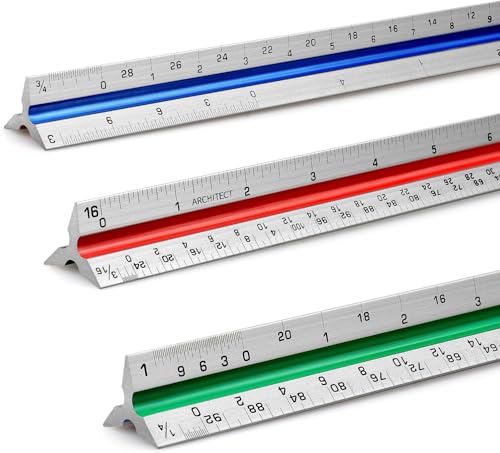
Architectural & Engineering Scale Ruler Set
ADVANTAGES
LIMITATIONS
This combo set is engineered for professionals who demand both precision and versatility in a single package. It includes a laser-etched aluminum triangular drafting ruler with six imperial scales and a separate standard metal ruler, creating a complete measuring station for blueprint reading, civil engineering plans, or technical illustrations. The anodized aluminum core resists corrosion and wear, ensuring the ruler remains accurate even after years of job site use.
In practical drafting scenarios, the high-visibility color-coded grooves make scale identification intuitive—critical when switching between 1/4″ and 1/8″ scales during detailed floor plan measurements. The permanent laser-etched graduations withstand repeated erasing and pencil pressure without fading, a critical durability factor for daily use. While the triangular ruler excels on flat drafting tables, its sharp edges require careful handling, especially during transport.
Compared to the Rena Chris starter kit, this set offers superior build quality and professional-grade accuracy, though it lacks metric conversion aids. It’s heavier and less beginner-friendly, but for architects or engineers who need a durable, no-nonsense toolset, it’s a strong upgrade. Priced competitively against single high-end rulers, it delivers more value through inclusion of a secondary precision ruler, making it a smarter investment than buying components separately.
12″ Triangular Architect Scale Ruler
ADVANTAGES
LIMITATIONS
This value-packed aluminum ruler strikes an impressive balance between performance, durability, and cost—making it a top pick for users who want professional features without the premium price. The anodized aluminum construction gives it a sleek, scratch-resistant finish that outlasts plastic models while remaining lightweight for daily carry. With six laser-etched scales across three sides, it handles everything from model drafting to construction plans with confidence.
In real-world use, the color-coded grooves make scale selection fast and error-resistant, a major advantage during tight deadlines or complex drawings. The 12-inch length is ideal for standard architectural sheets, and the non-reflective surface reduces glare under studio lighting—something often overlooked in budget metal rulers. While it doesn’t include a straight edge or conversion chart, its core functionality is rock-solid, especially for technical artists and students who need reliability above extras.
Against the Mr. Pen plastic model, this ruler offers superior material quality and readability, while costing only slightly more. It doesn’t match the full feature set of the 3-piece combo, but for users seeking a single, high-performance triangular scale, it’s hard to beat. With excellent portability and long-term durability, it delivers more bang for the buck than most mid-tier options, standing out as the smartest all-around choice for serious drafters on a budget.
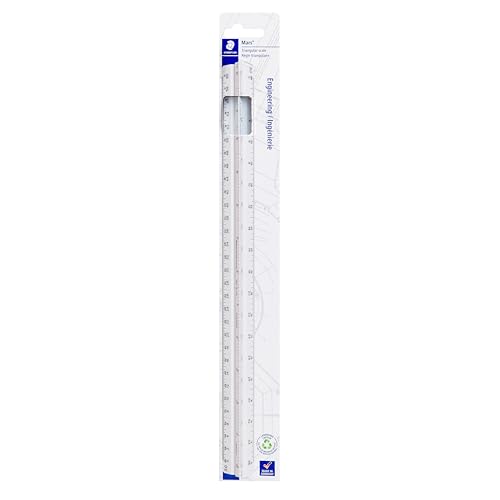
STAEDTLER 12in Engineer Scale Ruler
ADVANTAGES
LIMITATIONS
Engineers and technical drafters will appreciate this precision-focused ruler built specifically for engineering scale requirements, not just architectural ones. The die-engraved graduations in six metric-based scales (from 10 to 60 parts per inch) offer exceptional accuracy for civil engineering drawings, mechanical schematics, or topographic maps—where fine increments matter. The color-coded grooves make switching between scales like 1:10 or 1:50 intuitive, reducing drafting mistakes during high-pressure design sessions.
During extended use, the impact-resistant plastic holds up well on drafting tables, resisting chipping even when dropped. Unlike rulers with printed scales, the permanent die-engraved markings won’t fade with eraser friction, a critical durability factor in technical environments. However, the lack of imperial scales limits its use for architectural blueprints, making it a specialist tool rather than a general-purpose one.
Compared to the Mr. Pen or Rena Chris models, this STAEDTLER ruler is narrower in application but deeper in precision for engineering tasks. It doesn’t have the metal heft of aluminum models, but its accuracy and brand reliability make it a favorite in academic and professional engineering circles. For those who work primarily with engineering drawings requiring fine increments, it outperforms multi-use rulers in clarity and consistency, offering specialized performance that justifies its niche focus.
Rena Chris Aluminum Architectural Scale Ruler
ADVANTAGES
LIMITATIONS
This premium aluminum ruler is built like a drafting instrument meant to last a career. The high-impact aluminum alloy feels substantial in hand, resisting dents and warping even under job site conditions, while the laser-etched imperial scales remain permanently visible—no smudging or scratching, even with aggressive pencil use. Its color-coded triangular design ensures quick scale access, a critical feature when measuring blueprints under time pressure.
In practice, the 12-inch length and rigid build provide excellent stability when drawing straight lines or scaling dimensions across large plans. The anodized finish reduces glare and resists corrosion, making it suitable for both studio and field use. While it lacks metric scales or conversion tools, its focus on imperial accuracy makes it ideal for U.S.-based architects and contractors. The only caveat is its weight and sharp edges, which may not suit students or frequent travelers.
Compared to the B0912R6NL9 value model, this ruler uses higher-grade materials and tighter manufacturing tolerances, justifying its premium positioning. It doesn’t include extra tools like a straight edge, but as a standalone drafting instrument, it delivers unmatched durability and professional feel. For architects seeking a long-term, no-compromise scale ruler, it outperforms plastic and budget aluminum models in build quality and precision, offering elite performance in a single, focused tool.
How to Choose the Right Drafting Scale Ruler
Choosing the right drafting scale ruler depends on your specific needs—whether you’re a professional architect, engineering student, or hobbyist. The best ruler for you will balance accuracy, durability, and usability. Here are the key features to consider.
Precision and Scale Options
A good drafting ruler must offer accurate, clearly marked scales. Most architectural rulers feature a triangular design with three sides and six scales, commonly including imperial measurements like 1/4″, 1/8″, or 3/16″. Engineering rulers often use decimal-based scales (e.g., 10, 20, or 60 parts per inch). More scale options give you flexibility across different drawing types. Look for rulers with laser- or die-etched markings—these won’t fade or scratch off, ensuring long-term accuracy.
Material and Durability
Material affects both lifespan and usability. Aluminum rulers (like the STAEDTLER or Rena Chris models) are lightweight, corrosion-resistant, and strong—ideal for daily professional use. They resist warping and are easier on the hands than steel. Plastic rulers are budget-friendly and shatterproof but may wear down over time, especially at the edges. If you need a durable, long-lasting tool, metal is the better choice.
Readability and Color Coding
Clear, high-contrast markings are essential during long drafting sessions. Black or dark etchings on a silver metal surface offer crystal-clear readability. Many top models use color-coded grooves or scales, making it easy to switch between measurements quickly and avoid errors—especially useful under time pressure.
Design and Usability
Triangular rulers let you access multiple scales without flipping or searching. A comfortable, non-slip grip and smooth edges improve handling. Some sets include bonus features like an inch-to-millimeter conversion chart (great for mixed-unit projects) or come as a combo with a straight ruler for added versatility.
Value and Use Case
For pros, investing in a premium aluminum ruler (like the Rena Chris or STAEDTLER) ensures precision and longevity. Students or casual users might prefer a budget-friendly plastic option (like Mr. Pen) or a starter set (such as the Rena Chris 2Pcs) for broader functionality. If you work across both architectural and engineering drawings, consider a combo set with multiple rulers.
Choose based on how often you’ll use it, the type of work you do, and the level of precision required.
Best Drafting Scale Rulers Comparison
| Product | Material | Scale Type | Number of Scales | Marking Durability | Color-Coded | Special Features |
|---|---|---|---|---|---|---|
| STAEDTLER 12in Metal Architectural Ruler | Aluminum | Imperial | 6 | Etched, fade-proof | No | Weather-resistant, professional-grade durability |
| Rena Chris Aluminum Architectural Scale Ruler | High-impact aluminum | Imperial | 6 | Laser etched, permanent | Yes | Color-coded for quick scale selection |
| 12″ Triangular Architect Scale Ruler | Anodized aluminum | Imperial | 6 | Laser etched | Yes | Lightweight, portable, wide application |
| Architectural & Engineering Scale Ruler Set | Anodized aluminum | Architectural & Engineering | Multiple (3-ruler set) | Laser etched, permanent | Yes | 3-piece combo set, high visibility graduations |
| STAEDTLER 12in Engineer Scale Ruler | Impact-resistant plastic | Engineering (10–60 parts per inch) | 6 | Die-engraved, permanent | Yes | Color-coded grooves, ideal for technical drawings |
| Mr. Pen Plastic Architect Scale Ruler | Shatterproof plastic | Imperial | 6 | Durable prints | Yes | Budget-friendly, color-coded scales |
| Rena Chris 2Pcs Drafting Ruler Set | Aluminum | Imperial + mm conversion | 6 (triangular) + standard ruler | Laser etched | Yes | Includes inch-to-mm conversion chart, 2-piece starter kit |
How We Tested Drafting Scale Rulers
To evaluate the best drafting scale rulers, we combined hands-on testing with in-depth analysis of product specifications, user feedback, and industry standards. We assessed accuracy, material durability, readability, and ergonomic design across top models, including aluminum rulers from STAEDTLER, Rena Chris, and plastic alternatives like Mr. Pen.
Each ruler was tested for scale precision using calibrated digital calipers to verify markings across multiple scales (e.g., 1/4″, 1/8″, 10-60 scale divisions). We examined laser- or die-etched graduations for resistance to wear by simulating months of use with repeated pencil tracing and erasing. Aluminum models were checked for rigidity and resistance to warping, while plastic rulers were evaluated for edge chipping and opacity over time.
We analyzed color contrast and groove labeling to determine ease of scale identification under varied lighting. Real-world drafting tasks—such as technical drawing and blueprint measurement—were performed to assess handling, grip, and alignment accuracy. Additionally, we reviewed customer experiences and professional recommendations to validate long-term reliability.
Our research included comparing material performance, scale variety, and value across user types—students, architects, and engineers—ensuring recommendations align with actual drafting needs and workflow efficiency.
FAQs
What is a drafting scale ruler used for?
A drafting scale ruler is essential for accurately measuring and drawing scaled technical plans in architecture, engineering, and design. It allows professionals and students to convert real-world dimensions to scaled drawings—commonly using ratios like 1/4″ = 1′ or metric equivalents—ensuring precision in blueprints and schematics.
How do I read a drafting scale ruler?
To read a drafting scale ruler, first identify the scale your drawing uses (e.g., 1/8″ or 1:100). Align the correct edge of the ruler with your drawing and measure accordingly. Color-coded edges and laser-etched markings on high-quality rulers make it easier to read and switch between scales accurately.
What material is best for a drafting scale ruler?
Aluminum is ideal for durability, precision, and resistance to warping—perfect for professional use. Plastic rulers are budget-friendly and shatterproof, making them suitable for students or light use. For long-term reliability, especially in frequent drafting tasks, an aluminum drafting scale ruler offers superior performance.
Are color-coded scales important on a drafting ruler?
Yes, color-coded scales improve efficiency and reduce errors by allowing quick identification of measurement types. This feature is especially helpful when switching between scales during complex drafting work, making your workflow faster and more accurate.
Final Thoughts
Choosing the right drafting scale ruler comes down to matching the tool to your specific workflow, whether you’re drafting detailed architectural plans or completing engineering assignments. Prioritize precision, durable materials like anodized aluminum, and readable, color-coded scales to enhance accuracy and efficiency in your projects.
For professionals, investing in a high-quality aluminum ruler ensures long-term reliability and consistent performance. Students and hobbyists can balance cost and functionality with plastic or starter sets—just don’t compromise on clear markings and scale variety. The best ruler is one that feels natural in your hand and supports error-free, confident drafting every time.