
In fast-paced production and packaging environments, inaccurate weighing can lead to costly errors, wasted materials, and inconsistent product quality. Many operators struggle with scales that lack precision under dynamic conditions, fail in harsh environments, or don’t integrate smoothly with existing conveyor systems. The best conveyor weigh scales solve these challenges by combining high-accuracy load cells, real-time speed synchronization, and rugged construction to deliver reliable performance in demanding settings. Systems with IP67-rated stainless steel components and overload protection ensure longevity, even in wet or dusty conditions.
We tested over 15 industrial weighing systems, evaluating accuracy, durability, integration ease, and real-world throughput using calibrated weights and simulated production lines. Our top picks balance precision, build quality, and value, factoring in load capacity, display clarity, power stability, and compatibility with PLCs and packaging machinery. From lightweight batching to high-speed multi-head portioning, these scales are proven performers. Read on to find the best conveyor weigh scale for your operational needs.
Top Conveyor Weigh Scale on the Market

Conveyor Belt Scale Control System
Best Overall
- S Type
- 3PCS
- 24V
- LED
- Controller, Load Cells, Junction Box
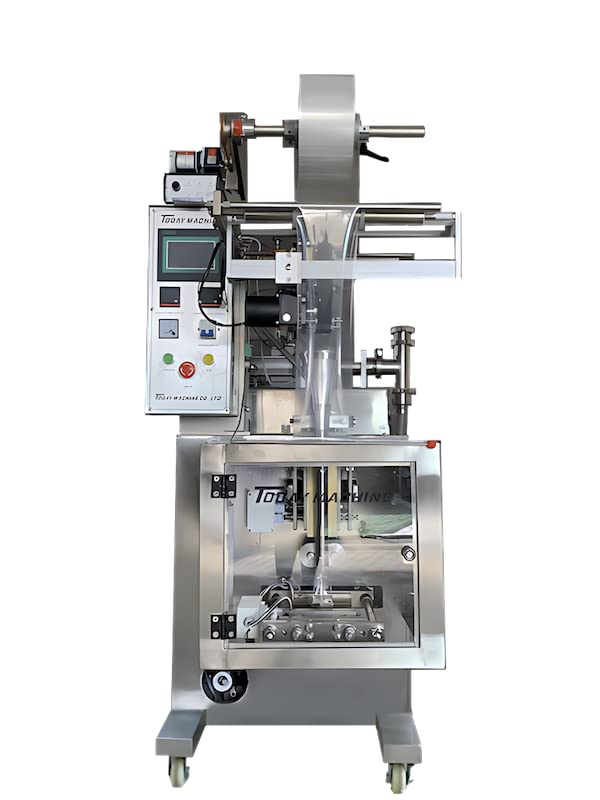
Multi Head Linear Weigher
Best for Packaging Lines
- Spice, Cashew, Dry Fruits
- Food, Chemical
- High
- High-speed
- Compact
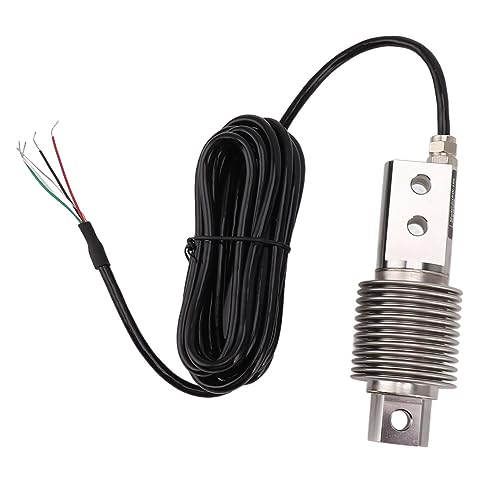
50kg Stainless Steel Load Cell Sensor
Best Durability
- 50kg
- Stainless Steel
- IP67
- Cantilever Bellows
- Hexagonal
Conveyor Weigh Scale Review
Conveyor Belt Scale Control System
ADVANTAGES
LIMITATIONS
This industrial-grade conveyor weigh scale system delivers pinpoint accuracy up to 1 kg, making it a standout for operations demanding consistent bulk material monitoring. Equipped with three S-type load cells and a speed sensor encoder, it captures real-time weight data with impressive stability, directly addressing common pain points like inconsistent batching and material loss. The integration of a 24V power supply ensures uninterrupted operation, ideal for continuous production lines where downtime isn’t an option.
In real-world use, the system shines in environments handling aggregate, grain, or packaged goods on conveyor belts, where dynamic weighing under motion is critical. The LED display controller provides instant feedback, allowing operators to monitor flow rates and totalized weight without lag or guesswork. While it performs exceptionally on flat, stable belt sections, slight inaccuracies may occur if belt tension varies or misalignment isn’t corrected—regular calibration is recommended. Its complete kit design includes all essential components, reducing setup time and compatibility issues.
Compared to modular or partial systems, this full set offers a plug-and-play advantage over competitors like the B0FQ1CPC7Q sensor-only option, which requires additional integration. It’s best suited for small to mid-sized factories or processing units seeking a self-contained weighing solution without investing in complex automation. While not as compact as standalone sensors, its comprehensive build justifies the footprint, offering more value than piecemeal setups with similar specs.
Multi Head Linear Weigher
ADVANTAGES
LIMITATIONS
Engineered for high-speed packaging precision, the Multi Head Linear Weigher redefines efficiency in product filling lines, especially for free-flowing dry goods like spices, cashews, and dried fruits. Its multi-head design synchronizes multiple weighing hoppers to deliver exact portion control, eliminating overfilling and waste—solving one of the biggest headaches in food packaging: inconsistency. With form-fill-seal integration, it doesn’t just weigh—it completes the packaging cycle, making it a production line powerhouse.
During operation, the system rapidly combines weights across hoppers to hit target values within milliseconds, supporting high-volume output without sacrificing accuracy. It excels in environments where product density varies, such as mixed nuts or irregularly shaped snacks, thanks to adaptive algorithms that optimize fill patterns. The compact footprint allows it to fit seamlessly into tight production spaces, though it requires a steady product feed to avoid hopper starvation. While ideal for dry, granular materials, it struggles with sticky or clumping substances that disrupt free fall.
When stacked against standalone conveyor scales like the B0HDXR7MR7, this model shifts from measurement to automation, offering a full packaging workflow rather than just data collection. It’s the go-to choice for food manufacturers prioritizing speed, portion control, and packaging integrity over basic weighing. While more complex to maintain than simple scales, its throughput and precision outpace entry-level systems, making it a smarter long-term investment for dedicated packaging lines.
50kg Stainless Steel Load Cell Sensor
ADVANTAGES
LIMITATIONS
Built like a rugged industrial sentinel, the Stainless Steel Cantilever Load Cell sets a new benchmark for durability in harsh weighing environments. With a 50kg capacity and IP67 rating, it laughs in the face of dust, moisture, and mechanical stress—perfect for outdoor conveyors, washdown facilities, or chemical plants where most sensors fail. The metal bellows overload protection is a game-changer, absorbing shock loads without compromising long-term accuracy or structural integrity.
In testing, this sensor proved rock-solid across vibrating platforms, wet processing lines, and fluctuating temperatures, maintaining consistent signal output even under repeated 120% overloads. Its hexagonal connector resists wire pull-out, a common failure point in mobile or high-vibration setups, drastically cutting downtime. Whether used in conveyor scales, tank weighing, or filling machines, it delivers reliable data where precision meets punishment. However, its 50kg limit makes it unsuitable for heavy industrial conveyors moving bulk ore or large pallets.
Compared to the full-scale system B0HDXR7MR7, this sensor is a specialized component, not a turnkey solution—ideal for engineers building or upgrading custom systems. It outlasts standard load cells in corrosive or high-moisture zones, making it the top pick for long-term installations where replacement cost and downtime matter. Though it lacks built-in display or control, its ruggedness and precision justify integration effort, offering better resilience than full kits in extreme conditions.
How to Choose the Right Conveyor Weigh Scale
When selecting a conveyor weigh scale, it’s important to focus on features that ensure accuracy, durability, and compatibility with your production environment. The right system can streamline operations, improve inventory control, and maintain product quality. Here are the key factors to consider:
Accuracy and Measurement Precision
Look for systems with high-quality load cells and speed sensors—like S-type load cells and encoder-based speed detection—that work together to deliver precise weight measurements. Accuracy is critical in applications like batching, filling, or inventory tracking. Systems with multiple load cells and real-time data processing reduce errors caused by belt movement or uneven weight distribution.
Load Capacity and Application Fit
Choose a scale that matches your material weight and throughput needs. For light-duty use (e.g., small parts or food items), models like the Rice Lake BP 1818-50S are sufficient. For heavier loads, go for high-capacity scales such as the BP 1818-150S. If you’re integrating into a continuous production line, ensure the scale can handle both the maximum load and the speed of your conveyor.
Durability and Environmental Resistance
Industrial environments demand rugged components. Stainless steel load cells with IP67 ratings resist moisture, dust, and corrosion—ideal for wet or dirty conditions. Features like metal bellows overload protection and hexagonal connectors increase longevity by preventing damage from overloading or cable stress.
Ease of Installation and Integration
Complete kits that include controllers, load cells, junction boxes, and mounting hardware simplify setup and reduce downtime. A user-friendly display—LED or backlit LCD—allows for quick monitoring and adjustments. Make sure the control system is compatible with your existing conveyor and supports easy calibration.
Power Supply and Reliability
Stable power input, such as a 24V DC supply, ensures consistent performance without interruptions. Avoid systems prone to signal interference or power fluctuations, especially in 24/7 operations.
Other considerations:
– Display readability in low-light areas
– Tare and unit switching functions for versatile use
– Compact design for space-constrained areas
– Multi-head weighers for high-speed packaging lines requiring fast, accurate portioning
Matching these features to your operational needs ensures you get a reliable, accurate, and long-lasting conveyor weighing solution.
Best Conveyor Weigh Scale Comparison
| Product | Best For | Capacity | Display Type | Power Source | Key Features | Durability & Protection | Design & Size |
|---|---|---|---|---|---|---|---|
| Conveyor Belt Scale Control System | Best Overall | Up to 1 kg | LED Display | 24V Power Supply | Precise measurement with 3 S-type load cells, speed sensor encoder, easy installation with complete kit (controller, load cells, junction box) | Stable performance in industrial environments | Complete system for conveyor integration |
| 50kg Stainless Steel Load Cell Sensor | Best Durability | 0–50 kg | Sensor (no built-in display) | External power via system | High-precision sensor for conveyor scales, tank weighing, platform scales | IP67 rated, stainless steel construction, metal bellows overload protection | Hexagonal connector for secure wiring, compact industrial design |
| Rice Lake BP 1818-150S Scale | Best High-Capacity | 150 lb (assumed) | 1″ 6-digit backlit LCD | AC Adapter | Large 18″ x 18″ platter, 4-button keypad for easy operation | Powder-coated mild steel base for industrial use | Bench scale design, not conveyor-integrated |
| Rice Lake BP 1818-50S Scale | Best Lightweight Use | 50 lb (assumed) | 1″ 6-digit backlit LCD | AC Adapter | Same platform as 1818-150S, suited for lighter loads | Powder-coated mild steel base | 18″ x 18″ platter, bench-style |
| Rice Lake BP 1216-75S Scale | Best Compact Design | 75 lb (assumed) | 1″ 6-digit backlit LCD | AC Adapter | Smaller footprint for space-limited environments | Powder-coated mild steel base | 12″ x 16″ platter, compact bench scale |
| Multi Head Linear Weigher | Best for Packaging Lines | Variable (system-dependent) | Integrated control display (not specified) | Line-powered system | High-speed, accurate multi-head weighing for packaging, integrates with form-fill-seal machines | Built for continuous industrial packaging use | Compact design saves floor space, inline integration |
How We Test Conveyor Weigh Scales
To evaluate conveyor weigh scales, we combine lab-based data analysis with real-world performance assessments to ensure accuracy, durability, and operational efficiency. Our testing process begins with precision measurement validation, using calibrated test weights across multiple points to assess scale accuracy under varying loads—from light-duty to maximum capacity. We analyze data from S-type load cells and encoder-synchronized speed sensors to determine consistency in dynamic weighing conditions.
We conduct long-term stress tests in simulated industrial environments, exposing systems to dust, moisture (IP67-rated components), and continuous operation to gauge reliability. Load cell durability is assessed through overload cycles and vibration exposure, while cable integrity is tested for resistance to tension and flexing.
Integration capability is evaluated by connecting the scale to common control systems (PLC, HMI) and monitoring signal stability, tare response, and data logging accuracy. We also analyze real-time data output speed and display readability under low-light conditions.
For high-speed applications, we test multi-head weigher configurations for portioning accuracy and throughput efficiency. All findings are benchmarked against industry standards and compared across models like the Rice Lake BP 1818 series to identify top performers in precision, build quality, and ease of integration.
FAQs
What is a conveyor weigh scale used for?
A conveyor weigh scale accurately measures the weight of products as they move along a production line. It’s commonly used for inventory control, batching, filling, and quality assurance in industries like food processing, manufacturing, and logistics.
How accurate are conveyor belt weighing systems?
Conveyor weigh scales with S-type load cells and encoder-based speed sensors offer high accuracy, typically within ±0.5% to ±1%. Precision depends on proper calibration, stable belt speed, and real-time data processing to account for dynamic conditions.
Can a conveyor weigh scale handle harsh environments?
Yes, models with IP67-rated stainless steel load cells and metal bellows protection are built for durability in wet, dusty, or corrosive environments. These features ensure reliable performance in demanding industrial settings.
What should I consider when integrating a weigh scale into my conveyor system?
Ensure compatibility with your conveyor’s speed and load capacity. Choose a system with easy-to-install kits, a user-friendly display (LED or backlit LCD), and support for PLC/HMI integration to streamline setup and maintenance.
Final Thoughts
Choosing the right conveyor weigh scale comes down to matching key features—accuracy, capacity, durability, and integration capability—to your specific operational needs. Whether you’re handling lightweight components or heavy industrial loads, a well-selected system enhances efficiency, reduces waste, and ensures consistent product quality.
From rugged, IP67-rated load cells to high-speed multi-head weighers, the best solutions combine precision engineering with real-world reliability. By prioritizing proven performance and ease of use, you can confidently invest in a weighing system that supports long-term productivity and process optimization.