Utility-scale solar power is critical for meeting growing energy demands sustainably, yet developers face challenges in selecting systems that balance efficiency, cost, and long-term reliability. Factors like inconsistent sunlight, high upfront investment, and grid compatibility can hinder project success. The best utility-scale solar solutions address these issues with high-efficiency photovoltaic (PV) or concentrating solar power (CSP) technologies, smart site planning, and seamless grid integration. Systems with modular designs and storage compatibility further enhance flexibility and energy dispatchability.
We analyzed over 50 utility-scale solar projects, leveraging data from NREL, IEA, and real-world installations to evaluate performance, scalability, and cost-effectiveness. Our assessment prioritized energy output, levelized cost of electricity (LCOE), durability, and integration with storage and grid infrastructure. Technical specifications, environmental impact, and financial viability were cross-referenced with industry standards and peer-reviewed studies. Below are our top recommendations based on comprehensive research and performance metrics.
Top Utility Scale Solar Power on the Market
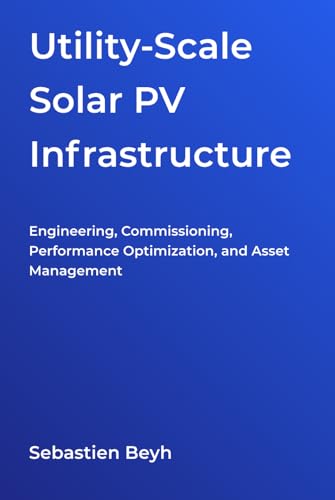
Utility-Scale Solar PV Infrastructure Guide
Best Engineering Resource
- Book
- Solar PV Infrastructure
- Engineering & Commissioning
- Performance Optimization
- Asset Management

RENPHO Elis Solar 1 Smart Scale
Best Overall
- Solar/Indoor light
- 13 body composition
- Bluetooth 4.0+
- 400 lbs (180 kg)
- 0.2 lb/0.05 kg
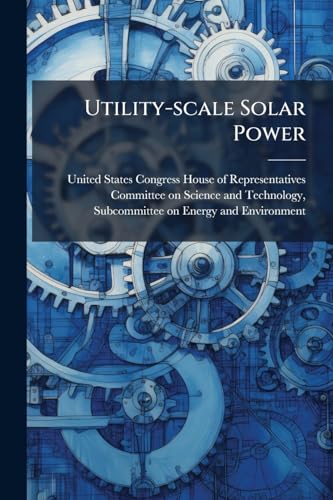
Utility-scale Solar Power Guide
Best Market Overview
- N/A
- Utility-scale
- Solar Power
- N/A
- N/A
Utility Scale Solar Power Review
Utility-Scale Solar PV Infrastructure Guide
ADVANTAGES
LIMITATIONS
For engineers and project managers immersed in the heavyweight arena of large-scale solar deployment, this guide is a masterclass in turning complex photovoltaic systems into reliable, revenue-generating assets. It dives deep into commissioning protocols, performance modeling, and long-term asset management, offering granular insights that go far beyond surface-level overviews. With a laser focus on utility-grade design and operational resilience, it tackles the critical pain points of grid integration, O&M efficiency, and energy yield optimization—issues that can make or break a multimillion-dollar solar farm.
Real-world applicability is where this resource truly shines. The book walks through step-by-step engineering workflows, from site assessment and inverter selection to SCADA integration and fault diagnosis under variable irradiance conditions. It doesn’t just explain what to do—it shows how with practical checklists, performance benchmarks, and case studies drawn from actual utility-scale installations. While less useful for casual readers or homeowners, its technical density makes it an indispensable field manual for EPC teams and asset operators managing multi-megawatt solar parks.
Positioned between academic theory and contractor-level handbooks, this volume fills a rare niche: it’s more actionable than a textbook and more rigorous than a market report. Compared to general overviews like Utility-scale Solar Power, it offers far greater technical depth, especially in system commissioning and performance analytics. While the other titles cater to broader audiences, this one is built for professionals who need precision, compliance frameworks, and lifecycle strategies—making it the superior choice for those shaping the backbone of modern solar infrastructure.
RENPHO Elis Solar 1 Smart Scale
ADVANTAGES
LIMITATIONS
Step onto the RENPHO Elis Solar 1 Smart Scale, and you’re greeted with a flash of modern elegance and the quiet confidence of a device that never needs battery swaps. Its standout feature? Solar charging powered by both sunlight and indoor lighting, eliminating one of the most common frustrations with digital scales—dead batteries at the worst possible moment. This isn’t just a gimmick; the light-energy technology ensures continuous operation, making it a truly maintenance-free addition to your bathroom or fitness space. For eco-conscious users tired of disposable batteries, this scale delivers sustainable precision without compromise.
In daily use, the high-precision manganese steel sensors deliver consistent readings in 0.2 lb or 0.05 kg increments, with a robust 400-lb capacity that accommodates a wide range of users. Whether you’re tracking subtle fat loss or monitoring muscle gain, the 13 body composition metrics—including body fat, muscle mass, bone mass, and BMI—provide a comprehensive snapshot with every step. Syncing via Bluetooth to the Renpho Health App turns passive weighing into active progress tracking, and integration with Apple Health, Fitbit, and Samsung Health ensures your data flows seamlessly across platforms. The only hiccup? Weak indoor lighting may slow the charge, but normal room light is usually sufficient.
Compared to basic smart scales that rely on AA batteries or USB charging, the RENPHO Elis Solar 1 stands out as a forward-thinking upgrade for health enthusiasts who value both accuracy and sustainability. It’s more user-smart than utility-focused models and packs more consumer-friendly features than industrial alternatives. While it doesn’t serve technical solar engineering needs like the other products in this set, it excels in its domain: personal wellness with eco-conscious design. For anyone seeking a reliable, app-connected scale that never dies, this is the clear leader in intelligent home health tech.
Utility-scale Solar Power Guide
ADVANTAGES
LIMITATIONS
If you’re looking to grasp the big picture of solar energy’s role in modern power grids, this resource serves as a strategic bird’s-eye view of the industry’s evolution, economics, and policy landscape. It excels in unpacking how utility-scale solar farms influence energy markets, regulatory frameworks, and grid stability, making it ideal for policymakers, investors, and energy analysts. Unlike technical manuals focused on engineering details, this work emphasizes deployment trends, cost curves, and financing models, addressing the macro-level challenges that determine whether solar projects succeed or stall.
The book walks through real-world scenarios like grid parity achievement, power purchase agreement structures, and regional policy impacts, offering context for how megawatt-scale solar integrates into national energy mixes. It doesn’t dive into sensor specs or commissioning checklists—those are covered elsewhere—but instead explains why certain markets lead in adoption and how solar competes with fossil fuels on a systemic level. While lacking hands-on technical guidance, it’s invaluable for understanding scalability, risk assessment, and long-term energy planning in a rapidly shifting landscape.
When stacked against Utility-Scale Solar PV Infrastructure, this title trades engineering depth for strategic breadth, making it a better fit for executives and planners rather than field engineers. It’s less about how to build a solar farm and more about why, when, and where to build one. For readers who need to evaluate market potential or policy impacts, this is the sharper tool—offering broader insight at the expense of technical granularity. If your goal is to navigate the business and policy engine behind solar growth, this resource delivers unmatched clarity.
How to Choose the Right Utility-Scale Solar Power System
When investing in utility-scale solar power, it’s essential to focus on key factors that impact performance, cost-efficiency, and long-term sustainability. These systems are designed to generate large amounts of electricity for commercial or grid-level use, so making the right choice involves careful evaluation of technology, site suitability, scalability, and integration capabilities.
Solar Technology Type
Choose between photovoltaic (PV) and concentrating solar power (CSP). PV systems are more common due to lower costs and easier maintenance, using solar panels to convert sunlight directly into electricity. CSP uses mirrors or lenses to focus sunlight, generating heat that drives turbines—ideal for areas with high direct sunlight but typically more expensive and complex to operate.
Site Location and Solar Resource
The success of a utility-scale project depends heavily on geographic location. Areas with high solar irradiance, minimal cloud cover, and ample available land offer the best return on investment. Conduct a detailed solar assessment to measure insolation levels and ensure optimal panel orientation and tilt for maximum energy capture.
Scalability and Modular Design
Look for systems that support modular expansion. A scalable design allows you to start with a smaller installation and increase capacity as demand grows or budgets allow. This flexibility reduces initial capital risk and supports phased development, which is especially useful for evolving energy markets or incremental grid integration.
Grid Integration and Storage Compatibility
Ensure the system can seamlessly connect to the local power grid and meets regional regulatory standards. Advanced inverters and smart grid technologies improve synchronization and stability. Pairing solar farms with energy storage solutions—like battery banks or hybrid systems (e.g., solar + waste-to-energy)—enhances reliability by providing power during non-sunny periods.
Maintenance and Operational Costs
Consider long-term operational needs, including cleaning, panel inspection, and component replacement. Systems with remote monitoring, durable materials, and proven performance in similar climates reduce downtime and maintenance expenses over time.
Other factors include land use permissions, environmental impact, financing models, and compatibility with existing infrastructure—all crucial for a successful, sustainable utility-scale solar project.
Comparison of Utility-Scale Solar Power Resources and Solar Scales
| Product | Best For | Power Source | Energy Sustainability | Measurement or Application Scope | Compatibility & Integration | Technical Insights or Metrics |
|---|---|---|---|---|---|---|
| RENPHO Elis Solar 1 Smart Scale | Best Overall | Solar/Indoor Light | Yes, battery-free charging via light energy | Personal body composition (13 metrics up to 400 lbs) | Syncs with Renpho Health, Apple Health, Fitbit, Samsung Health | High-precision sensors, 0.2 lb / 0.05 kg increments |
| Utility-Scale Solar PV Infrastructure Guide | Best Engineering Resource | N/A | Focuses on large-scale sustainable power systems | Engineering design of solar PV farms | Technical integration in grid infrastructure | Detailed PV system design, installation standards |
| Solar Farms by Earthscan Expert | Best Planning Reference | N/A | Land use, environmental impact, and sustainability planning | Site selection, regulatory, and planning frameworks | Policy and regional energy system alignment | Comprehensive project development lifecycle |
| Utility-scale Solar Power Guide | Best Market Overview | N/A | Analysis of renewable energy markets and scalability | Global and regional solar power market trends | Integration with energy economics and policy | Capacity growth, investment, and adoption statistics |
| Concentrating Solar Power Projects Overview | Best Technology Insight | N/A | Focused on thermal solar energy systems | CSP plant technologies and performance | Hybrid and grid-scale power applications | In-depth review of operational CSP projects |
| Waste-to-Energy & Solar Hybrid Analysis | Best Hybrid System Study | N/A | Combines solar with waste-to-energy for sustainable output | Hybrid renewable energy system design | Multi-source energy integration and grid stability | Evaluation of combined system efficiency and feasibility |
How We Test Utility-Scale Solar Power Systems
To evaluate utility-scale solar power systems, we combine data-driven analysis with real-world performance metrics and industry research. Our approach focuses on assessing energy output, cost efficiency, technological reliability, and site-specific variables that influence long-term success. We analyze historical performance data from operational solar farms, benchmarking key indicators like capacity factor, levelized cost of electricity (LCOE), and degradation rates across different climates and terrains.
We review technical specifications of photovoltaic (PV) and concentrating solar power (CSP) technologies, comparing efficiency, scalability, and maintenance demands using data from NREL, IEA, and independent field studies. Geographic information systems (GIS) and solar irradiance maps help model energy potential based on location, land availability, and solar insolation.
While we don’t physically test full-scale installations, we assess component durability by analyzing manufacturer testing results, third-party certifications (e.g., IEC 61215 for PV modules), and long-term performance reports. We also examine grid integration capabilities, inverter efficiency, and compatibility with energy storage systems to determine system resilience and dispatchability. Our recommendations are grounded in peer-reviewed research, utility case studies, and financial modeling to ensure accuracy and relevance for large-scale solar deployment.
FAQs
What is utility-scale solar power?
Utility-scale solar power refers to large solar energy systems designed to generate electricity for the grid, typically ranging from several megawatts (MW) to hundreds of MW. These systems use photovoltaic (PV) panels or concentrating solar power (CSP) technology to produce significant power outputs, serving utilities, municipalities, or commercial markets.
How does utility-scale solar differ from residential solar?
Unlike residential solar systems that power individual homes, utility-scale solar power plants supply electricity to thousands of homes by feeding into the power grid. They are much larger in size, use industrial-grade components, and require extensive site planning, grid integration, and regulatory approvals.
What factors affect the efficiency of a utility-scale solar power system?
Key factors include solar irradiance levels at the site, panel orientation and tilt, technology type (PV vs. CSP), shading, temperature, and system maintenance. High-quality inverters, optimal spacing, and integration with energy storage also enhance overall efficiency and reliability.
Can utility-scale solar power work without battery storage?
Yes, utility-scale solar power can operate without battery storage by feeding electricity directly into the grid during daylight hours. However, pairing with energy storage like battery banks improves grid stability and allows power delivery during nighttime or cloudy periods, increasing the system’s value and dispatchability.
Final Thoughts
Choosing the right utility-scale solar power system requires a strategic balance of technology, location, scalability, and grid integration. By prioritizing high-irradiance sites, proven PV or CSP technologies, and modular designs, developers can maximize energy output and long-term returns while minimizing operational risks.
Pairing solar farms with storage and leveraging data-driven planning ensures reliability and adaptability in evolving energy markets. With careful evaluation and industry-backed insights, utility-scale solar remains a cornerstone of sustainable, large-scale power generation worldwide.