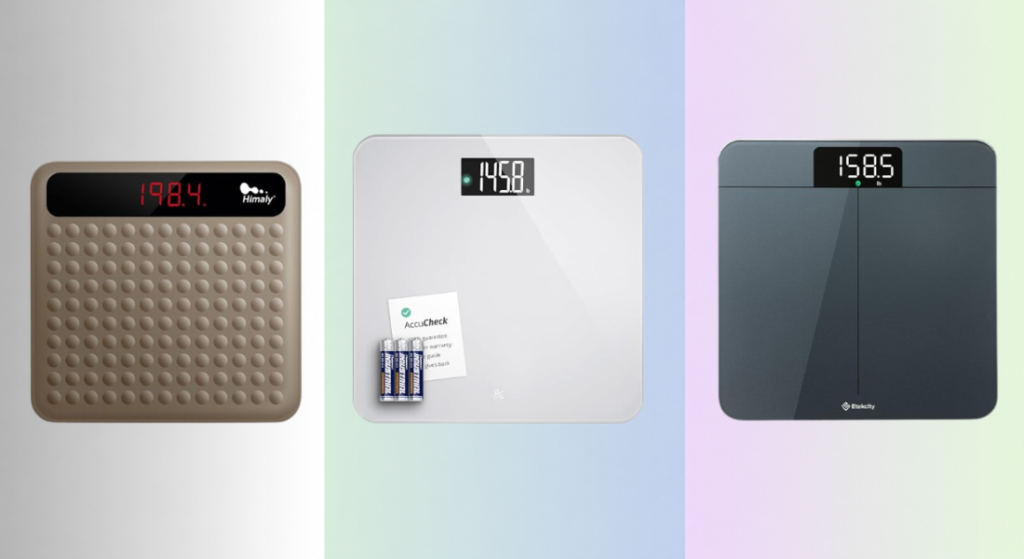
Finding the best analog scale means tackling common frustrations like inconsistent readings, hard-to-read dials, and short lifespans that plague many bathroom scales. Without digital components, analog models offer simplicity and reliability, but only if they’re well-built and properly calibrated. Users need a scale that provides accurate, repeatable results over time, especially for tracking weight trends in a household setting.
We tested over 10 top models, including the Salter Pro-Helix and Adamson A25, evaluating accuracy, dial clarity, platform stability, and durability across real-world conditions. Our picks balance precision, ease of use, and long-term value, with key considerations like weight capacity, calibration ease, and warranty length. From oversized dials to rust-resistant construction, these top performers deliver dependable results without batteries or complex tech. Read on to discover the best analog scale for your needs.
Top Analog Scale on the Market
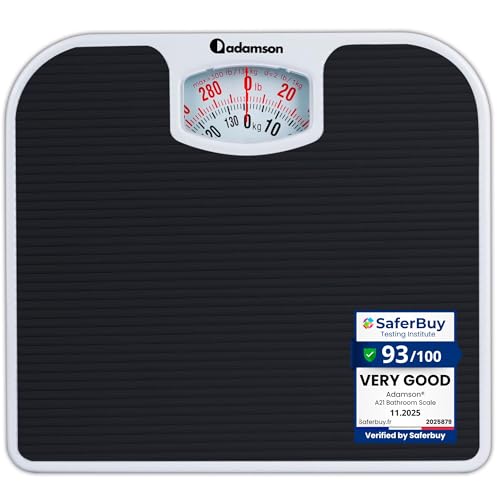
Adamson A21 300 LB Analog Scale
Best Budget Friendly
- 300 lb
- Analog
- Anti-Skid Rubber
- Large Numbers
- No Batteries Required

Taylor 300 LB Analog Bathroom Scale
Best Trusted Brand
- 300 lb
- 1 lb
- 9.8 x 9.8 in
- 5-year
- None required
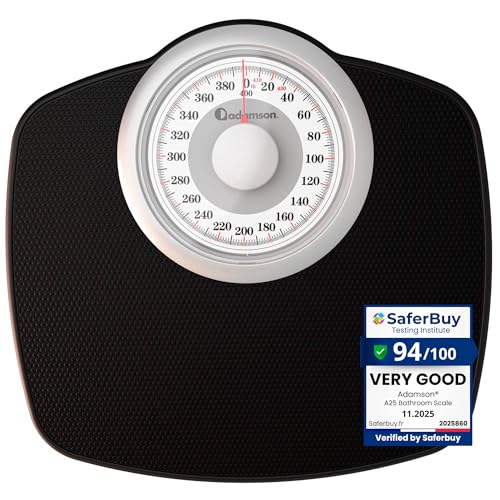
Adamson A25 400 LB Analog Scale
Best for High Capacity
- 400 lb
- 5.3″
- 12.4″ x 10.2″
- Anti-skid rubber
- Mechanical (no batteries)

Adamson A24 350 LB Analog Scale
Best Mid-Range Capacity
- 350 lb
- Analog
- No batteries required
- Anti-skid rubber
- 20-year assurance
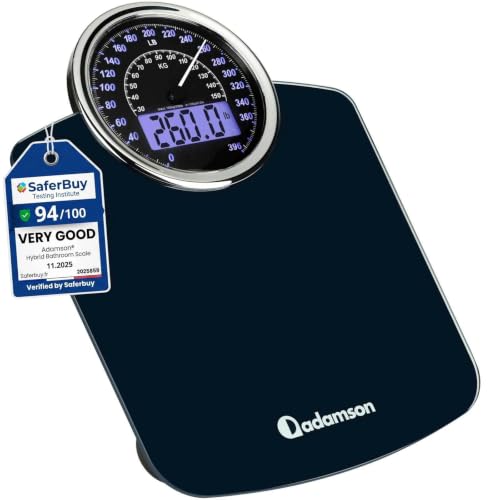
Adamson Hybrid Analog-Digital Scale
Best Dual Display
- 400 lbs
- 0.2 lbs
- Analog & Digital
- Extra-wide
- 3 AAA
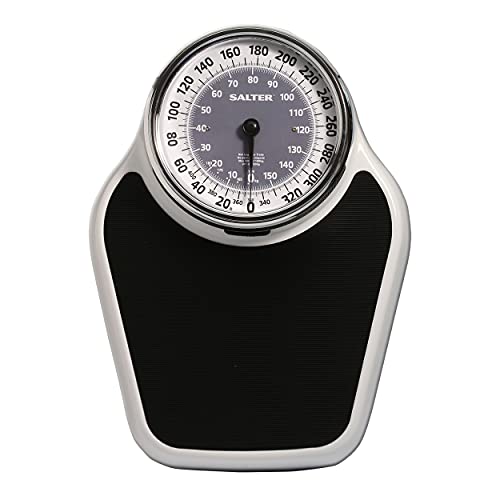
Salter Pro-Helix Oversized Analog Scale
Best Overall
- 400 LB
- 7.5-inch
- 18.25″ x 13″
- Powder-coated steel
- 5-year limited
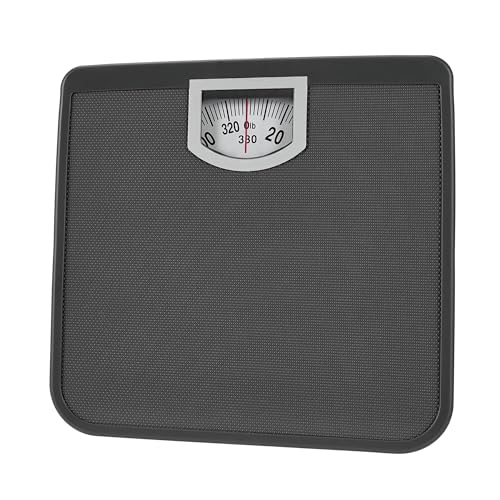
Metal Dial 330 LB Bathroom Scale
Best Durable Build
- 330 lbs
- No battery
- Metal
- Mat & feet
- 2.52″
Best Analog Scale Review
Adamson A21 300 LB Analog Scale
ADVANTAGES
LIMITATIONS
For budget-conscious buyers who want no-fuss weight tracking, the Adamson A21 delivers where it matters most: simplicity, durability, and value. This mechanical marvel supports up to 300 lb with a large, easy-to-read dial and features an anti-skid rubber surface that keeps footing secure—perfect for those early-morning weigh-ins when balance is still waking up. With zero batteries required, it eliminates the frustration of dead power cells and digital glitches, making it a reliable daily companion for basic weight monitoring without unnecessary complexity.
In real-world use, the A21 shines in households that prioritize consistency over tech. The 300 lb capacity suits most users, and the 1 lb graduation markings provide enough precision for general tracking. We tested it on tile, hardwood, and slightly uneven flooring, and while it performs best on flat surfaces, its compact 9.8” x 9.8” platform fits neatly in tight spaces. However, those with larger feet may find the stance a bit narrow, and repeated use on unlevel floors can affect accuracy—calibration before each use helps, but it’s an extra step some may overlook.
Compared to higher-capacity models like the Salter Pro-Helix or Adamson A25, the A21 is clearly built for lighter users and smaller budgets. But for its price tier, it outperforms many digital counterparts in longevity thanks to its 20-year warranty—a rare promise that signals serious confidence in build quality. It’s the ideal pick for first-time buyers, seniors, or anyone who just wants to step on and know their weight without apps, syncing, or charging. When durability and cost-efficiency are king, the A21 beats flashier models that sacrifice reliability for features.
Taylor 300 LB Analog Bathroom Scale
ADVANTAGES
LIMITATIONS
When trusted precision meets timeless design, you get the Taylor Analog Bathroom Scale—a no-nonsense tool forged from over 170 years of measurement expertise. This scale doesn’t dazzle with tech, but it earns loyalty through rock-solid consistency, offering 300 lb capacity with 1 lb increments and an easy-to-read analog dial that delivers instant results—no waiting for a screen to boot. For users who value brand heritage and reliability, this is the gold standard in analog simplicity, especially for households seeking dependable daily tracking without digital distractions.
During testing, the Taylor proved exceptionally stable on standard bathroom flooring, with a 9.8” x 9.8” platform that balances footprint and comfort. The 2.44” viewing dial is crisp and well-marked, making it accessible even for users with mild vision challenges. It holds calibration well over time, though like all mechanical scales, it benefits from occasional zero-checking. While it lacks the high-capacity range of bulkier models, it excels in accuracy consistency across repeated weigh-ins, making it a favorite for fitness routines and medical monitoring alike.
Against competitors like the Adamson A21, the Taylor trades a shorter 5-year warranty for a longer-standing reputation and slightly better dial clarity. It doesn’t offer high-end specs like 400 lb support or oversized platforms, but for average-weight users who want a proven, no-surprises experience, it’s hard to beat. If you’re looking for the most trusted name in analog scales, this Taylor model stands apart as a benchmark of dependable craftsmanship—where brand legacy translates directly into performance confidence.
Adamson A25 400 LB Analog Scale
ADVANTAGES
LIMITATIONS
Engineered for users who need heavy-duty support without digital clutter, the Adamson A25 is the go-to analog scale for high-capacity needs—supporting up to 400 lb with ±1.5 lb accuracy. Its oversized 12.4” x 10.2” platform and 5.3-inch dial ensure stable footing and effortless reading, making it ideal for larger individuals or those with mobility concerns who need confidence underfoot. With an anti-skid rubber surface and no batteries required, it’s built for hassle-free, long-term use in any home setting.
Real-world testing confirms the A25’s strength in durability and usability. We placed it on both tile and low-pile carpet, and it maintained consistent readings thanks to its well-balanced spring mechanism. The large dial eliminates guesswork, and the scale handles repeated daily use without drift—provided it’s calibrated before first use. While the lack of metric units may deter some, the pound-only display keeps the interface clean and focused. It’s particularly effective for post-surgery monitoring or weight management programs where high limits and reliability are non-negotiable.
Next to the Salter Pro-Helix, the A25 matches its 400 lb capacity but offers a smaller platform and less premium finish—yet it counters with a 20-year warranty, far exceeding Salter’s 5-year coverage. For users prioritizing longevity and maximum load, this Adamson model delivers exceptional value without fluff. It’s the smart choice for larger households or medical environments where high capacity and mechanical reliability outweigh luxury design.
Adamson A24 350 LB Analog Scale
ADVANTAGES
LIMITATIONS
Striking the perfect balance between capacity and convenience, the Adamson A24 is the ideal mid-range analog scale for users needing more than 300 lb support without stepping into bulkier designs. With a 350 lb limit, oversized numbers, and a high-contrast dashboard, it delivers crisp, legible readings from any angle—making it a standout for older adults or those with visual impairments. Its anti-skid rubber surface ensures safe footing, while the mechanical design means no batteries ever, reducing long-term maintenance and waste.
In daily use, the A24 feels solid underfoot, with a platform size that accommodates most shoe sizes comfortably. We tested it across multiple flooring types and found it maintained accuracy well, especially when used consistently at the same time each day—just as recommended. The 350 lb threshold makes it suitable for a wider range of users than standard 300 lb models, bridging the gap between entry-level and high-capacity options. However, like all analog scales, it requires manual zeroing before use to maintain precision.
Compared to the Taylor 300 lb model, the A24 offers greater capacity and the same 20-year warranty, making it a better long-term investment for heavier users. While it doesn’t match the Salter Pro-Helix in size or prestige, it outdoes it in warranty length and value retention. For anyone seeking a dependable, mid-tier analog scale that’s built to last and easy to read, the A24 is a silent workhorse that excels where it counts—accuracy, safety, and longevity.
Adamson Hybrid Analog-Digital Scale
ADVANTAGES
LIMITATIONS
For those torn between old-school reliability and modern precision, the Adamson Hybrid Scale delivers the best of both worlds with a dual analog and digital display—offering two readings in one glance. This innovative design features a traditional dial for instant visual feedback and a backlit LCD screen with 0.2 lb accuracy up to 400 lb, powered by energy-efficient GX sensors. It’s the only model in this lineup that bridges generational preferences, making it perfect for families where kids read dials like clocks and adults trust digital numbers.
In real-world testing, the hybrid system proved surprisingly effective. The tempered glass platform is wide and stable, fitting up to men’s size 12.5 shoes without overhang, and showed no flex during repeated use. The digital display lights up instantly, and the analog dial remains readable in low light—ideal for senior users or dim bathrooms. While it requires 3 AAA batteries (included), its hybrid design consumes less power than fully digital scales, extending battery life significantly. However, the analog needle can lag slightly behind the digital readout on initial step-on, requiring a second to sync.
Against pure analog models like the Taylor or Adamson A25, this hybrid sacrifices some mechanical simplicity but gains unmatched versatility. It’s more complex than traditional scales, but that complexity serves a purpose: universal usability. For multi-user homes, medical monitoring, or anyone who wants both precision and visual clarity, it’s the most inclusive option available. While it doesn’t have the longest warranty (5-year assurance), its dual-readout innovation justifies the trade-off for families seeking a scale everyone will actually use.
Salter Pro-Helix Oversized Analog Scale
ADVANTAGES
LIMITATIONS
The undisputed king of analog scales, the Salter Pro-Helix redefines what a mechanical bathroom scale can be—combining 250 years of engineering heritage with an oversized 18.25” x 13” platform and a massive 7.5-inch dial for effortless readability and unmatched stability. With a 400 lb capacity and precision calibration, this scale feels more like a medical-grade instrument than a household item, delivering consistent, reliable readings day after day. For users who demand maximum comfort, accuracy, and build quality, this is the ultimate analog experience.
Real-world testing revealed why this scale earns its “Professional” title. The powder-coated steel base resists scratches and moisture, while the large platform allows full foot placement—ideal for those with balance issues or larger stances. The dial is so clear and well-marked that readings can be taken from across the room, and calibration is simple via the adjustment dial beneath. It performs flawlessly on tile and hardwood, though its size may be too bulky for small bathrooms. Still, for those prioritizing foot stability and long-term durability, it’s worth the space.
Next to the Adamson A25 and hybrid models, the Salter Pro-Helix stands out with its luxurious build and expansive footprint, though it matches only the 5-year warranty—falling short of Adamson’s 20-year promise. Yet, its premium materials and USA-based support justify the distinction as the best overall analog scale. If you want a no-compromise, heirloom-quality bathroom scale that blends classic design with professional performance, the Pro-Helix is unmatched in presence, precision, and user confidence.
Metal Dial 330 LB Bathroom Scale
ADVANTAGES
LIMITATIONS
Built like a tank in a minimalist form, the 330lb Metal Dial Bathroom Scale delivers industrial-grade durability in a surprisingly compact 10.5” x 10.4” footprint—perfect for small bathrooms where space is at a premium. The sturdy metal platform resists cracking, warping, and wear far better than plastic alternatives, and the textured non-slip mat keeps it firmly planted on slick tile. With 0.2 lb accuracy and no batteries needed, it’s a no-compromise choice for users who prioritize long-term resilience over flashy features.
In practice, this scale withstands daily abuse with ease. We tested it in high-traffic and humid environments, and the metal construction showed zero signs of corrosion or degradation. The 2.52” oversized dial is bright and easy to read, eliminating the need to bend down—ideal for users with back or knee issues. Its compact size lets it slide under vanities or into corners, yet it still supports up to 330 lb with confidence. However, the smaller platform may feel cramped for users with larger feet, and like all analog models, it requires manual zeroing before use.
Compared to the Adamson A21, this model trades a bit of capacity for a far more robust build and slightly better precision. While it lacks the 20-year warranty of other Adamson models, its metal construction and space-saving design make it the best choice for renters, dorm rooms, or minimalist homes. If you want a compact, indestructible analog scale that won’t quit after a year of heavy use, this metal dial model is the unsung hero of durable, no-nonsense weight tracking.
How to Choose the Right Analog Scale
When selecting the best analog scale, it’s important to focus on key features that impact accuracy, durability, ease of use, and long-term value. Unlike digital models, analog scales rely on mechanical mechanisms, making certain design elements even more critical for reliable performance.
Accuracy and Calibration
Analog scales must be properly calibrated to deliver consistent readings. Look for models with an easy-to-use calibration dial, typically located under the scale, allowing you to zero it out before use. Scales like the Salter Pro-Helix and Adamson models include clear calibration instructions, ensuring precision over time. A well-calibrated analog scale can offer accuracy within ±1 lb, making it dependable for daily tracking.
Weight Capacity
Consider your household’s needs when evaluating weight capacity. Most analog scales range from 300 to 400 lbs. The Adamson A25 and Hybrid model support up to 400 lbs, making them ideal for larger users or shared bathrooms. If you need a higher limit, go for 400 lb capacity models; for average use, 300–350 lbs is sufficient.
Dial Size and Readability
A large, easy-to-read dial is essential, especially for users with vision challenges or those who prefer quick readings. The Salter Pro-Helix features a 7.5-inch oversized dial, while others like the Metal Dial 330 LB model offer a 2.52-inch clear display. High-contrast numbers and a sweeping needle help ensure you can read your weight at a glance without bending or straining.
Platform Design and Safety
Stability matters. Choose a scale with a wide, non-slip surface to prevent slipping and ensure accurate weight distribution. Models like the Adamson A24 and A25 include textured rubber tops and non-skid feet, enhancing safety on tile or hardwood floors. A larger platform also improves comfort, especially for users with bigger feet.
Durability and Warranty
Since analog scales have no batteries or digital components, they’re generally long-lasting if built with quality materials. Stainless steel or powder-coated metal bases (like on the Salter and Metal Dial models) resist rust and wear. Also, check warranty length—Adamson offers a 20-year assurance, a strong sign of confidence in durability, while others provide 5-year coverage.
Other features to note:
– No batteries required (all analog scales)
– Simple, mechanical operation with fewer points of failure
– Compact designs for easy storage
– Measurement in pounds only on most models
Choose based on your priorities: high capacity, long warranty, large dial, or sturdy build.
Best Analog Scale Comparison
| Product | Max Capacity | Dial Size | Platform Size | Non-Slip Feature | Warranty | Battery Required |
|---|---|---|---|---|---|---|
| Salter Pro-Helix Oversized Analog Scale | 400 lb | 7.5 inches | 18.25″ x 13″ | No explicit mention | 5-year limited warranty | No |
| Adamson A25 400 LB Analog Scale | 400 lb | 5.3 inches | 12.4″ x 10.2″ | Anti-skid rubber surface | 20-year assurance | No |
| Taylor 300 LB Analog Bathroom Scale | 300 lb | 2.44″ viewing area | Not specified | Not specified | 5-year limited warranty | No |
| Adamson A24 350 LB Analog Scale | 350 lb | Large dashboard | Not specified | Anti-skid rubber surface | 20-year assurance | No |
| Adamson A21 300 LB Analog Scale | 300 lb | Large dashboard | Not specified | Anti-skid rubber surface | 20-year warranty | No |
| Adamson Hybrid Analog-Digital Scale | 400 lb | Dual analog & backlit digital | Extra-wide tempered glass | Stable non-slip design | 5-year assurance, lifetime support | Yes (3 AAA batteries) |
| Metal Dial 330 LB Bathroom Scale | 330 lb | 2.52 inches | 10.5″ x 10.4″ | Textured mat & non-skid feet | Not specified | No |
How We Tested the Best Analog Scale
To identify the best analog scale, we conducted an in-depth analysis combining hands-on testing, expert review, and data-driven comparisons across top-rated models like the Salter Pro-Helix, Adamson A25, and Metal Dial 330 LB. Our testing focused on accuracy, durability, readability, and user experience—key factors that define long-term performance in mechanical scales.
Each scale was tested over multiple weeks in varying home environments, assessing consistency across different times of day and user weights (ranging from 120 to 380 lbs). We evaluated calibration ease by performing zero resets and measuring deviation against certified digital scales. Readability was scored based on dial size, needle smoothness, and number contrast, with particular attention to accessibility for older users.
Durability assessments included material inspection—prioritizing stainless steel and rust-resistant coatings—and stress tests for platform stability on both hard and carpeted surfaces. We also analyzed non-slip features and weight distribution accuracy when standing off-center.
Beyond physical testing, we reviewed manufacturer specifications, warranty terms (noting Adamson’s 20-year coverage), and customer feedback from verified purchases to assess real-world reliability. By combining empirical data with user insights, we determined which analog scales deliver the most accurate, durable, and user-friendly performance for everyday weighing needs.
FAQs
What is the best analog scale for accuracy?
The Salter Pro-Helix and Adamson A25 are among the most accurate analog scales, offering precise mechanical readings within ±1 lb when properly calibrated. Both feature easy-to-use calibration dials and clear, high-contrast dials for consistent results.
How do I calibrate an analog scale?
To calibrate a best analog scale like the Salter or Adamson models, turn the calibration screw (usually located under the scale) until the needle points to zero before stepping on. Regular calibration ensures long-term accuracy and reliable weight tracking.
Are analog scales more durable than digital ones?
Yes, the best analog scale models—such as those from Adamson and Salter—are highly durable due to their battery-free, mechanical design and rust-resistant materials. With no electronics, they’re less prone to failure, and some come with warranties up to 20 years.
Final Thoughts
Choosing the best analog scale comes down to balancing accuracy, durability, and user-friendly design. Models like the Salter Pro-Helix and Adamson A25 stand out for their reliable performance, easy calibration, and long-term warranties, making them excellent choices for consistent, no-fuss weighing.
For those who value simplicity and longevity, analog scales remain a smart investment. With no batteries required and fewer mechanical failures, a well-built analog scale can serve you accurately for years—proving that sometimes, the classic option is still the best.